Pewaukee was first counted by the census in 1880, and 1 of its places is on the National Register
More historic than 31% of U.S. towns · #283 of 362 in Wisconsin. What drives it
Most of Pewaukee was built recently: 3% of its homes predate 1940 and the median home dates from 1993. Its Register listing is the Hadfield Company Lime Kilns. Below: maps from 1892 on and the census since 1880.
On its age, its old homes and the National Register, Pewaukee is more historic than 31% of U.S. towns, #283 of 362 in Wisconsin. Its National Register listings hold the grade up; its share of homes from before 1940 pulls it down.
C
HistoryA character grade: shown, never part of Pewaukee’s overall grade.
Wisconsin towns list more on the Register than most of the country (a typical Wisconsin town has 3.0 per 10,000 residents, the U.S. 2.4), so Pewaukee’s 0.6 sits near the middle of its state (57% of Wisconsin towns have fewer) while its 1 listings outnumber those of 51% of U.S. towns.
How sure. Graded on any two of the three inputs instead, the letter would range from C− to C+. The pre-1940 share (±1.8 points) is firm at this size.
Founding year: the first census (other dates in Quick answers). Homes: Census ACS 2020–24. National Register: National Park Service, May 2026 list; each listing counted once (boundary changes and added documentation belong to their listing), and a historic district counts its contributing buildings. How TownRatings grades history →
What stands out about Pewaukee’s past
Read from the archive, the National Register and the record. The page puts what stands out first.
Every edition of the U.S. Geological Survey’s map of Pewaukee. Tap a year, or press play to watch the town change.
1892Waukesha sheet · 1:62,500
U.S. Geological Survey historical topographic maps (public domain), via Esri’s collection of the scans. The red ring marks the center of Pewaukee.
Every building
Pewaukee, building by building, 1894–1914
Fire insurance maps drew every building, what it was made of and what it was used for, so insurers could price the risk of fire. Pick a year, then a sheet.
1894Sheet 1 of 1
Edition
Sheets
BrickWoodStone
Sanborn Map Company, via the Library of Congress. Editions published in 1930 or earlier, which are in the public domain.
The name Pewaukee is constructed upon aki or (w)aukee, which means "land" or "location" in several Algonquian languages. The significance and outright etymology of the initial syllable of the name is uncertain. Sources in Ojibwe nibiwaki "watery (i.e., swampy) place", Potawatomi pee-wauk-ee-wee-nick "the dusty water" or "lake of shells", and Menominee pee-wau-nau-kee "place of flint" have been suggested, as well as rather less unclear attributed meanings such as "snail lake," "flinty place," and "clean land".
Passages that mention Pewaukee, cut from the printed page as they were published.
The History of Waukesha County, Wisconsin. Containing an account of its settlement, growth, development and resources1880 · page 319Read the page →
Read the text
Pewaukee Lake. — This is a noted as well as exceedingly beautiful sheet of water. As near as can be measured, one-half of it lies in the town of Pewaukee — the town taking its name from the lake — and the other half in the town of Delafield. It is nearly ten times as long as wide ; has high but not precipitous banks most beautifully wooded, and deep, clear, cool water.
Text read by machine from the scan; it may contain errors.
The History of Waukesha County, Wisconsin. Containing an account of its settlement, growth, development and resources1880 · page 778Read the page →
Read the text
The town of Pewaukee, named after the lake within its borders, of the same name, called by the Indians Pewauk-ee-we-nink, is, historically speaking, the oldest town in the county, next to Waukesha. The Cutler brothers and Henry Luther passed the summer of 1834 in the town of Waukesha, but notthe winter of 1834-35. In the spring of 1835, people began settling in Pewaukee within a few weeks of the time when the Cutlers and others returned permanently to Waukesha.
Text read by machine from the scan; it may contain errors.
Scans and text from the Internet Archive. Books published in 1930 or earlier, which are in the public domain.
Timeline
Pewaukee, 1856 to 1999
Woven from the archive, old maps, post office records, the National Register and the people born here.
The Pewaukee post office opened in 1880, the earliest record of the town by name (U.S. post office records). Wikidata gives 1999.
How does Pewaukee rank for history?
Pewaukee is more historic than 31% of U.S. towns, #283 of 362 in Wisconsin. The History grade combines the town’s founding era, the share of homes built before 1940 and its National Register listings. It’s a character grade, so it isn’t part of the overall grade. How it works.
What is on the National Register in Pewaukee?
One place: the Hadfield Company Lime Kilns (listed 1982).
How old are the homes in Pewaukee?
3% of Pewaukee’s homes were built before 1940 (Census estimate, ±1.8 points), against a typical 12% for a Wisconsin town; the median home was built in 1993.
Founding dates: Wikidata, Wikipedia, the U.S. post office records of Blevins & Helbock (CC0) and the Census. Homes by year built: Census ACS 2020–24. National Register of Historic Places: National Park Service (list of May 22, 2026). Old photos, postcards and papers: Wikimedia Commons, the Library of Congress and other public archives, credited on each item’s page. Maps: U.S. Geological Survey historical topographic maps (via Esri) and Sanborn fire-insurance maps (Library of Congress). History text and census tables: Wikipedia (CC BY-SA 4.0). Places that used to be: USGS Geographic Names Information System (2021).
From Wikimedia Commons (11), Wikidata (1), the National Register of Historic Places (1), Wikipedia, Wikidata and Wikipedia for famous people, U.S. Geological Survey historical maps, U.S. Census counts (via Wikipedia), the US Post Offices dataset (Blevins & Helbock), the USGS Geographic Names Information System, Sanborn fire insurance maps (Library of Congress) and old county and town histories (Internet Archive). Archive images are copied here with their credits and licenses, shown on each photo’s page. Refreshed monthly.


 2023
 2023
 2023
 2023
 2017
 2016
 2015
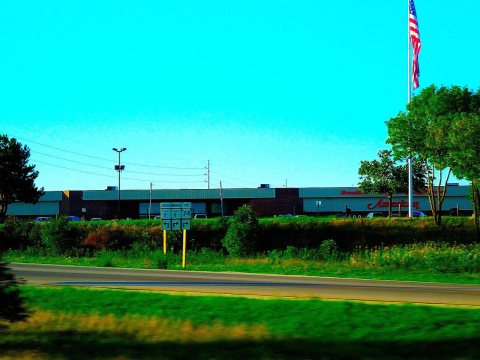 2012
 2011
 2006
 2005
