Snohomish dates to 1859, and 18% of its homes were built before 1940
More historic than 74% of U.S. towns · #20 of 285 in Washington. What drives it
1 place in town is on the National Register, among them a historic district with 44 buildings. Below: 6 old photos and papers, maps from 1888 on, and the census since 1880.
Founding year: Wikidata; Wikipedia’s history section gives the same year. First post office: 1861.The full story ↓
History grade
What drives Snohomish’s History grade
On its age, its old homes and the National Register, Snohomish is more historic than 74% of U.S. towns, #20 of 285 in Washington. Its National Register listings hold the grade up; its age pulls it down.
B+
HistoryA character grade: shown, never part of Snohomish’s overall grade.
Few Washington towns list much on the Register (a typical Washington town has 0.1 per 10,000 residents, the U.S. 2.4), so Snohomish’s 43.0 sits above most of its state (93% of Washington towns have fewer) while its 44 historic buildings outnumber those of 84% of U.S. towns.
How sure. Graded on any two of the three inputs instead, the letter would range from B− to A. The pre-1940 share is a Census survey estimate (±4.5 points). Two sources give 1859.
Founding year: Wikidata (other dates in Quick answers). Homes: Census ACS 2020–24. National Register: National Park Service, May 2026 list; each listing counted once (boundary changes and added documentation belong to their listing), and a historic district counts its contributing buildings. How TownRatings grades history →
What stands out about Snohomish’s past
Read from the archive, the National Register and the record. The page puts what stands out first.
Fire insurance maps drew every building, what it was made of and what it was used for, so insurers could price the risk of fire. Pick a year, then a sheet.
1888Sheet 1 of 1
Edition
Sheets
BrickWoodStone
Sanborn Map Company, via the Library of Congress. Editions published in 1930 or earlier, which are in the public domain.
On the National Register
1 listing protects 44 historic buildings
The country’s official list of buildings and places worth saving.
The Snohomish River Valley was originally inhabited by the Snohomish people, a Coast Salish tribe who lived between Port Gardner Bay and modern-day Monroe. An archaeological site near the confluence of the Snohomish and Pilchuck Rivers has indications of human habitation that began as early as 8,000 years before present. A village, sbadaʔɬ, was at the site of the modern-day city that now bears the tribe's name. The Snohomish had contact with white explorers in the early 19th century, with their name recorded as "Sinnahamis" by John Work of the Hudson's Bay Company, among the first to also use the name to describe the river. The Snohomish were signatories of the Point Elliott Treaty in 1855, which relocated the tribe to the Tulalip Indian Reservation.
Passages that mention Snohomish, cut from the printed page as they were published.
An illustrated history of Skagit and Snohomish Counties1906 · page 253Read the page →
Read the text
still held bv right of possession all the land on which are the cities of Seattle, Everett, La Conner, Bellingham and other prominent towns of the sound, the first permanent white settlement in Snohomish county was made. The site of this settlement was Tulali'p bay, the settlers were John Gould, who died recently on Whidby island, a Frenchman named Peter Goutre and a few others ; the purpose of these
Text read by machine from the scan; it may contain errors.
An illustrated history of Skagit and Snohomish Counties1906 · page 332Read the page →
Read the text
very recently beside the splendid new une. the Snohomish Free Religious Association, the Snohomish County Agricultural Society, the Snohomish Telegraph Company, the Snohomish Cemetery Association, and last but by no means least the Northern Star, which, though then in its first year was a large, live-column, eight-page weekly paper, all home print, with an overflowing ambition to be truly
Text read by machine from the scan; it may contain errors.
History of Snohomish County, Washington, Volume I1926 · page 849Read the page →
Read the text
In 1869 Miss Robie Willard taught the first school in the county; it was located in the City of Snohomish. In 1876 Eldridge Morse, Snohomish, started the first paper in the county and called it The Northern Star. The first church in the county (aside from the Tulalip Mission Church built on Tulalip Bay by Rev. Father E. C.
Text read by machine from the scan; it may contain errors.
History of Snohomish County, Washington, Volume I1926 · page 243Read the page →
Read the text
being to build from Seattle to the Canadian boundary. The real work was that of the Seattle, Lakeshore and Eastern, however, which had been in the field for a year, with surveyors and graders all through the county. The work was pushed _ rapidly and the first regular train from Seattle to Snohomish was run on July 3, 1888, although it was obliged to stop on the south side of the river as the bridge was not completed until September 22, 1888. This railroad activity was enough in itself to have accounted for the prosperity of Snohomish, but added to this was the great demand for lumber, both for railroad construction and city building, and
Text read by machine from the scan; it may contain errors.
Scans and text from the Internet Archive. Books published in 1930 or earlier, which are in the public domain.
Timeline
Snohomish, 1859 to 1987
Woven from the archive, old maps, post office records, the National Register and the people born here.
Nothing in the archives for these yearsWeddings on Main Street, storms, parades, school pictures, the old store. If it’s in your family album, it belongs here.
In 1859, according to Wikidata and Wikipedia’s history of the town. Snohomish’s post office opened in 1861, and the census of 1880 counted 149 people here.
How does Snohomish rank for history?
Snohomish is more historic than 74% of U.S. towns, #20 of 285 in Washington. The History grade combines the town’s founding era, the share of homes built before 1940 and its National Register listings. It’s a character grade, so it isn’t part of the overall grade. How it works.
What is on the National Register in Snohomish?
One place: the Snohomish Historic District (listed 1974).
How old are the homes in Snohomish?
18% of Snohomish’s homes were built before 1940 (Census estimate, ±4.5 points), against a typical 4.3% for a Washington town; the median home was built in 1978.
Founding dates: Wikidata, Wikipedia, the U.S. post office records of Blevins & Helbock (CC0) and the Census. Homes by year built: Census ACS 2020–24. National Register of Historic Places: National Park Service (list of May 22, 2026). Old photos, postcards and papers: Wikimedia Commons, the Library of Congress and other public archives, credited on each item’s page. Maps: U.S. Geological Survey historical topographic maps (via Esri) and Sanborn fire-insurance maps (Library of Congress). History text and census tables: Wikipedia (CC BY-SA 4.0). Places that used to be: USGS Geographic Names Information System (2021).
From Wikimedia Commons (6), the National Register of Historic Places (1), Wikipedia, Wikidata and Wikipedia for famous people, U.S. Geological Survey historical maps, U.S. Census counts (via Wikipedia), the US Post Offices dataset (Blevins & Helbock), the USGS Geographic Names Information System, Sanborn fire insurance maps (Library of Congress) and old county and town histories (Internet Archive). Archive images are copied here with their credits and licenses, shown on each photo’s page. Refreshed monthly.


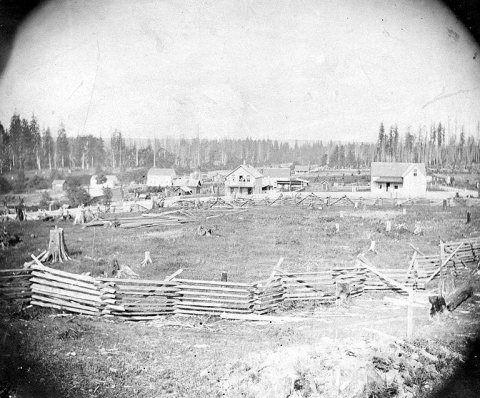 1874
 c. 1885
 c. 1885
 1885


