Founding year: Wikipedia. First post office: 1835.The full story ↓
History grade
What drives Lincoln’s History grade
On its age, its old homes and the National Register, Lincoln is more historic than 62% of U.S. towns. Its share of homes from before 1940 holds the grade up; its National Register listings pull it down.
B
HistoryA character grade: shown, never part of Lincoln’s overall grade.
Vermont towns list more on the Register than most of the country (a typical Vermont town has 147 per 10,000 residents, the U.S. 2.4), so Lincoln’s 0.0 sits below most of its state (5% of Vermont towns have fewer) while its 0 listings outnumber those of 23% of U.S. towns.
How sure. Graded on any two of the three inputs instead, the letter would range from C to A. The pre-1940 share is a Census survey estimate (±4.0 points). Two sources give 1780.
Founding year: Wikipedia (other dates in Quick answers). Homes: Census ACS 2020–24. National Register: National Park Service, May 2026 list; each listing counted once (boundary changes and added documentation belong to their listing), and a historic district counts its contributing buildings. How TownRatings grades history →
What stands out about Lincoln’s past
Read from the archive, the National Register and the record. The page puts what stands out first.
Lincoln was chartered to Colonel Benjamin Simonds and 64 associates on November 9, 1780. As commander of the Massachusetts militia, Simonds fought at the Battle of Bennington in 1777. He named the new town in honor of his commanding officer, Major General Benjamin Lincoln, who played a vital role in getting the militia to Vermont. General Lincoln was respected and well liked by his contemporaries.
"It was also at the Stover farm, when it was the property of Isaac and Mary Lincoln, that Thomas Lincoln, the father of Abraham Lincoln, worked for a while as a farmhand for his Uncle Isaac. (See Holland's Life of Lincoln, and Nicolay and Hay's Life of Lincoln.)
Text read by machine from the scan; it may contain errors.
History of Addison county Vermont, with illustrations and biographical sketches of some of its prominent men and pioneers1886 · page 491Read the page →
Read the text
of the peace, requesting " His Honor " to warn a town meeting. The following is a literal copy of the petition, warning, and proceedings of the first meeting as they were originally recorded : " Lincoln Feb the 26 day 1798 "We the subscribers Humbly Request your Honour to worn a town meeting for the in Habitance of the town of Lincoln on the Second tuesday of March Next at the Dwelling house of Jedediah Durfey in Said Lincoln, and we yours are in Duty Ever bound to Henry McLaughlin Justice of Pice
Text read by machine from the scan; it may contain errors.
History of Addison county Vermont, with illustrations and biographical sketches of some of its prominent men and pioneers1886 · page 444Read the page →
Read the text
Loren Orvis, said to have been the first settler in the town of Lincoln, settled at an early day on the farm now owned by his son Lorenzo. He had a family of nine sons and four daughters, Lorenzo being the survivor of them all. Loren Orvis died October 5, 1859, aged ninety-one years.
Text read by machine from the scan; it may contain errors.
In July, 1777, General Lincoln was despatched to the northern army, under Gates, to assist in opposing Burgoyne. Stationed at Manchester, in Vermont, Lincoln received and organized the New England militia as they joined him. A detachment of 500 men from his troops, under colonel Brown surprised the English at the landing at Lake George, took 293 men, and released 100 American prisoners. He then joined general Gate's
Text read by machine from the scan; it may contain errors.
Scans and text from the Internet Archive. Books published in 1930 or earlier, which are in the public domain.
Timeline
Lincoln, 1780 to 1968
Woven from the archive, old maps, post office records, the National Register and the people born here.
Nothing in the archives for these yearsWeddings on Main Street, storms, parades, school pictures, the old store. If it’s in your family album, it belongs here.
In 1780, according to Wikipedia’s history of the town. Lincoln’s post office opened in 1835, and the census of 1800 counted 97 people here.
How does Lincoln rank for history?
Lincoln is more historic than 62% of U.S. towns. The History grade combines the town’s founding era, the share of homes built before 1940 and its National Register listings. It’s a character grade, so it isn’t part of the overall grade. How it works.
How old are the homes in Lincoln?
27% of Lincoln’s homes were built before 1940 (Census estimate, ±4.0 points), against a typical 22% for a Vermont town; the median home was built in 1977.
Founding dates: Wikidata, Wikipedia, the U.S. post office records of Blevins & Helbock (CC0) and the Census. Homes by year built: Census ACS 2020–24. National Register of Historic Places: National Park Service (list of May 22, 2026). Old photos, postcards and papers: Wikimedia Commons, the Library of Congress and other public archives, credited on each item’s page. Maps: U.S. Geological Survey historical topographic maps (via Esri) and Sanborn fire-insurance maps (Library of Congress). History text and census tables: Wikipedia (CC BY-SA 4.0). Places that used to be: USGS Geographic Names Information System (2021).
From Wikimedia Commons (18), Wikipedia, Wikidata and Wikipedia for famous people, U.S. Geological Survey historical maps, U.S. Census counts (via Wikipedia), the US Post Offices dataset (Blevins & Helbock), the USGS Geographic Names Information System and old county and town histories (Internet Archive). Archive images are copied here with their credits and licenses, shown on each photo’s page. Refreshed monthly.
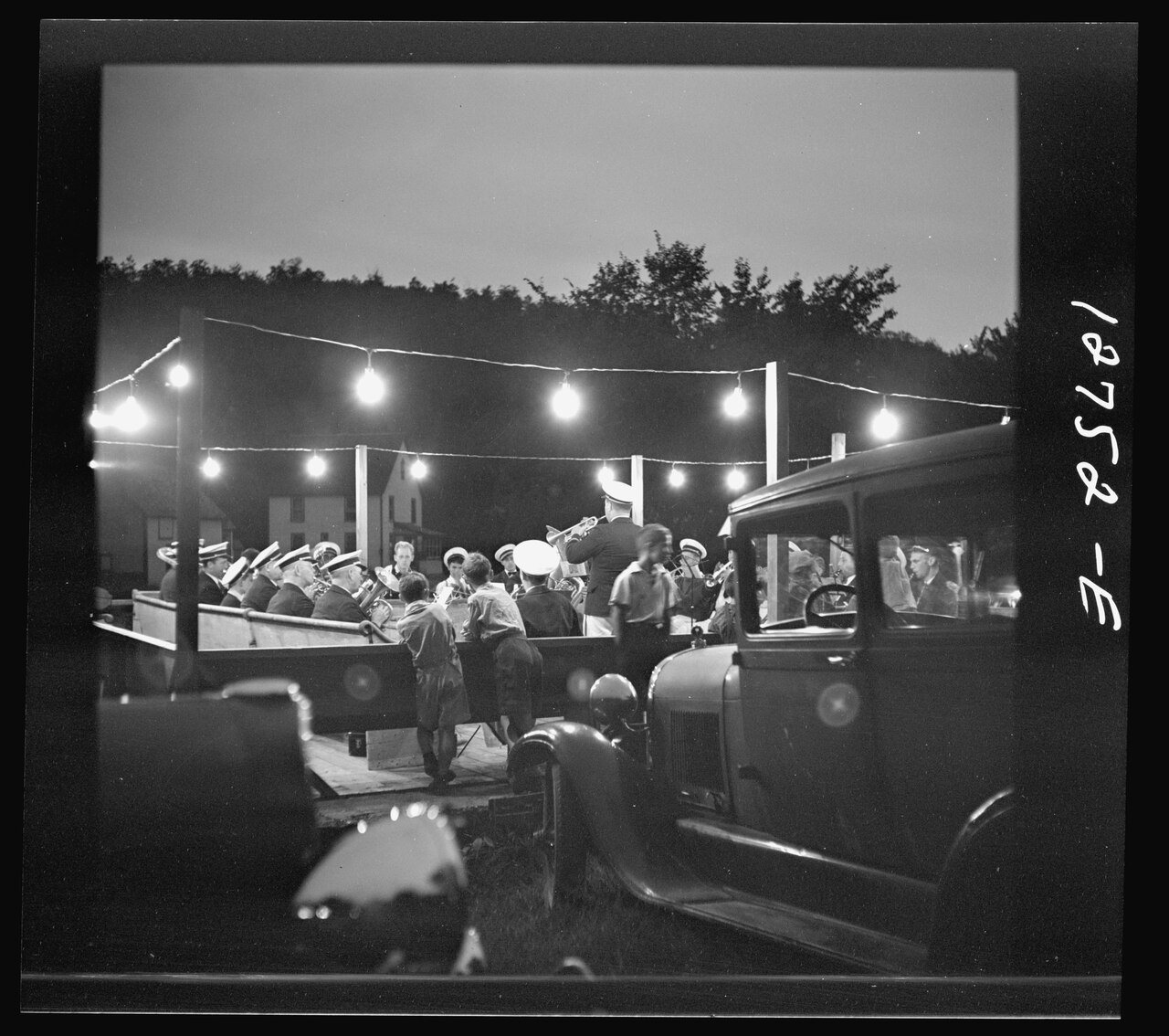


 1940
 1940
 1940
 1940
 2011
 2011
 2011
 2011
 2011
 2011
 2011
 2011
 2011
 2011
 2011
 2011
 2004