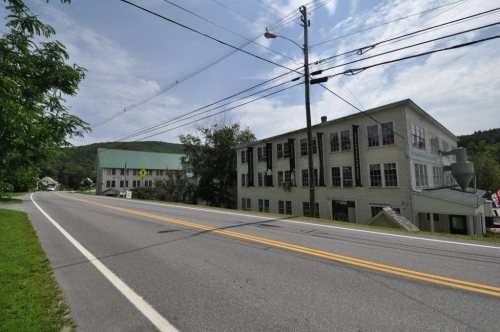
4 places in town are on the National Register, among them a historic district with 2 buildings. Below: 12 old photos and papers, maps from 1911 on, and the census since 1790.
Nothing in the archives for these yearsWeddings on Main Street, storms, parades, school pictures, the old store. If it’s in your family album, it belongs here.
Wikipedia doesn’t have a history of Bridgewater yet. The photos, dates and memories neighbors add here are how it gets written.
Bridgewater is a town in Windsor County, Vermont, United States. The population was 903 at the 2020 census. Bridgewater contains the hamlets of Bridgewater Village, Bridgewater Corners, West Bridgewater, and Bridgewater Center (formerly called Briggs).
Between the 2010 and 2020 censuses its population fell from 936 to 903 (-4%).
Intro from Wikipedia. Population: U.S. Census Bureau.
From the old history books
What they wrote about Bridgewater in 1891
Passages that mention Bridgewater, cut from the printed page as they were published.
History of Windsor county, Vermont1891 · page 611Read the page →
Read the text
Bridgewater Mills. — The first person to utilize the waters of the Quechee River at Bridgewater, for manufacturing purposes, was Richard Southgate He was from Massachusetts and came to Bridgewater in 1784, and took an active part in developing the early settlement of that town. In 1786 he built a dam across the Quechee, which was situated about ten rods west of the present dam at Bridgewater. He there carried on for a number of years a saw and grist-mill. Mr. Southgate had a family of six children, of whom three were sons, viz.: Richard, Thomas
Text read by machine from the scan; it may contain errors.
History of Windsor County, Vermont, with illustrations and biographical sketches of some of its prominent men and pioneers1891 · page 611Read the page →
Read the text
Bridgctvatcr Mills. — The first person to utilize the waters of the Quechee River at Bridgewater, for manufacturing purposes, was Richard Southgate He was from Massachusetts and came to Bridgewater in 1784, and took an active part in developing the early settlement of that town. In 1786 he built a dam across the Quechee, which was situated about ten rods west of the present dam at Bridgewater. He there carried on for a number of years a saw and grist-mill. Mr. Southgate had a family of six children, of whom three were sons, viz.: Richard, Thomas
Text read by machine from the scan; it may contain errors.
History of Windsor County, Vermont, with illustrations and biographical sketches of some of its prominent men and pioneers1891 · page 609Read the page →
Read the text
The history of the growth, progress and development of the town of Bridgewater during the present century has been much the same as of other towns similarly situated. During the period of the Revolutionary war the locality was so sparsely settled as to attract no notice from the civil and military authorities of the new State, and it is not known that any volunteers were sent from the town during that contest; but it is known and understood that some of the men who were engaged in the service during that time afterward became residents of Bridgewater.
Text read by machine from the scan; it may contain errors.
History of Windsor county, Vermont1891 · page 609Read the page →
Read the text
The history of the growth, progress and development of the town of Bridgewater during the present century has been much the same as of other towns similarly situated. During the period of the Revolutionary war the locality was so sparsely settled as to attract no notice from the civil and military authorities of the new State, and it is not known that any volunteers were sent from the town during that contest ; but it is known and understood that some of the men who were engaged in tlie service during that time afterward became residents of Bridgewater.
Text read by machine from the scan; it may contain errors.
Scans and text from the Internet Archive. Books published in 1930 or earlier, which are in the public domain.
Timeline
Bridgewater, 1796 to 1940
Woven from the archive, old maps, post office records, the National Register and the people born here.
4 listings: 2 buildings, among them the Bridgewater Woolen Mill (listed 1976, the first), 1 historic district, the Saddlebow Farm, with 2 contributing buildings, and 1 structure.
Founding dates: Wikidata, Wikipedia, the U.S. post office records of Blevins & Helbock (CC0) and the Census. Homes by year built: Census ACS 2020–24. National Register of Historic Places: National Park Service (list of May 22, 2026). Old photos, postcards and papers: Wikimedia Commons, the Library of Congress and other public archives, credited on each item’s page. Maps: U.S. Geological Survey historical topographic maps (via Esri) and Sanborn fire-insurance maps (Library of Congress). History text and census tables: Wikipedia (CC BY-SA 4.0). Places that used to be: USGS Geographic Names Information System (2021). How TownRatings grades history →
From Wikimedia Commons (1), the Library of Congress (11), the National Register of Historic Places (4), Wikidata and Wikipedia for famous people, U.S. Geological Survey historical maps, U.S. Census counts (via Wikipedia), the US Post Offices dataset (Blevins & Helbock), the USGS Geographic Names Information System and old county and town histories (Internet Archive). Archive images are copied here with their credits and licenses, shown on each photo’s page. Refreshed monthly.


 1937
 1937
 1937
 1939
 1939
 1939
 1939
 1940
 1940
 1940
 1940
 1940