Guest, Sign inJoin

Post to Reading

We’ll email a one-tap link to publish your post. No password, and nothing is public until you click it.
Already a member? Sign in
–Not graded
History · Reading

Reading’s post office opened in 1818, and 36% of its homes were built before 1940

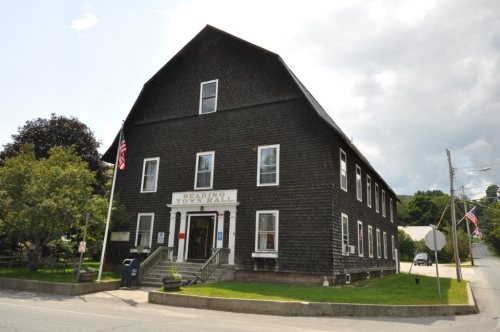
Its Register listings are the Indian Stones, the South Reading Schoolhouse and the Reading Town Hall. Below: 2 old photos and papers, maps from 1929 on, and the census since 1790.

1818first post office
3on the National Register
36%homes built before 1940
2old photos & papers
1famous people
From Reading’s archive · credits on each photo
Quick answers

How Reading began

When was Reading founded?

1818

The Reading post office opened in 1818, the earliest record of the town by name. Two smaller post offices, Felchville (1830) and South Reading (1832), opened inside today’s town and later closed.

First census: 747 in 17902020 census: 687208 years
Founding year: the first Reading post office (Blevins & Helbock, CC0).The full story ↓

What stands out about Reading’s past

Read from the archive, the National Register and the record. The page puts what stands out first.

★ What stands out · Help out

Start Reading’s collection

The first neighbors to add old photos shape how Reading’s history is told.

Decades since 1900 with photos
00s10s20s30s40s50s60s70s80s90s
1 of 10 decades. The empty ones are waiting for someone’s album.
Places that used to be

Lost post offices, old corners, places now gone and burying grounds

Reading had its own post office from 1818 to 1903. Two other post offices opened and closed inside today’s town.

Reading
1818–1903
Felchville
1830–1922
South Reading
1832–1903
Reading
1922–today
18101920today
Hamlets and corners on the map
Bailey MillsFelchvilleHammondsvilleSouth Reading
Gone or out of use
South Reading Schoolhouseschool
7cemeteries and burying grounds inside Reading
AmsdenFelchvilleHapgoodSawyer - StandSheddSouth ReadingSwain

US Post Offices dataset (Blevins & Helbock, CC0). Places and cemeteries from the USGS Geographic Names Information System (2021).

People over time

Reading, census by census

02004006008001,0001,2001,4001,60018001850190019502000Peak: 1,603

Peaked at 1,603 in 1820; 687 people lived here in 2020.

24 censuses, 1790–2020.

U.S. Census Bureau decennial counts, from the census table on Reading’s Wikipedia page.

The story

How Reading came to be

From Wikipedia’s history of Reading.

Read it all →

On August 30, 1754, after being captured by Abenakis at Fort at Number 4, Charlestown, New Hampshire, and being force-marched to Montreal, Susannah Willard Johnson gave birth to a daughter about .5 miles (0.80 km) up Knapp Brook. A marker beside Vermont Route 106 commemorates this event.

Text from Wikipedia, licensed CC BY-SA 4.0.

From the old history books

What they wrote about Reading, 1891–1903

Passages that mention Reading, cut from the printed page as they were published.

The town of Reading has four villages, or trading centers, — Reading Center, or Reading, Hammondsville, South Reading, and Felchville, of which that last named is the largest and most important. Felchville was named in honor of William Felch, a native of Royalton, Mass., born February 3, 1797, but …
History of Windsor county, Vermont1891 · page 390Read the page →
Read the text

The town of Reading has four villages, or trading centers, — Reading Center, or Reading, Hammondsville, South Reading, and Felchville, of which that last named is the largest and most important. Felchville was named in honor of William Felch, a native of Royalton, Mass., born February 3, 1797, but who came to this county at the age of fourteen years, and to the locality named for him in 1826. He was a generous, public-spirited, and industrious citizen, through whose labors the town was greatly benefited, and to whose energy the village owed its very ex-

Text read by machine from the scan; it may contain errors.
The town of Reading has four villages, or trading centers, — Reading Center, or Reading, Hammondsville, South Reading, and Felchville, of which that last named is the largest and most important. Felchville was named in honor of William Felch, a native of Royalton, Mass., born F"ebruary 3, 1797, but…
History of Windsor County, Vermont, with illustrations and biographical sketches of some of its prominent men and pioneers1891 · page 390Read the page →
Read the text

The town of Reading has four villages, or trading centers, — Reading Center, or Reading, Hammondsville, South Reading, and Felchville, of which that last named is the largest and most important. Felchville was named in honor of William Felch, a native of Royalton, Mass., born F"ebruary 3, 1797, but who came to this county at the age of fourteen years, and to the locality named for hmi in 1826. He was a generous, public-spirited, and industrious citizen, through whose labors the town was greatly benefited, and to whose energy the village owed its very ex-

Text read by machine from the scan; it may contain errors.
resplendent manner in which he has held his shoulder to the chariot wheel of the country's onward and upward movement speaks in no uncertain terms for the credit and honor of his own native town of Reading ; the State of Vermont ; for New England ; and for the country at large. Thus the farmer boy …
History of Reading, Windsor County, Vermont. Vol. II1903 · page 281Read the page →
Read the text

resplendent manner in which he has held his shoulder to the chariot wheel of the country's onward and upward movement speaks in no uncertain terms for the credit and honor of his own native town of Reading ; the State of Vermont ; for New England ; and for the country at large. Thus the farmer boy from the eastern slope of the Green Mountains, left at four without a father, must have been born as possessed of unusual natural traits

Text read by machine from the scan; it may contain errors.
Under the authority of the provincial government of New Hampshire the town of Reading was chartered on Juh' 6, 1761, but its first settlement was not commenced until the year 1772, when Andrew Spear came to the locality and began an improvement in the northeastern part of the town, east of the haml…
History of Windsor county, Vermont1891 · page 382Read the page →
Read the text

Under the authority of the provincial government of New Hampshire the town of Reading was chartered on Juh' 6, 1761, but its first settlement was not commenced until the year 1772, when Andrew Spear came to the locality and began an improvement in the northeastern part of the town, east of the hamlet called Reading Center.

Text read by machine from the scan; it may contain errors.

Scans and text from the Internet Archive. Books published in 1930 or earlier, which are in the public domain.

Timeline

Reading, 1818 to 1929

Woven from the archive, old maps, post office records, the National Register and the people born here.

  1. 19th century
  2. 1818Post officeThe Reading post office opens
  3. 1820CensusPopulation peaks at 1,603
  4. 1828Born hereSamuel Emery Adams is born here
  5. 1830Post officeThe Felchville post office opens
  6. 1832Post officeThe South Reading post office opens
  7. 1850In the archive1940 Census Enumeration District Descriptions - Vermont - Windsor County - ED 14-21, ED 1…
  8. 20th century
  9. 1900In the archiveFelchville Library ca1899 Vermont
  10. 1903Post officeThe Reading post office closes
  11. 1903Post officeThe South Reading post office closes
  12. 1911BuiltReading Town Hall is built
  13. 1922Post officeThe Felchville post office closes
  14. 1929On the mapFirst mapped by the U.S. Geological Survey
By decade

Reading, decade by decade

2 decades in the archive, from the 1850s to the 1900s. Scroll each row; tap a photo for its story.

On the map

Reading on the map, 1929 to 1972

Every edition of the U.S. Geological Survey’s map of Reading. Tap a year, or press play to watch the town change.

Reading on the 1929 USGS mapReading on the 1932 USGS mapReading on the 1972 USGS map1929Ludlow sheet · 1:62,500

U.S. Geological Survey historical topographic maps (public domain), via Esri’s collection of the scans. The red ring marks the center of Reading.

Then & now

Stand where they stood

No then-and-now pairs yet. Take a photo from the same spot as an old one and they appear here side by side.

1940 Census Enumeration District Descriptions - Vermont - Windsor County - ED 14-21, ED 14-22, ED 14-23, ED 14-24, ED 1…
Retake this view1940 Census Enumeration District Descriptions - Vermont - Windsor County - ED 14-21, ED 14-22, ED 14-23, ED 14-24, ED 1…, 1850

Find the spot, match the angle, and add your photo. It becomes the first then-and-now pair on Reading’s page.

Retake this view · +15
On the National Register

3 historic places in Reading

The country’s official list of buildings and places worth saving.

places listed
3
National Historic Landmarks
0
none yet
historic buildings protected
3
each building in a district counts
first listed
1974
Indian Stones
BuildingsObjects

Architectural styles listings

Greek Revival1
Colonial Revival1

National Park Service, National Register of Historic Places. Photos from Wikimedia Commons, credited on each place’s page.

Stories next door

History across the town line

Each neighbor’s History grade, on the same three inputs.

Questions about Reading’s history

What year was Reading founded?

The Reading post office opened in 1818, the earliest record of the town by name (U.S. post office records).

What is on the National Register in Reading?

Three places: the Indian Stones (listed 1974), the South Reading Schoolhouse (1983) and the Reading Town Hall (1996).

Memory lane

What the archives can’t tell you, neighbors can.

Town Square →
Start a conversation
Sources

Where this page comes from

Founding dates: Wikidata, Wikipedia, the U.S. post office records of Blevins & Helbock (CC0) and the Census. Homes by year built: Census ACS 2020–24. National Register of Historic Places: National Park Service (list of May 22, 2026). Old photos, postcards and papers: Wikimedia Commons, the Library of Congress and other public archives, credited on each item’s page. Maps: U.S. Geological Survey historical topographic maps (via Esri) and Sanborn fire-insurance maps (Library of Congress). History text and census tables: Wikipedia (CC BY-SA 4.0). Places that used to be: USGS Geographic Names Information System (2021). How TownRatings grades history →

From Wikimedia Commons (14), Wikidata (1), the National Register of Historic Places (3), Wikipedia, Wikidata and Wikipedia for famous people, U.S. Geological Survey historical maps, U.S. Census counts (via Wikipedia), the US Post Offices dataset (Blevins & Helbock), the USGS Geographic Names Information System and old county and town histories (Internet Archive). Archive images are copied here with their credits and licenses, shown on each photo’s page. Refreshed monthly.