Fairfax dates to 1805, and 6 of its places are on the National Register
More historic than 53% of U.S. towns · #84 of 253 in Virginia. What drives it
Most of Fairfax was built recently: 0.3% of its homes predate 1940 and the median home dates from 1967. 6 places in town are on the National Register, among them a historic district with 28 buildings. Below: 14 old photos and papers, maps from 1915 on, and the census since 1880.
Founding year: Wikidata. First post office: 1800.The full story ↓
History grade
What drives Fairfax’s History grade
On its age, its old homes and the National Register, Fairfax is more historic than 53% of U.S. towns, #84 of 253 in Virginia. Its age holds the grade up; its share of homes from before 1940 pulls it down.
B−
HistoryA character grade: shown, never part of Fairfax’s overall grade.
Virginia towns list more on the Register than most of the country (a typical Virginia town has 3.6 per 10,000 residents, the U.S. 2.4), so Fairfax’s 13.2 sits near the middle of its state (58% of Virginia towns have fewer) while its 33 historic buildings outnumber those of 82% of U.S. towns.
NoteThe founding year comes from Wikidata alone; no second source gives 1805.
How sure. Graded on any two of the three inputs instead, the letter would range from C to A−. The pre-1940 share (±0.3 points) is firm at this size.
Founding year: Wikidata (other dates in Quick answers). Homes: Census ACS 2020–24. National Register: National Park Service, May 2026 list; each listing counted once (boundary changes and added documentation belong to their listing), and a historic district counts its contributing buildings. How TownRatings grades history →
What stands out about Fairfax’s past
Read from the archive, the National Register and the record. The page puts what stands out first.
Both the City and County of Fairfax take their names from Thomas Fairfax, 6th Lord Fairfax of Cameron, a Scottish nobleman and colonial landowner. In the 18th century, Lord Fairfax held the Northern Neck Proprietary, a vast land grant of more than five million acres between the Potomac and Rappahannock Rivers.
The area now known as the City of Fairfax began as the Town of Providence, a rural crossroads and the administrative seat of Fairfax County in the early 19th century. The town grew around the courthouse and developed as a local center for governance and commerce. In 1874, the town changed its name to Fairfax.
Passages that mention Fairfax, cut from the printed page as they were published.
Industrial and historical sketch of Fairfax County, Virginia1907 · page 35Read the page →
Read the text
litiilnnral Fairfax County was founded in 1742, and named in honor of Lord Fairfax. It is situated in the northeastern portion of Virginia, seventy-eight miles from Richmond, and lies on the western bank of the Potomac River, in close proximity to the cities of Washington, D. C, and Alexandria, Va.
Text read by machine from the scan; it may contain errors.
Industrial and historical sketch of Fairfax County, Virginia1907 · page 18Read the page →
Read the text
West End, a suburb of Alexandria, in point of population, is one of the most important villages in Fairfax County. It was named for the West family, who held, under regal grant, the land on which the village was first projected. It is a community of four or five hundred inhabitants, having a church, a graded school, the union depot of all the railroads touching Alexandria, a glass factory, distillery, several stores, the Alexandria Water Company's plant, and the old Cameron Run Mills. The old Cameron Run Mills, now owned by the Roberts family, is an enterprise of great age. When
Text read by machine from the scan; it may contain errors.
Scans and text from the Internet Archive. Books published in 1930 or earlier, which are in the public domain.
Timeline
Fairfax, 1800 to 2004
Woven from the archive, old maps, post office records, the National Register and the people born here.
Nothing in the archives for these yearsWeddings on Main Street, storms, parades, school pictures, the old store. If it’s in your family album, it belongs here.
Nothing in the archives for these yearsWeddings on Main Street, storms, parades, school pictures, the old store. If it’s in your family album, it belongs here.
In 1805, according to Wikidata. Fairfax’s post office opened in 1800, and the census of 1880 counted 376 people here.
How does Fairfax rank for history?
Fairfax is more historic than 53% of U.S. towns, #84 of 253 in Virginia. The History grade combines the town’s founding era, the share of homes built before 1940 and its National Register listings. It’s a character grade, so it isn’t part of the overall grade. How it works.
What is on the National Register in Fairfax?
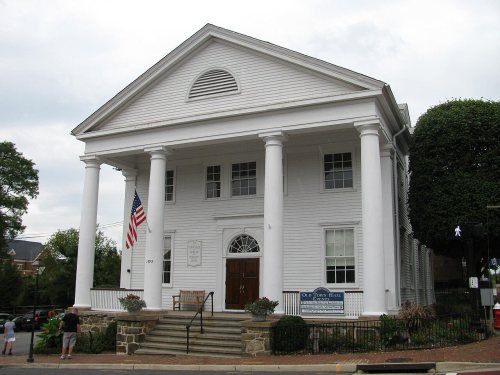
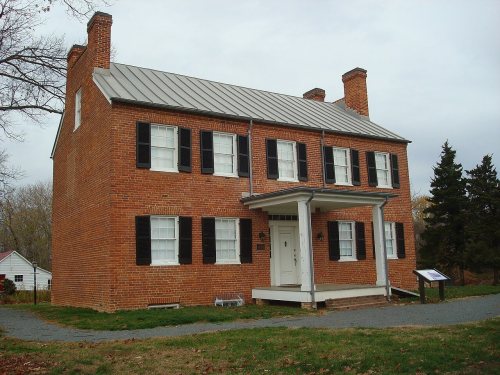
6 listings: 5 buildings, among them the Ratcliffe-Logan-Allison House (listed 1973, the first), and 1 historic district, the City of Fairfax Historic District, with 28 contributing buildings. 33 historic buildings in all.
How old are the homes in Fairfax?
0.3% of Fairfax’s homes were built before 1940 (Census estimate), against a typical 1.9% for a Virginia town; the median home was built in 1967.
Founding dates: Wikidata, Wikipedia, the U.S. post office records of Blevins & Helbock (CC0) and the Census. Homes by year built: Census ACS 2020–24. National Register of Historic Places: National Park Service (list of May 22, 2026). Old photos, postcards and papers: Wikimedia Commons, the Library of Congress and other public archives, credited on each item’s page. Maps: U.S. Geological Survey historical topographic maps (via Esri) and Sanborn fire-insurance maps (Library of Congress). History text and census tables: Wikipedia (CC BY-SA 4.0). Places that used to be: USGS Geographic Names Information System (2021).
From Wikimedia Commons (19), the Library of Congress (5), the National Register of Historic Places (6), Wikipedia, Wikidata and Wikipedia for famous people, U.S. Geological Survey historical maps, U.S. Census counts (via Wikipedia), the US Post Offices dataset (Blevins & Helbock), the USGS Geographic Names Information System and old county and town histories (Internet Archive). Archive images are copied here with their credits and licenses, shown on each photo’s page. Refreshed monthly.






 1861
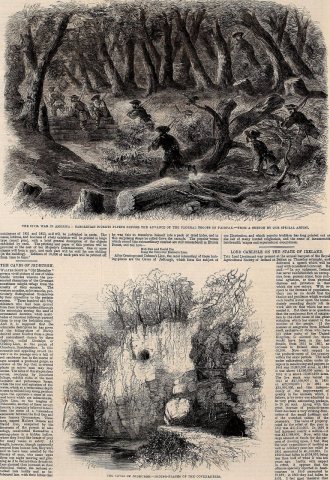 1861
 1863
 1863
 1918
 1918
 1918
 1921
 2006
 2006
 2006
 2006
 2006
 2006
 2006
 2006
 2006
 2004


