 I
Public · listed 1951Market CrossOn the list as Swaffham Market CrossPhoto: John Salmon · CC BY-SA 2.0
 George Hotel · Photo: Stavros1 · CC BY 3.0
B+History Grade
History of Swaffham · Historic England
102 listed buildings, 2 of them Grade I
On the Historic England list, all of them stand inside Swaffham’s built-up area, 121 for every 10,000 residents. Of the listed buildings in Swaffham, 98 are Grade II. We have photos of 6 of its listed buildings. 10% of its homes were built before 1919. Swaffham grades B+ for history: #12 of 51 in Norfolk.
Listed buildings
102
121 per 10,000 residents
Grade I
2
exceptional interest
Grade II*
2
more than special interest
Scheduled monuments
0
nationally important sites
Homes built before 1919
10%
typical UK town 15%
In pictures
Swaffham in 7 photos and old views
Nearly every Grade I and II* building, photographed. Tap a photo to step through them full screen.
 Swaffham Market CrossGrade I listed
 Church of St Peter and St PaulGrade I listed
 Oakleigh HouseGrade II* listed
 Swaffham Methodist ChurchGrade II listed
 18 Market PlaceGrade II listed+2See all photos
Photos from Wikimedia Commons and Geograph, copied to our own server, each credited to its photographer with its licence; names open the building’s page or its official list entry.
Through time
Swaffham in old photos and maps
An old map and 0 old photos and postcards, in date order. All public domain, made before 1950.
 1946
Public domain, from Wikimedia Commons, copied to our own server. Each credit opens the image’s page with its full description and history.
The map
Where Swaffham’s history is
Every Grade I and II* building, monument and historic park, over the age of each neighbourhood’s homes.
Grade IGrade II*
Homes built before 1919, by neighbourhoodunder 10%10–25%25–50%50%+
0 of 6neighbourhoods have mostly pre-1919 homes.
Hover a dot for its name; tap one with a photo to open it.
102 listed buildings by grade
2 Grade I2 Grade II*98 Grade II
Historic England lists buildings in three grades: Grade I for buildings of exceptional interest (about 2.5% of all listed buildings), Grade II* for particularly important buildings of more than special interest (about 5.8%), and Grade II for buildings of special interest (about 91.7%). Listing protects the whole building, inside and out.
Every entry on the National Heritage List for England whose point lies inside the ONS 2022 built-up-area boundary. One list entry can cover a terrace or a group of buildings. Neighbourhood dots: the population-weighted centre of each Census 2021 output area, coloured by its neighbourhood’s (LSOA’s) share of homes built before 1919 (Valuation Office Agency, March 2025).
Grade I
The 2 Grade I listed buildings in Swaffham
Buildings of exceptional interest, about 2.5% of all listed buildings. Every one is photographed. Each opens its own page, with the official list entry.
 I
Church · listed 1951Church of St Peter and St PaulPhoto: John Salmon · CC BY-SA 2.0
Grade II*
The 2 Grade II* listed buildings in Swaffham
Particularly important buildings of more than special interest. 1 is photographed.
 II*
House · listed 1951Oakleigh HousePhoto: Keith Evans · CC BY-SA 2.0
House · listed 1973Manor House Including Attached Service Range to East
Historic streets
Market Place has the most listed buildings
Streets by the listed entries with an address on them. One entry can be a whole terrace, so long rows count once.
Market Place24 listed
London Street9 listed
Station Street4 listed
Of the 102 entries, 42 are named by a street address; the rest are named buildings such as churches, halls and bridges.
What’s protected
Most of Swaffham’s listed buildings are homes
Every listed building sorted by what its list name says it is.
Houses, terraces & villas75
Walls, gates & bridges9
Public & civic buildings8
Inns, shops & warehouses5
Churches, chapels & priories4
Memorials, crosses & tombs1
75 entries (74%) are houses, terraces and villas. 4 are churches, chapels and priories, including 1 of the 2 Grade I buildings.
Buildings are sorted by words in each entry’s name (church, gate, inn, memorial…): the list’s open data has no building type. An entry named only by its address counts as a house.
Grade II
98 Grade II listed buildings
Most listed buildings are in this grade, which covers buildings of special interest. Open any building to read its official list entry.
All 98 Grade II listed buildings, A to Z
Assembly RoomsAston House and Dalton HouseBaptist Chapel and HallBarn and Stock Houses with Enclosing Wall North West of Manor FarmhouseBeech HouseBoundary Wall South of Number 62 (Holly House)Boundary Walls to East and North of Numbers 24 and 26Church CottageChurchyard Walls East of White Lodge Including Churchyard Gates at East EndChurchyard Walls to West of White LodgeCranglegate, 59 Market PlaceCrown CottageEversley HouseFincham HouseFitzroy HouseFormer Corn Hall, 7 Market PlaceFront Wall to North of Numbers 16 and 18 Oakleigh HouseGate piers and flanking walls north of 18 Market PlaceGate piers to Whitsands Road and boundary wall south-west of 20 Market PlaceGates to Churchyard of St Peter and St PaulGeorge HotelGlaisdaleGradys HotelHolly House Flats a-GHolmwood HouseK6 Telephone Kiosk to the north of the former Corn HallLondon House, 3 Market PlaceManor Farmhouse Including Attached Wing to NorthMontpelier House and Western House, 89 and 91 Market PlaceOrwell HousePoint HouseRed LionShirley HouseStable Block and Cart Shed North West of Manor FarmhouseStrattons HotelSwaffham Methodist ChurchSwaffham War MemorialThe Church RoomsThe Greyhound InnThe ShirehallThe White HartThornton HouseTown Hall and attached front railingsTown PoundVentnor House, 11 London StreetWestgate and Fernside, London StreetWhite Lion InnWhite LodgeWood FarmhouseYork House1 London Street10 Market Place10, Cley Road11 and 12 Market Place12, Cley Road12, Station Street13 Market Place14 Market Place14, Station Street15 Market Place15a Market Place16 and 18 London Street17, 17A and 19, Station Street18 Market Place19, 19a and 19b Market Place2 Market Place20 London Street20 Market Place21 and 23 Market Place21, Station Street22-23 Market Place and 1-8 Plowright Place25 and 25a Market Place25, London Street26, 28 and 30 Market Place27 and 27A Market Place (Currently listed as 27 Market Place)27, London Street29 Market Place31, 31b and 31c Market Place33 Market Place34 and 34A Market Place35 Market Place38 Market Place39 and 41 Market Place39, London Street4 Market Place4-16, Lynn Street40, 42 and 44, London Street46 and 48 Market Place5 and 7 London Street50, 50A and 50B Market Place53, 55 and 57 Market Place63 Market Place8, 8a and 8b Market Place83 and 83a Market Place85 Market Place9 London Street9 Market Place93 and 95 Market Place
Conservation areas
1 conservation area covers 14% of Swaffham
Areas the council protects as a whole: demolition and changes to how buildings look need consent, and trees are protected.
Swaffham 197441 ha
41 hain conservation areas, of 304 ha inside the built-up area.
100 of the 102 listed buildings stand in one.
Historic England’s conservation areas layer, supplied by councils (incomplete in places, so a page fact, never graded). Hectares are the part of each area inside the built-up area.
How the list grew
More than half of Swaffham’s listed buildings were added in one year, 1973
The year each building now on the list was first listed.
1973 · 721951 · 121995 · 12
19501960197019801990200020102020
The first 1 entry was listed in 1950. 72 came in 1973, in the national resurvey of the 1970s and 80s. Only 1 has been added in the last 15 years.
History Grade
Swaffham grades B+ for history
Protected heritage and the age of the town’s homes, against all UK towns.
Protected heritage, for its size and in all (108 points, 128 per 10,000 residents)More than 82% of UK towns
Homes built before 1919 (10%)More than 25% of UK towns
Two measures, each ranked against every UK town of 1,000 or more, with protected heritage counting twice as much as the age of homes. Protected heritage counts each listed building by its grade (Grade I three points, II* two, II one), each scheduled monument and battlefield two, and each registered park or garden by its grade; it is ranked both per 10,000 residents and as a total, so a village with one fine church doesn’t outrank a historic city. The second measure is the share of homes built before 1919, from the Valuation Office Agency’s council tax records. History is a character grade: it describes the town and isn’t part of the overall grade.
Born here
5 notable people born in Swaffham before 1900
Their lives on one timeline, earliest first.
Robert Robinson
Samuel Alpe
Arthur Wilson
Edward Rose
Hilda Plowright
170017501800185019001950
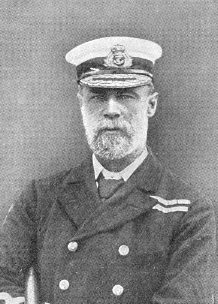
Arthur Wilson1842–1921 · Royal Navy officer (1842-1921)

Robert Robinson1735–1790 · Baptist Minister (1735-1790)
HP
Hilda Plowright1890–1973 · British actress (1890-1973)
SA
Samuel Alpe1834–1918 · Cricketer (1834-1918)

Edward Rose1849–1904 · British dramatist (1849-1904)
Everyone born in Swaffham → Birthplaces from Wikidata; portraits from Wikimedia Commons.
Towns its size
Swaffham has the 49th most Grade I buildings of 722 towns its size
Places of 5,000–13,000 people outside London, by Grade I listed buildings.
Swaffham2
#111 of 722for listed buildings per resident (121 per 10,000). Brecon, Dartmouth and Malmesbury lead.
48 have more. The typical town its size has 0.
Neighbours
Listed buildings in the places around Swaffham
| Town | People | Listed | Grade I | History |
|---|---|---|---|---|
| Swaffham | 8,434 | 102 | 2 | B+ |
| Necton | 1,742 | 6 | 1 | C |
| Ashill | 1,252 | 2 | 1 | C |
| Narborough | 1,362 | 7 | 1 | C+ |
| Saham Toney | 1,287 | 6 | 1 | B− |
| Marham | 2,608 | 9 | 1 | C |
| Watton | 11,549 | 32 | 0 | C+ |
| Shipdham | 2,459 | 16 | 1 | B− |
In brief
Swaffham in brief
Per resident, Swaffham has more listed heritage than 82% of UK towns. All told, the list holds 102 listed buildings, 2 of them Grade I, including Market Cross. Only 48 of the 722 towns nearest its size have more Grade I buildings. On Market Place alone there are 24 listed buildings.
A conservation area has protected part of it since 1974. Of the whole list, 74% are houses, terraces and villas. Arthur Wilson (1842), Robert Robinson (1735) and Hilda Plowright (1890) are among the 5 people born here before 1900. Otherwise the figures are ordinary: 10% of its homes were built before 1919, close to the 15% in the typical UK town.
Questions about Swaffham’s history
How many listed buildings are there in Swaffham?
Historic England lists 102 buildings inside Swaffham’s built-up area: 2 Grade I, 2 Grade II* and 98 Grade II.
What are the Grade I listed buildings in Swaffham?
2, including Church of St Peter and St Paul and Swaffham Market Cross.
Which street in Swaffham has the most listed buildings?
Market Place (24), London Street (9) and Station Street (4) have the most listed entries named by an address. One entry can be a whole terrace.
How many conservation areas are there in Swaffham?
1, covering about 41 hectares of the town. The largest is Swaffham.
When were Swaffham’s buildings listed?
The first in 1950; the most, 72, in 1973.
Who was born in Swaffham?
Among people born before 1900: Arthur Wilson (1842), Robert Robinson (1735), Hilda Plowright (1890), Samuel Alpe (1834) and Edward Rose (1849).
How old are the homes in Swaffham?
10% of homes were built before 1919 and 14% before 1940, from the Valuation Office Agency’s council tax records (March 2025).
© Historic England 2026. Contains Ordnance Survey data © Crown copyright and database right 2026. The National Heritage List for England is the official, up-to-date register of all nationally protected historic buildings and sites in England; check an entry on Historic England’s website before relying on it.
Sources: Historic England, National Heritage List for England (listed buildings, scheduled monuments, registered parks and gardens, battlefields, World Heritage Sites), October 2026, inside the ONS 2022 built-up-area boundary · Valuation Office Agency, Council Tax: stock of properties by build period (31 March 2025) · TownRatings grades: our own summary of the data, ranked against UK towns only · Historic England conservation areas (supplied by local planning authorities; October 2026). All under the Open Government Licence v3.0.
Contains public sector information licensed under the Open Government Licence v3.0. Contains HM Land Registry data © Crown copyright and database right 2026. Contains OS data © Crown copyright and database right 2026 (ONS boundaries). Northern Ireland: Source: NISRA; contains Land & Property Services data and Ordnance Survey of Northern Ireland information, © Crown copyright, licensed under the Open Government Licence v3.0. Scotland: contains National Records of Scotland data, Registers of Scotland data and SEPA data, © Crown copyright / © SEPA 2025, licensed under the Open Government Licence v3.0.