Fort Worth has 103 places on the National Register
More historic than 79% of U.S. towns · #33 of 642 in Texas. What drives it
Dated to 1849 (Wikidata and Wikipedia’s history), with 6% of its homes built before 1940 and 18 historic districts holding 2,094 contributing buildings. Most of Fort Worth was built recently: 6% of its homes predate 1940 and the median home dates from 1994. Below: 15 old photos and papers, maps from 1885 on, the census since 1880, and every listing on the Register.
Founding year: Wikidata; Wikipedia’s history section gives the same year. First post office: 1856.The full story ↓
History grade
What drives Fort Worth’s History grade
On its age, its old homes and the National Register, Fort Worth is more historic than 79% of U.S. towns, #33 of 642 in Texas. Its National Register listings hold the grade up; its share of homes from before 1940 pulls it down.
A−
HistoryA character grade: shown, never part of Fort Worth’s overall grade.
Among the 400 U.S. cities of 100,000 or more, Fort Worth ranks #128 on History.
Few Texas towns list much on the Register (a typical Texas town has 0.0 per 10,000 residents, the U.S. 2.4), so Fort Worth’s 21.7 sits above most of its state (91% of Texas towns have fewer) while its 2,094 historic buildings outnumber those of 99% of U.S. towns.
How sure. Graded on any two of the three inputs instead, the letter would range from B− to A. The pre-1940 share (±0.3 points) is firm at this size. Two sources give 1849. A citywide figure averages neighborhoods that differ a lot.
Founding year: Wikidata (other dates in Quick answers). Homes: Census ACS 2020–24. National Register: National Park Service, May 2026 list; each listing counted once (boundary changes and added documentation belong to their listing), and a historic district counts its contributing buildings. How TownRatings grades history →
What stands out about Fort Worth’s past
Read from the archive, the National Register and the record. The page puts what stands out first.
National Park Service, National Register of Historic Places. Photos from Wikimedia Commons, credited on each place’s page.
Places that used to be
Lost post offices, old corners, places now gone and burying grounds
Fort Worth’s post office has been open since 1856. Seven other post offices opened and closed inside today’s town.
Fort Worth
1856–today
Oak Grove
1873–1901
Handley
1876–1947
Ederville
1887–1891
Avondale
1891–1922
Polytechnic
1898–1898
Tarrant
1905–1923
Seminary Hill
1920–1944
18501940today
Hamlets and corners on the map
Alta Vista Mobile Home ParkAvondaleBelt JunctionEagle MountainEdervilleGarden AcresHandleyIonaLake Crest EstatesLytleMeadow Glen Mobile Home ParkMelody HillsMoselleOak GrovePine Tree Estates Number 2PrimroseTarrantWestland
Gone or out of use
Carswell Air Force BasemilitaryCircle C Ranch AirportairportFlight Safety Texas HeliportairportFort Worth Army Air FieldmilitaryJmk International Incorporated HeliportairportLuck FieldairportMallick Tower HeliportairportPlaza Medical Center of Fort WorthhospitalSW Region FAA Heliportairport
15cemeteries and burying grounds inside Fort Worth
GreenwoodHandleyHarrisonHebrewHebrew RestIshamLake ComoLauren Land Memorial ParkMount OlivetOakwoodOld TrinityPioneers RestRay-ManshipRose Hill ParkSweets Chapel
US Post Offices dataset (Blevins & Helbock, CC0). Places and cemeteries from the USGS Geographic Names Information System (2021).
The Treaty of Bird's Fort between the Republic of Texas and several Native American tribes was signed in 1843 at Bird's Fort in present-day Arlington, Texas. Article XI of the treaty provided that no one may "pass the line of trading houses" (at the border of the Indians' territory) without permission of the President of Texas, and may not reside or remain in the Indians' territory. These "trading houses" were later established at the junction of the Clear Fork and West Fork of the Trinity River in present-day Fort Worth.
educational training in the local schools. Leaving home at eighteen, he began working on the railroads, and was first employed as a trucker in a freight house at Fort Worth, to which city he came in 1877, and remained with the Texas & Pacific Railroad until 1887, rising to be chief clerk in the freight office.
Text read by machine from the scan; it may contain errors.
ional training in the local schools. Leavime at eighteen, he began working on lilroads, and was first employed as a r in a freight house at Fort Worth, to city he came in 1877, and remained 1 ■ Texas & Pacific Railroad until 1887, lo be chief clerk in the freight office.
Text read by machine from the scan; it may contain errors.
Scans and text from the Internet Archive. Books published in 1930 or earlier, which are in the public domain.
Timeline
Fort Worth, 1849 to 1955
Woven from the archive, old maps, post office records, the National Register and the people born here.
Nothing in the archives for these yearsWeddings on Main Street, storms, parades, school pictures, the old store. If it’s in your family album, it belongs here.
Every edition of the U.S. Geological Survey’s map of Fort Worth. Tap a year, or press play to watch the town change.
1955Fort Worth sheet · 1:24,000
U.S. Geological Survey historical topographic maps (public domain), via Esri’s collection of the scans. The red ring marks the center of Fort Worth.
Every building
Fort Worth, building by building, 1885–1911
Fire insurance maps drew every building, what it was made of and what it was used for, so insurers could price the risk of fire. Pick a year, then a sheet.
In 1849, according to Wikidata and Wikipedia’s history of the town. Fort Worth’s post office opened in 1856, and the census of 1880 counted 6,663 people here.
How does Fort Worth rank for history?
Fort Worth is more historic than 79% of U.S. towns, #33 of 642 in Texas. The History grade combines the town’s founding era, the share of homes built before 1940 and its National Register listings. It’s a character grade, so it isn’t part of the overall grade. How it works.
What is on the National Register in Fort Worth?
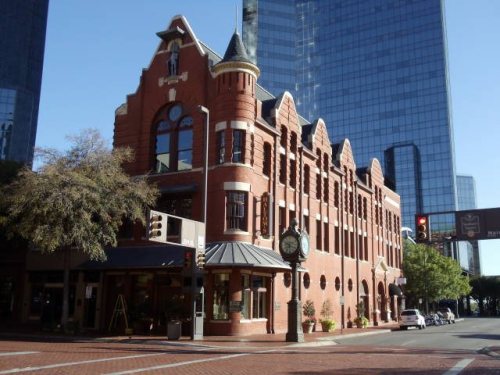
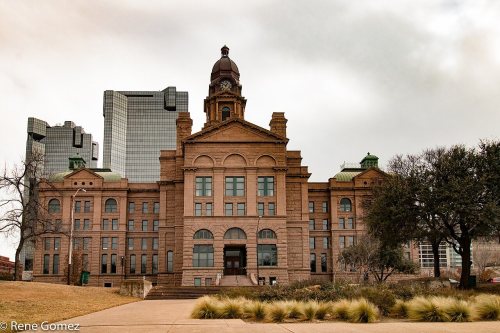
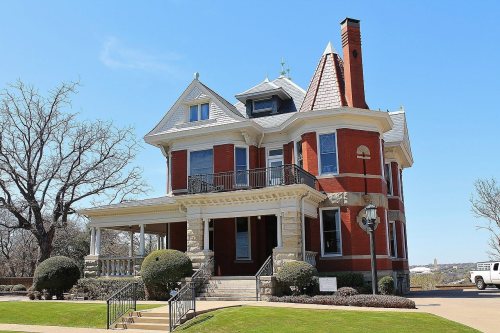
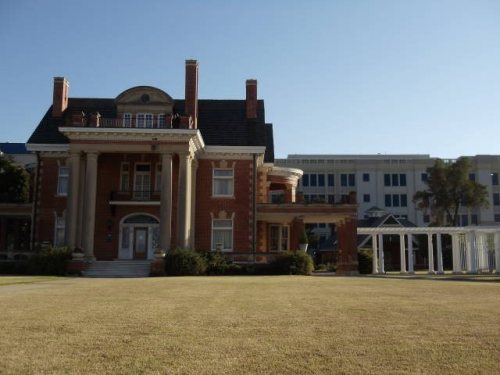
103 listings: 81 buildings, among them the Knights of Pythias Building (listed 1970, the first), 18 historic districts with 1,992 contributing buildings, 1 site, and 3 structures. 2,094 historic buildings in all.
How old are the homes in Fort Worth?
6% of Fort Worth’s homes were built before 1940 (Census estimate), against a typical 1.6% for a Texas town; the median home was built in 1994.
Founding dates: Wikidata, Wikipedia, the U.S. post office records of Blevins & Helbock (CC0) and the Census. Homes by year built: Census ACS 2020–24. National Register of Historic Places: National Park Service (list of May 22, 2026). Old photos, postcards and papers: Wikimedia Commons, the Library of Congress and other public archives, credited on each item’s page. Maps: U.S. Geological Survey historical topographic maps (via Esri) and Sanborn fire-insurance maps (Library of Congress). History text and census tables: Wikipedia (CC BY-SA 4.0). Places that used to be: USGS Geographic Names Information System (2021).
From Wikimedia Commons (11), the Library of Congress (4), Wikidata (3), the National Register of Historic Places (103), Wikipedia, Wikidata and Wikipedia for famous people, U.S. Geological Survey historical maps, U.S. Census counts (via Wikipedia), the US Post Offices dataset (Blevins & Helbock), the USGS Geographic Names Information System, Sanborn fire insurance maps (Library of Congress) and old county and town histories (Internet Archive). Archive images are copied here with their credits and licenses, shown on each photo’s page. Refreshed monthly.






 1902
 1905
 1905
 1905
 1905
 1905
 1908
 1910
 1912
 1915
 1917
 1917


