Franklin dates to 1799, and 54 of its places are on the National Register
More historic than 70% of U.S. towns · #40 of 177 in Tennessee. What drives it
Most of Franklin was built recently: 2% of its homes predate 1940 and the median home dates from 2002. 54 places in town are on the National Register, among them 2 National Historic Landmarks and eight historic districts with 435 buildings between them. Below: 4 old photos and papers, maps from 1888 on, and the census since 1870.
Founding year: Wikidata. First post office: 1801.The full story ↓
History grade
What drives Franklin’s History grade
On its age, its old homes and the National Register, Franklin is more historic than 70% of U.S. towns, #40 of 177 in Tennessee. Its National Register listings hold the grade up; its share of homes from before 1940 pulls it down.
B+
HistoryA character grade: shown, never part of Franklin’s overall grade.
Tennessee towns list more on the Register than most of the country (a typical Tennessee town has 6.1 per 10,000 residents, the U.S. 2.4), so Franklin’s 57.6 sits above most of its state (85% of Tennessee towns have fewer) while its 502 historic buildings outnumber those of 97% of U.S. towns.
How sure. Graded on any two of the three inputs instead, the letter would range from C+ to A. The pre-1940 share (±0.7 points) is firm at this size. Two sources give 1799.
Founding year: Wikidata (other dates in Quick answers). Homes: Census ACS 2020–24. National Register: National Park Service, May 2026 list; each listing counted once (boundary changes and added documentation belong to their listing), and a historic district counts its contributing buildings. How TownRatings grades history →
What stands out about Franklin’s past
Read from the archive, the National Register and the record. The page puts what stands out first.
The country’s official list of buildings and places worth saving. 2 are National Historic Landmarks, the highest tier. Boundary changes and added documentation are counted with their listing.
The City of Franklin was founded October 26, 1799, by Abram Maury Jr. (1766–1825). Later a state senator, he is buried with his family in the current Founders Pointe neighborhood. Maury named the town after national founding father Benjamin Franklin.
Ewen Cameron built a log house in 1798, the first in the new settlement. Cameron was born February 23, 1768, in Bogallan, Ferintosh, Scotland. He emigrated to Virginia in 1785 and came to Tennessee shortly after it was admitted to the Union. Cameron died on February 28, 1846, after living 48 years in the same house. He and his second wife, Mary, were buried in the old City Cemetery.
Passages that mention Franklin, cut from the printed page as they were published.
History of Tennessee, from the earliest time to the present1886 · page 788Read the page →
Read the text
The first grist-mill in the southern part of Franklin County, was built by George Stovall about the 3'ear 1810, and as early as 1815 Districts Nos. 2 and 3 had over a dozen cotton-gins. This county at that early day was one of the leading cotton-producing counties of the State. The cotton was shipped out of the Elk River on flat-boats, and thence by way of the Tennessee 'and Mississippi Rivers to New Orleans, where it was sold for from If to 2i cents per pound. Peter Simmons, John R. Patrick and Dick Holder, early merchants of Salem, used to ship large quantities of cotton on "flats" from the raouth of Bean Creek to New Orleans, and then walk back through the Chickasaw and
Text read by machine from the scan; it may contain errors.
History of Tennessee, from the earliest time to the present1886 · page 789Read the page →
Read the text
courts-martial should be held at the same place, or place of holding courts. By a subsequent act, passed November 14, 1809, creating the county of Lincoln, all the territory east of Lincoln, south of Bedford and north of the State line, was attached to and made a part of Franklin County. And by later acts of the General Assembly creating Moore, Coflfee, Grundy and Marion Counties, Franklin has been reduced to its present limits. Before the organization of Franklin County a portion of its territory lay in what was then called White County, and in many of the original conveyances the lands were described as being in White County. The early records of the county court, or court of quarter ses-
Text read by machine from the scan; it may contain errors.
Scans and text from the Internet Archive. Books published in 1930 or earlier, which are in the public domain.
Timeline
Franklin, 1799 to 1995
Woven from the archive, old maps, post office records, the National Register and the people born here.
Every edition of the U.S. Geological Survey’s map of Franklin. Tap a year, or press play to watch the town change.
1909Franklin sheet · 1:62,500
U.S. Geological Survey historical topographic maps (public domain), via Esri’s collection of the scans. The red ring marks the center of Franklin.
Every building
Franklin, building by building, 1888–1913
Fire insurance maps drew every building, what it was made of and what it was used for, so insurers could price the risk of fire. Pick a year, then a sheet.
In 1799, according to Wikidata. Franklin’s post office opened in 1801, and the census of 1870 counted 1,552 people here.
How does Franklin rank for history?
Franklin is more historic than 70% of U.S. towns, #40 of 177 in Tennessee. The History grade combines the town’s founding era, the share of homes built before 1940 and its National Register listings. It’s a character grade, so it isn’t part of the overall grade. How it works.
What is on the National Register in Franklin?
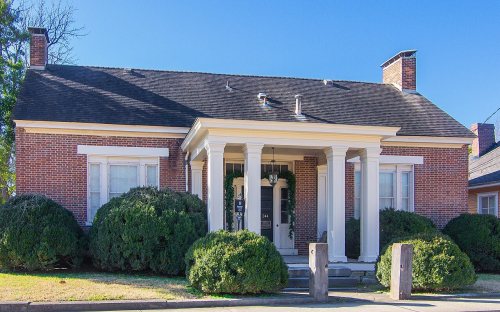
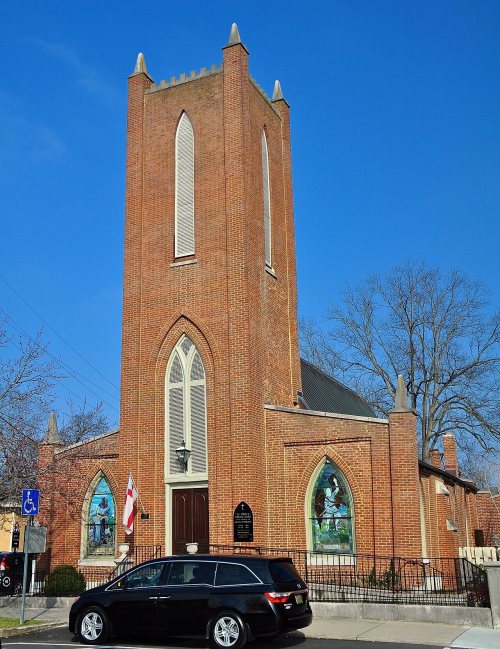
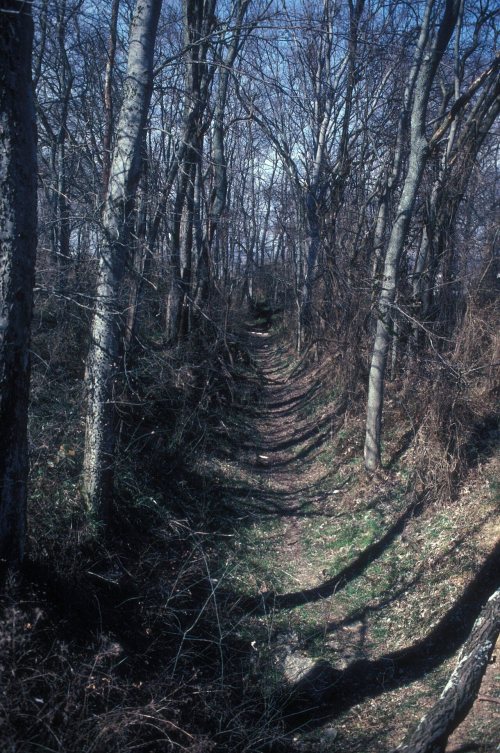
54 listings, 2 of them National Historic Landmarks: 40 buildings, 8 historic districts with 435 contributing buildings, and 7 sites. 502 historic buildings in all.
How old are the homes in Franklin?
2% of Franklin’s homes were built before 1940 (Census estimate), against a typical 4.9% for a Tennessee town; the median home was built in 2002.
Founding dates: Wikidata, Wikipedia, the U.S. post office records of Blevins & Helbock (CC0) and the Census. Homes by year built: Census ACS 2020–24. National Register of Historic Places: National Park Service (list of May 22, 2026). Old photos, postcards and papers: Wikimedia Commons, the Library of Congress and other public archives, credited on each item’s page. Maps: U.S. Geological Survey historical topographic maps (via Esri) and Sanborn fire-insurance maps (Library of Congress). History text and census tables: Wikipedia (CC BY-SA 4.0). Places that used to be: USGS Geographic Names Information System (2021).
From Wikimedia Commons (4), Wikidata (2), the National Register of Historic Places (55), Wikipedia, Wikidata and Wikipedia for famous people, U.S. Geological Survey historical maps, U.S. Census counts (via Wikipedia), the US Post Offices dataset (Blevins & Helbock), the USGS Geographic Names Information System, Sanborn fire insurance maps (Library of Congress) and old county and town histories (Internet Archive). Archive images are copied here with their credits and licenses, shown on each photo’s page. Refreshed monthly.

 ★ Landmark
 ★ Landmark


 1864
 1864
 1864


