The name of Burrillville's principal village, Pascoag, named after the Pascoag River upon which it is located, probably derives from an Algonquian Indian root. The Nipmuc word for snake was rendered "askug" by Roger Williams in his A Key Into the Language of America, and "askoog" by the Reverend John Eliot in his Algonquian translation of the Bible.
Passages that mention Pascoag, cut from the printed page as they were published.
History of Providence County, Rhode Island1891 · page 551Read the page →
Read the text
portunity of throwing off their allegiance. The Kipmuck river, formed by the union of three streams, was named after them. The Pascoags were another tribe that inhabited this section, and the village of Pascoag is named in remembrance of them. Tradition says " coag " meant snake, and as there were formerly a great quantity of snakes here, wherever they went they were accustomed to say " passcoag." " Black Hut " was the name of an old Indian wigwam that was in this locality. Now instead of the roar of the beast and the
Text read by machine from the scan; it may contain errors.
History of Providence County, Rhode Island1891 · page 564Read the page →
Read the text
The Free-will Baptist church of Pascoag was the first society of this denomination organized in the state. Elder Colby gathered a church membership here and organized the society December 15th, 1812. On February 11th, 1813, was held the first meeting, and the first Free-will Baptist quarterly meeting held in the state was at the old Burrillville meeting house on the 12th of March, 1814. Elder Colby was the active pastor of this church for a number of years, and until failing health caused his resignation that he might go south for
Text read by machine from the scan; it may contain errors.
Scans and text from the Internet Archive. Books published in 1930 or earlier, which are in the public domain.
By decade
Pascoag, decade by decade
3 decades in the archive, from the 1890s to the 1980s. Scroll each row; tap a photo for its story.
Nothing in the archives for these yearsWeddings on Main Street, storms, parades, school pictures, the old store. If it’s in your family album, it belongs here.
Nothing in the archives for these yearsWeddings on Main Street, storms, parades, school pictures, the old store. If it’s in your family album, it belongs here.
Founding dates: Wikidata, Wikipedia, the U.S. post office records of Blevins & Helbock (CC0) and the Census. Homes by year built: Census ACS 2020–24. National Register of Historic Places: National Park Service (list of May 22, 2026). Old photos, postcards and papers: Wikimedia Commons, the Library of Congress and other public archives, credited on each item’s page. Maps: U.S. Geological Survey historical topographic maps (via Esri) and Sanborn fire-insurance maps (Library of Congress). History text and census tables: Wikipedia (CC BY-SA 4.0). Places that used to be: USGS Geographic Names Information System (2021). How TownRatings grades history →
From Wikimedia Commons (6), Wikipedia, Wikidata and Wikipedia for famous people and old county and town histories (Internet Archive). Archive images are copied here with their credits and licenses, shown on each photo’s page. Refreshed monthly.


 1907–1915
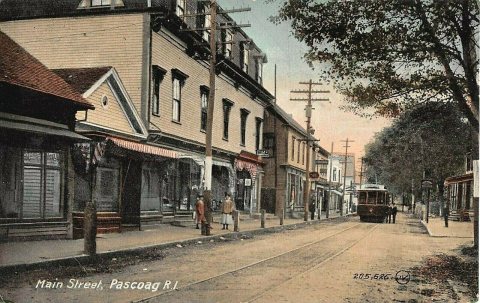 c. 1908
 c. 2005