Middletown dates to 1743, and 17% of its homes were built before 1940
More historic than 81% of U.S. towns · #25 of 38 in Rhode Island. What drives it
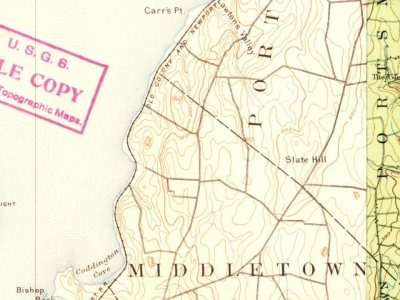
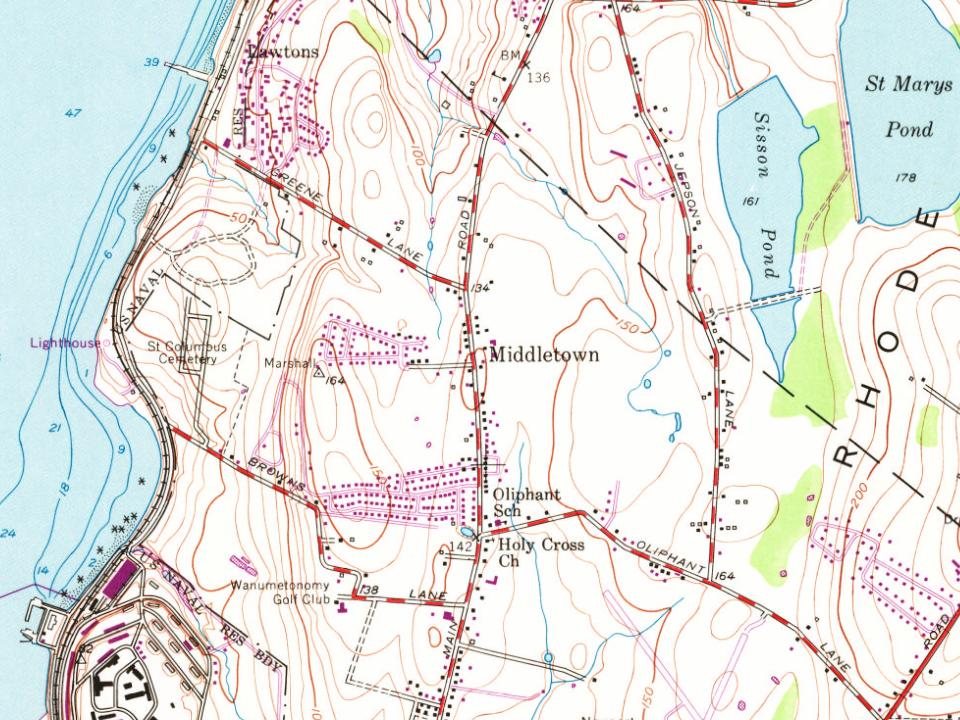
15 places in town are on the National Register, among them two historic districts with 8 buildings between them. Below: 18 old photos and papers, maps from 1890 on, and the census since 1790.
Founding year: Wikidata; Wikipedia’s history section gives the same year. First post office: 1835.The full story ↓
History grade
What drives Middletown’s History grade
On its age, its old homes and the National Register, Middletown is more historic than 81% of U.S. towns, #25 of 38 in Rhode Island. Its age holds the grade up; its National Register listings pull it down.
A−
HistoryA character grade: shown, never part of Middletown’s overall grade.
Rhode Island towns list more on the Register than most of the country (a typical Rhode Island town has 94.7 per 10,000 residents, the U.S. 2.4), so Middletown’s 16.0 sits below most of its state (13% of Rhode Island towns have fewer) while its 27 historic buildings outnumber those of 81% of U.S. towns.
How sure. Graded on any two of the three inputs instead, the letter would range from B to A. The pre-1940 share is a Census survey estimate (±4.5 points). Two sources give 1743.
Founding year: Wikidata (other dates in Quick answers). Homes: Census ACS 2020–24. National Register: National Park Service, May 2026 list; each listing counted once (boundary changes and added documentation belong to their listing), and a historic district counts its contributing buildings. How TownRatings grades history →
What stands out about Middletown’s past
Read from the archive, the National Register and the record. The page puts what stands out first.
Nothing in the archives for these yearsWeddings on Main Street, storms, parades, school pictures, the old store. If it’s in your family album, it belongs here.
Nothing in the archives for these yearsWeddings on Main Street, storms, parades, school pictures, the old store. If it’s in your family album, it belongs here.
Issues including unjust taxation and a growing population caused the freeholders living in the northern section of Newport to petition the General Assembly for independence. As a result of the petition, the land that Middletown occupies was set apart in 1731. The town was incorporated in 1743.
During the 1980s, large sections of East Main Road and West Main Road running through Middletown began to be commercialized, and by the late 1990s, the area had become Aquidneck Island's central business district.
Today, the community boasts a strong business district that relies heavily on Naval Station Newport and defense
Passages that mention Middletown, cut from the printed page as they were published.
History of Newport County, Rhode Island. From the year 1638 to the year 1887, including the settlement of its towns, and their subsequent progress1888 · page 756Read the page →
Read the text
" And be it further enacted by the authority aforesaid, that said town of Middletown shall send one grand and three petit jurors to the superior court of judicature, court of assize and general jail delivery; and three grand and three petit jurors to every inferior court of common pleas and general sessions of the peace held within the county of Newport; and that the town of New2iort shall hereafter send to each of the aforesaid courts so many jurors less of what they are now compelled by
Text read by machine from the scan; it may contain errors.
History of Newport County, Rhode Island. From the year 1638 to the year 1887, including the settlement of its towns, and their subsequent progress1888 · page 791Read the page →
Read the text
Churches. — The first church in the town of Middletown was Sabbatarian, or Seventh Day Baptist. The building occupied by them was near Easton's pond, at Green End. The early settlers held services there a long time, but after the dissolution of this society a hundred years passed before the erection of another meeting house. The people in the interim met in school houses and in private dwelling's. In the year 1829 the " Swamp " meeting house was built. It cost about seven hundred dollars.
Text read by machine from the scan; it may contain errors.
Scans and text from the Internet Archive. Books published in 1930 or earlier, which are in the public domain.
Timeline
Middletown, 1743 to 1973
Woven from the archive, old maps, post office records, the National Register and the people born here.
In 1743, according to Wikidata and Wikipedia’s history of the town. Middletown’s post office opened in 1835, and the first U.S. census counted 840 people here in 1790.
How does Middletown rank for history?
Middletown is more historic than 81% of U.S. towns, #25 of 38 in Rhode Island. The History grade combines the town’s founding era, the share of homes built before 1940 and its National Register listings. It’s a character grade, so it isn’t part of the overall grade. How it works.
What is on the National Register in Middletown?
15 listings: 13 buildings, among them the Whitehall (listed 1970, the first), and 2 historic districts, the Stonybrook Estate Historic District and the Smith-Gardiner-Norman Farm Historic District, with 8 contributing buildings. 27 historic buildings in all.
How old are the homes in Middletown?
17% of Middletown’s homes were built before 1940 (Census estimate, ±4.5 points), against a typical 20% for a Rhode Island town; the median home was built in 1969.
Founding dates: Wikidata, Wikipedia, the U.S. post office records of Blevins & Helbock (CC0) and the Census. Homes by year built: Census ACS 2020–24. National Register of Historic Places: National Park Service (list of May 22, 2026). Old photos, postcards and papers: Wikimedia Commons, the Library of Congress and other public archives, credited on each item’s page. Maps: U.S. Geological Survey historical topographic maps (via Esri) and Sanborn fire-insurance maps (Library of Congress). History text and census tables: Wikipedia (CC BY-SA 4.0). Places that used to be: USGS Geographic Names Information System (2021).
From Wikimedia Commons (20), the Library of Congress (7), Wikidata (7), the National Register of Historic Places (15), Wikipedia, Wikidata and Wikipedia for famous people, U.S. Geological Survey historical maps, U.S. Census counts (via Wikipedia), the US Post Offices dataset (Blevins & Helbock), the USGS Geographic Names Information System and old county and town histories (Internet Archive). Archive images are copied here with their credits and licenses, shown on each photo’s page. Refreshed monthly.




 1914
 1929
 1929
 1929
 1933
 1933
 1933
 1933
 1933
 1933
 1933
 1933
 1933
 1933
 1933
 1973
 1973
 Date?
 2023
 2022
 2018
 2018
 2013
 2012
 2011
 2011
 2010