York dates to 1741, and 49% of its homes were built before 1940
Among the most historic 1% of U.S. towns · #6 of 1,035 in Pennsylvania. What drives it
17 places in town are on the National Register, among them four historic districts with 4,312 buildings between them. Below: 6 old photos and papers, maps from 1887 on, and the census since 1790.
Founding year: Wikidata; Wikipedia’s history section gives the same year. First post office: 1775.The full story ↓
History grade
What drives York’s History grade
On its age, its old homes and the National Register, York is among the most historic 1% of U.S. towns, #6 of 1,035 in Pennsylvania. All 3 inputs put York near the top nationally; its National Register listings ranks highest.
A+
HistoryA character grade: shown, never part of York’s overall grade.
Pennsylvania towns list about as much on the Register as the country (a typical Pennsylvania town has 2.1 per 10,000 residents, the U.S. 2.4), so York’s 964 sits above most of its state (97% of Pennsylvania towns have fewer) while its 4,330 historic buildings outnumber those of 100% of U.S. towns.
How sure. Graded on any two of the three inputs instead, the letter would still be A+. The pre-1940 share is a Census survey estimate (±3.0 points). Two sources give 1741.
Founding year: Wikidata (other dates in Quick answers). Homes: Census ACS 2020–24. National Register: National Park Service, May 2026 list; each listing counted once (boundary changes and added documentation belong to their listing), and a historic district counts its contributing buildings. How TownRatings grades history →
What stands out about York’s past
Read from the archive, the National Register and the record. The page puts what stands out first.
York was also known as Yorktown in the mid-18th to early 19th centuries. It was founded in 1741 by settlers from the Philadelphia region and named for the English city of the same name. By 1777, most of the area residents were of German or Scots-Irish descent. It was incorporated as a borough on September 24, 1787, and as a city on January 11, 1887.
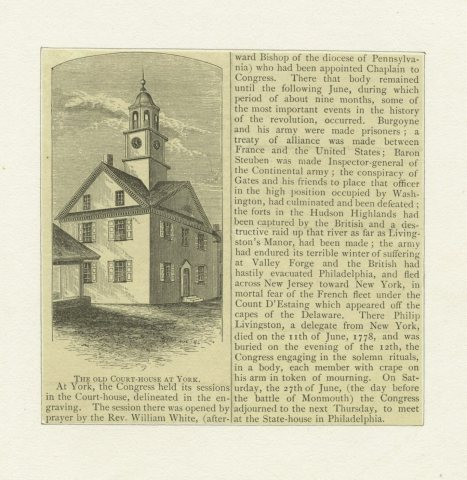
York served as the temporary base for the Continental Congress from September 30, 1777, to June 27, 1778, during the American Revolutionary War (1775–1783). Congress drafted and adopted the Articles of Confederation in York, though they were not ratified until March 1781. Congress met at the Court House that was built in 1754. It was demolished in 1841 and rebuilt in 1976 as Colonial Court House.
Passages that mention York, cut from the printed page as they were published.
History and genealogy of the Mead family of Fairfield county, Connecticut, eastern New York, western Vermont, and western Pennsylvania from A.D. 1180 to 19001901 · page 91Read the page →
Read the text
The War of 1812. 91 about 1727, removed from there to Nine Partners, Dutchess County, New York, and thence to Chenango County, where he permanently settled. At the commencement of the War of 18 1 2, the 17th Regiment, New York Militia, Lieutenant- Colonel Thompson Mead, Commanding, was ordered out on the first day of September, 1812, and participated in the Battle of Queenstown Heights.
Text read by machine from the scan; it may contain errors.
Scans and text from the Internet Archive. Books published in 1930 or earlier, which are in the public domain.
Timeline
York, 1741 to 1960
Woven from the archive, old maps, post office records, the National Register and the people born here.
Every edition of the U.S. Geological Survey’s map of York. Tap a year, or press play to watch the town change.
1908York sheet · 1:62,500
U.S. Geological Survey historical topographic maps (public domain), via Esri’s collection of the scans. The red ring marks the center of York.
Every building
York, building by building, 1887–1894
Fire insurance maps drew every building, what it was made of and what it was used for, so insurers could price the risk of fire. Pick a year, then a sheet.
In 1741, according to Wikidata and Wikipedia’s history of the town. York’s post office opened in 1775, and the first U.S. census counted 2,096 people here in 1790.
How does York rank for history?
York is among the most historic 1% of U.S. towns, #6 of 1,035 in Pennsylvania. The History grade combines the town’s founding era, the share of homes built before 1940 and its National Register listings. It’s a character grade, so it isn’t part of the overall grade. How it works.
What is on the National Register in York?
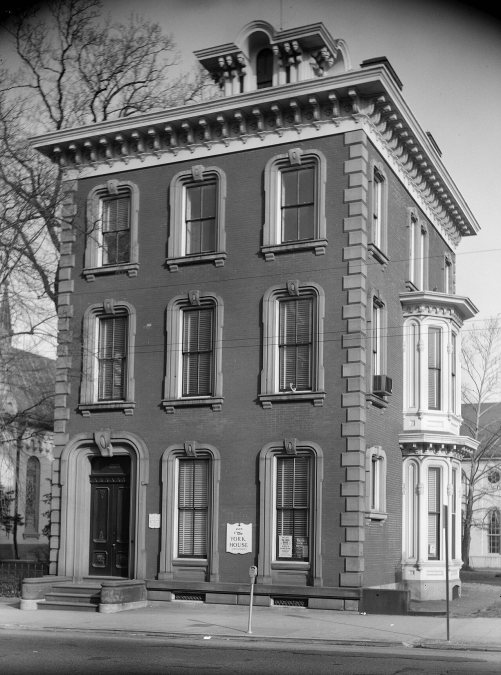
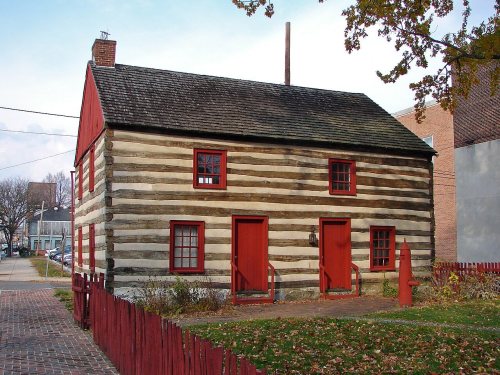
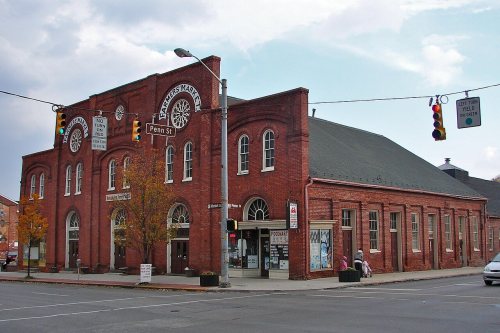
17 listings: 13 buildings, among them the Billmeyer House (listed 1970, the first), and 4 historic districts with 4,312 contributing buildings. 4,330 historic buildings in all.
How old are the homes in York?
49% of York’s homes were built before 1940 (Census estimate, ±3.0 points), against a typical 18% for a Pennsylvania town; the median home was built in 1941.
Founding dates: Wikidata, Wikipedia, the U.S. post office records of Blevins & Helbock (CC0) and the Census. Homes by year built: Census ACS 2020–24. National Register of Historic Places: National Park Service (list of May 22, 2026). Old photos, postcards and papers: Wikimedia Commons, the Library of Congress and other public archives, credited on each item’s page. Maps: U.S. Geological Survey historical topographic maps (via Esri) and Sanborn fire-insurance maps (Library of Congress). History text and census tables: Wikipedia (CC BY-SA 4.0). Places that used to be: USGS Geographic Names Information System (2021).
From Wikimedia Commons (6), the National Register of Historic Places (17), Wikipedia, Wikidata and Wikipedia for famous people, U.S. Geological Survey historical maps, U.S. Census counts (via Wikipedia), the US Post Offices dataset (Blevins & Helbock), the USGS Geographic Names Information System, Sanborn fire insurance maps (Library of Congress) and old county and town histories (Internet Archive). Archive images are copied here with their credits and licenses, shown on each photo’s page. Refreshed monthly.









 1853
 1879


