Newark dates to 1802, and 28% of its homes were built before 1940
More historic than 95% of U.S. towns · #67 of 993 in Ohio. What drives it
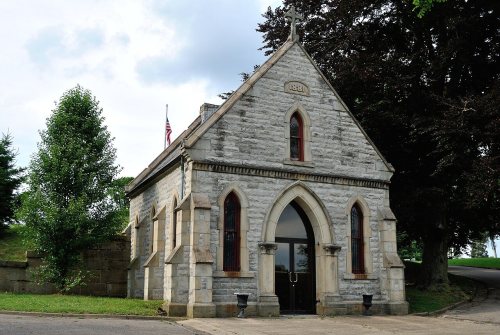
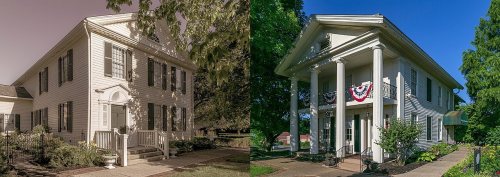
20 places in town are on the National Register, among them the Newark Earthworks, a National Historic Landmark, and two historic districts with 214 buildings between them. Below: maps from 1884 on and the census since 1810.
Founding year: Wikidata. First post office: 1809.The full story ↓
History grade
What drives Newark’s History grade
On its age, its old homes and the National Register, Newark is more historic than 95% of U.S. towns, #67 of 993 in Ohio. All 3 inputs are above most U.S. towns; its National Register listings ranks highest and its age lowest.
A
HistoryA character grade: shown, never part of Newark’s overall grade.
Ohio towns list about as much on the Register as the country (a typical Ohio town has 2.9 per 10,000 residents, the U.S. 2.4), so Newark’s 47.1 sits above most of its state (88% of Ohio towns have fewer) while its 239 historic buildings outnumber those of 94% of U.S. towns.
How sure. Graded on any two of the three inputs instead, the letter would still be A. The pre-1940 share (±2.0 points) is firm at this size. Two sources give 1802.
Founding year: Wikidata (other dates in Quick answers). Homes: Census ACS 2020–24. National Register: National Park Service, May 2026 list; each listing counted once (boundary changes and added documentation belong to their listing), and a historic district counts its contributing buildings. How TownRatings grades history →
What stands out about Newark’s past
Read from the archive, the National Register and the record. The page puts what stands out first.
Cultures of indigenous peoples lived along the river valleys for thousands of years before European contact. From more than two thousand years ago, 100 AD to 500 AD, people of the Hopewell culture transformed the area of Newark and Heath. They built many earthen mounds and enclosures, creating the single largest earthwork complex in the Ohio River Valley. The Newark Earthworks, designated a National Historic Landmark, have been preserved to document and interpret the area's significant ancient history. The earthworks cover several square miles and about 206 acres. This is operated as a state park by the Ohio History Connection.
Passages that mention Newark, cut from the printed page as they were published.
History of Licking County, Ohio1881 · page 567Read the page →
Read the text
money for the first Methodist “meeting house” in Newark : “Methodist Episcopal Meeting House. — A subscription addressed to the generous people of the town of Newark and its vicinity for the sole purpose of obtaining funds and materials for building said house in the town of Newark, on a lot obtained from Thomas Reed, on Fourth street, a few rods north of the old burying-ground — We, the subscribers, from
Text read by machine from the scan; it may contain errors.
History of Licking County, Ohio1881 · page 535Read the page →
Read the text
In addition to the plat and destription of the town of Newark, we, the subscribers, inhabitants, of the town of Newark, do certify that the following alteration in the plan of the town of Newark was made by William C. Schenck previous to his making sale of lots in said town, and that the said alteration was made by and with our advice and consent, to-wit: A street four rods wide on the north, south and west sides of the town, and alleys two rods wide, extending from the said street on the north side
Text read by machine from the scan; it may contain errors.
Centennial History of the City of Newark and Licking country Ohio1909 · page 581Read the page →
Read the text
No event of especial importance oceurred to vary the routine of life for William Frederick Wulfhoop in his boyhood days. He attended the public schools and divided his time between the pleasures of the playground and various duties assigned him by his parents. After leaving high school at Newark he became a student in Professor Beeney’s Business College, and in 1893 entered the county recorder’s office as deputy county recorder, in which position he capably served for six years. In 1900 he was elected constable of the city of Newark and the township, and in 1903 was reélected to the office. On the expiration of that term he engaged
Text read by machine from the scan; it may contain errors.
Centennial History of the City of Newark and Licking country Ohio1909 · page 500Read the page →
Read the text
It must have been between the years 1830 and 1835 that ex-President John Quiney Adams came to Newark to lecture on “Education.” He came by stage to Portsmouth and by canal to Hebron, where he was met by a number of Newark citizens, and by them escorted on canal boat to Newark. His lecture was delivered in the First Presbyterian church.
Text read by machine from the scan; it may contain errors.
Scans and text from the Internet Archive. Books published in 1930 or earlier, which are in the public domain.
Timeline
Newark, 1802 to 1964
Woven from the archive, old maps, post office records, the National Register and the people born here.
Every edition of the U.S. Geological Survey’s map of Newark. Tap a year, or press play to watch the town change.
1909Newark sheet · 1:62,500
U.S. Geological Survey historical topographic maps (public domain), via Esri’s collection of the scans. The red ring marks the center of Newark.
Every building
Newark, building by building, 1884–1920
Fire insurance maps drew every building, what it was made of and what it was used for, so insurers could price the risk of fire. Pick a year, then a sheet.
In 1802, according to Wikidata. Newark’s post office opened in 1809, and the census of 1810 counted 232 people here.
How does Newark rank for history?
Newark is more historic than 95% of U.S. towns, #67 of 993 in Ohio. The History grade combines the town’s founding era, the share of homes built before 1940 and its National Register listings. It’s a character grade, so it isn’t part of the overall grade. How it works.
What is on the National Register in Newark?
20 listings: 16 buildings, 2 historic districts, the Hudson Avenue Historic District and the Newark Downtown Historic District, with 214 contributing buildings, 1 site, and 1 structure. 239 historic buildings in all.
How old are the homes in Newark?
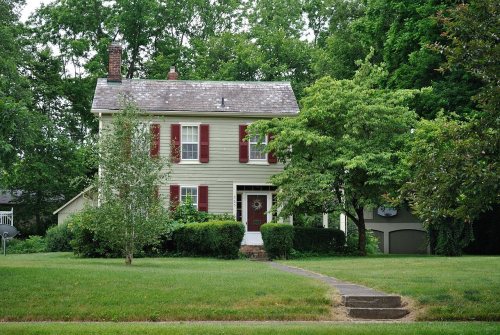
28% of Newark’s homes were built before 1940 (Census estimate, ±2.0 points), against a typical 15% for an Ohio town; the median home was built in 1963.
Founding dates: Wikidata, Wikipedia, the U.S. post office records of Blevins & Helbock (CC0) and the Census. Homes by year built: Census ACS 2020–24. National Register of Historic Places: National Park Service (list of May 22, 2026). Old photos, postcards and papers: Wikimedia Commons, the Library of Congress and other public archives, credited on each item’s page. Maps: U.S. Geological Survey historical topographic maps (via Esri) and Sanborn fire-insurance maps (Library of Congress). History text and census tables: Wikipedia (CC BY-SA 4.0). Places that used to be: USGS Geographic Names Information System (2021).
From Wikidata (6), the National Register of Historic Places (20), Wikipedia, Wikidata and Wikipedia for famous people, U.S. Geological Survey historical maps, U.S. Census counts (via Wikipedia), the US Post Offices dataset (Blevins & Helbock), the USGS Geographic Names Information System, Sanborn fire insurance maps (Library of Congress) and old county and town histories (Internet Archive). Archive images are copied here with their credits and licenses, shown on each photo’s page. Refreshed monthly.


 ★ Landmark