Grove City’s post office opened in 1852, and 3 of its places are on the National Register
More historic than 38% of U.S. towns · #774 of 993 in Ohio. What drives it
Most of Grove City was built recently: 5% of its homes predate 1940 and the median home dates from 1995. Its Register listings are the Gantz Homestead, the Samuel Landes House and the A. G. Grant Homestead. Below: 2 old photos and papers, maps from 1922 on, and the census since 1870.
Founding year: the first Grove City post office (Blevins & Helbock, CC0).The full story ↓
History grade
What drives Grove City’s History grade
On its age, its old homes and the National Register, Grove City is more historic than 38% of U.S. towns, #774 of 993 in Ohio. Its National Register listings hold the grade up; its share of homes from before 1940 pulls it down.
C+
HistoryA character grade: shown, never part of Grove City’s overall grade.
Ohio towns list about as much on the Register as the country (a typical Ohio town has 2.9 per 10,000 residents, the U.S. 2.4), so Grove City’s 1.2 sits near the middle of its state (50% of Ohio towns have fewer) while its 5 historic buildings outnumber those of 70% of U.S. towns.
How sure. Graded on any two of the three inputs instead, the letter would range from C− to C+. The pre-1940 share (±1.8 points) is firm at this size. The founding year is the first post office, not a stated founding date.
Founding year: the first post office (other dates in Quick answers). Homes: Census ACS 2020–24. National Register: National Park Service, May 2026 list; each listing counted once (boundary changes and added documentation belong to their listing), and a historic district counts its contributing buildings. How TownRatings grades history →
What stands out about Grove City’s past
Read from the archive, the National Register and the record. The page puts what stands out first.
Grove City’s post office has been open since 1852.
Hamlets and corners on the map
Autumn GroveBarfield HeightsBriarwood HillsBrook ParkBrookgroveChestnut FarmsClaybrooke CrossingsConcord LakesConcord ParkCreeksideElginfieldFarmbrookGrant Run EstatesGrove City Country ClubGrove City HeightsHaughn GlenHawthorne WoodsHennigans GroveHeritage GlenHigh MeadowHighland ParkHolton RunHoover CrossingHoover Park
Gone or out of use
Barbee Schoolschool
1cemetery inside Grove City
Grove City
US Post Offices dataset (Blevins & Helbock, CC0). Places and cemeteries from the USGS Geographic Names Information System (2021).
Help out
Start Grove City’s collection
The first neighbors to add old photos shape how Grove City’s history is told.
Decades since 1900 with photos
00s10s20s30s40s50s60s70s80s90s
1 of 10 decades. The empty ones are waiting for someone’s album.
The City of Grove City was founded in 1852. It was first incorporated as a village on March 5, 1866. Later, due to rapid growth, it was reincorporated and officially recognized as a city in 1959.
Until the mid-19th century, the area that is now Grove City was a wilderness filled with oak, beech, maple, walnut, dogwood and other trees. The area's first European settler, Hugh Grant, operated a gristmill in Pittsburgh and transported excess goods down the Ohio River for sale, returning to Pittsburgh on foot. On one of these trips, he passed through the Scioto Valley region and in 1803, purchased the land that would become Grove City and returned with his wife Catharine to start a new life.
Passages that mention Grove City, cut from the printed page as they were published.
Centennial history of Columbus and Franklin County, Ohio1909 · page 434Read the page →
Read the text
eighty-four; in 1850 it had risen to one thousand five hundred and fifty; in 1858, one thousand six hundred and seventy-five; in 1900, two thousand two hundred and eighty-nine, including the six hundred and fifty-six population of Grove City. The estimated population of the township in 1908 is, in round numbers, two thousand five hundred, of which seven hundred is in the town of Grove City.
Text read by machine from the scan; it may contain errors.
A Centennial biographical history of the city of Columbus and Franklin County, Ohio ..1901 · page 825Read the page →
Read the text
prominence as men of marked ability and substantial worth in Grove City the subject of this sketch, /\dam G. Grant, occupies a prominent position. He is one of the most enterprisingcitizens of the county and the owner of the Grove City & Greenlawn Railroad, his' home being in Grove City.
Text read by machine from the scan; it may contain errors.
A Centennial biographical history of the city of Columbus and Franklin County, Ohio ..1901 · page 826Read the page →
Read the text
On the 1st of May, 1898, he began the construction of the Grove City & Greenlaw'n Railroad, a line six miles in length, connecting this enterprising place with Ohio's' capital. He is the sole owner of the road, wdiich has proved a very great benefit to Grove City and the surrounding country, suoplying shipping and transportation facilities. The road has been in operation for three years, and not an accident or injury has occurred in connection wdth it in that time.
Text read by machine from the scan; it may contain errors.
Centennial history of Columbus and Franklin County, Ohio1909 · page 433Read the page →
Read the text
In that year William F. Breck laid out the present pretty suburban town, the postoffice of Grove City was established, and Mr. Breck was made postmaster. In 1857 he was succeeded by Randolph Higgy.
Text read by machine from the scan; it may contain errors.
Scans and text from the Internet Archive. Books published in 1930 or earlier, which are in the public domain.
Timeline
Grove City, 1848 to 1997
Woven from the archive, old maps, post office records, the National Register and the people born here.
Nothing in the archives for these yearsWeddings on Main Street, storms, parades, school pictures, the old store. If it’s in your family album, it belongs here.
The Grove City post office opened in 1852, the earliest record of the town by name (U.S. post office records).
How does Grove City rank for history?
Grove City is more historic than 38% of U.S. towns, #774 of 993 in Ohio. The History grade combines the town’s founding era, the share of homes built before 1940 and its National Register listings. It’s a character grade, so it isn’t part of the overall grade. How it works.
What is on the National Register in Grove City?
Three places: the Gantz Homestead (listed 1979), the Samuel Landes House (1987) and the A. G. Grant Homestead (1998).
How old are the homes in Grove City?
5% of Grove City’s homes were built before 1940 (Census estimate, ±1.8 points), against a typical 15% for an Ohio town; the median home was built in 1995.
Founding dates: Wikidata, Wikipedia, the U.S. post office records of Blevins & Helbock (CC0) and the Census. Homes by year built: Census ACS 2020–24. National Register of Historic Places: National Park Service (list of May 22, 2026). Old photos, postcards and papers: Wikimedia Commons, the Library of Congress and other public archives, credited on each item’s page. Maps: U.S. Geological Survey historical topographic maps (via Esri) and Sanborn fire-insurance maps (Library of Congress). History text and census tables: Wikipedia (CC BY-SA 4.0). Places that used to be: USGS Geographic Names Information System (2021).
From Wikimedia Commons (4), Wikidata (2), the National Register of Historic Places (3), Wikipedia, Wikidata and Wikipedia for famous people, U.S. Geological Survey historical maps, U.S. Census counts (via Wikipedia), the US Post Offices dataset (Blevins & Helbock), the USGS Geographic Names Information System, Sanborn fire insurance maps (Library of Congress) and old county and town histories (Internet Archive). Archive images are copied here with their credits and licenses, shown on each photo’s page. Refreshed monthly.


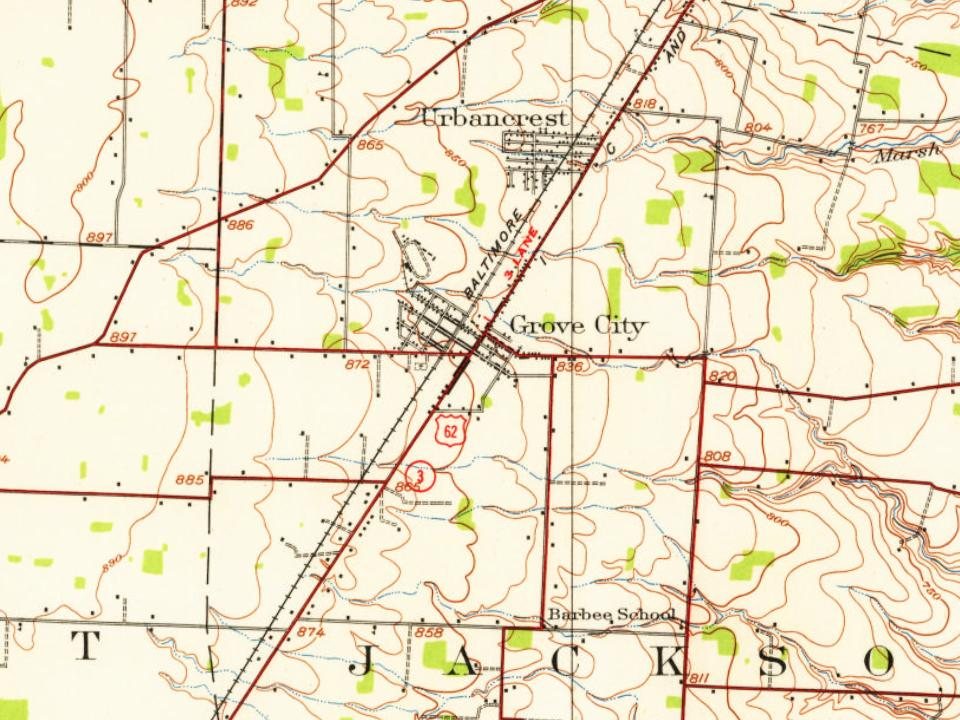




 1912
 2012
 2009


