Founding year: Wikipedia. First post office: 1814.The full story ↓
History grade
What drives Portland’s History grade
On its age, its old homes and the National Register, Portland is more historic than 80% of U.S. towns, #426 of 758 in New York. Its share of homes from before 1940 holds the grade up; its National Register listings pull it down.
A−
HistoryA character grade: shown, never part of Portland’s overall grade.
New York towns list more on the Register than most of the country (a typical New York town has 12.3 per 10,000 residents, the U.S. 2.4), so Portland’s 2.5 sits below most of its state (27% of New York towns have fewer) while its 1 listings outnumber those of 51% of U.S. towns.
How sure. Graded on any two of the three inputs instead, the letter would range from B to A. The pre-1940 share is a Census survey estimate (±7.0 points). Two sources give 1813.
Founding year: Wikipedia (other dates in Quick answers). Homes: Census ACS 2020–24. National Register: National Park Service, May 2026 list; each listing counted once (boundary changes and added documentation belong to their listing), and a historic district counts its contributing buildings. How TownRatings grades history →
What stands out about Portland’s past
Read from the archive, the National Register and the record. The page puts what stands out first.
The area was first settled in 1804. The town of Portland was founded in 1813 from the town of Chautauqua. Subsequently, the town was reduced in size to form two new towns: Ripley (1816) and Westfield (1829).
A genealogical history of Portland was published in 1873 by Dr. H. C. Taylor, titled Historical Sketches of the Town of Portland, New York. An all names index was created for this book by Agnes Lee Mitchell in 1989 and published by the Chautauqua County Genealogical Society.
Passages that mention Portland, cut from the printed page as they were published.
History of Chautauqua County, New York, and its people1921 · page 224Read the page →
Read the text
all trunk lines — the Lake Shore & Michigan Central, the New York Central, and the Pennsylvania, stations being established at Vineyard, Brocton, Portland and Prospect. Brocton was made an incorporated village, March 20, 1894. The first village election was held April 17, 1894, Garrett E. Ryckman being the first president of the village. In 1915 Broc-
Text read by machine from the scan; it may contain errors.
History of Chautauqua County, New York, and its people1921 · page 221Read the page →
Read the text
Portland — The act erecting the original town of Portland was passed April 9, 1813, but the town as originally created did not long continue. An act, passed March 1, 1816, erected the town of Ripley as at present constituted, and in addition took from Portland all of the present town of Westfield lying west of Chautauqua creek. Friction arose between the
Text read by machine from the scan; it may contain errors.
Portland, Oregon, its history and builders1911 · page 497Read the page →
Read the text
their town by starting an opposition steamship line, and they accordingly purchased, as they believed, a controlling interest in the steamship Gold Hunter, paying down twenty-one thousand dollars in coin, a much larger sum comparatively to Portland in 1850 than half a million is today. At that early example of Coffin, Chapman, Lownsdale and others, in contending for the business interests of Portland, should be a significant hint to the millionaires who are now wrestling with the tug and dredger business, many of whom are singly better able to take the whole job than Portland was to raise that twenty-one thousand
Text read by machine from the scan; it may contain errors.
Portland, Oregon, its history and builders1911 · page 42Read the page →
Read the text
age changed the scene of his activities from New York to Wisconsin, locating on the Eau Claire river, where he owned and conducted a sawmill. There he resided until 1870, when he came to Portland, arriving in this city on the loth of December. He came to the northwest for the purpose of engaging in the lumber business, and after remaining in Portland for a short time built a sawmill on Lewis river in Clarke county, and took up his abode at that place. There he remained for five years, at the end of which time he sold out and removed to a point below the Cowlitz river, where he had a floating mill. In 1878 he returned
Text read by machine from the scan; it may contain errors.
Scans and text from the Internet Archive. Books published in 1930 or earlier, which are in the public domain.
Timeline
Portland, 1813 to 1900
Woven from the archive, old maps, post office records, the National Register and the people born here.
In 1813, according to Wikipedia’s history of the town. Portland’s post office opened in 1814, and the census of 1820 counted 1,162 people here.
How does Portland rank for history?
Portland is more historic than 80% of U.S. towns, #426 of 758 in New York. The History grade combines the town’s founding era, the share of homes built before 1940 and its National Register listings. It’s a character grade, so it isn’t part of the overall grade. How it works.
What is on the National Register in Portland?
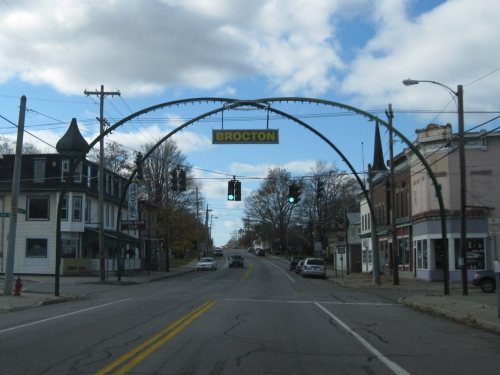
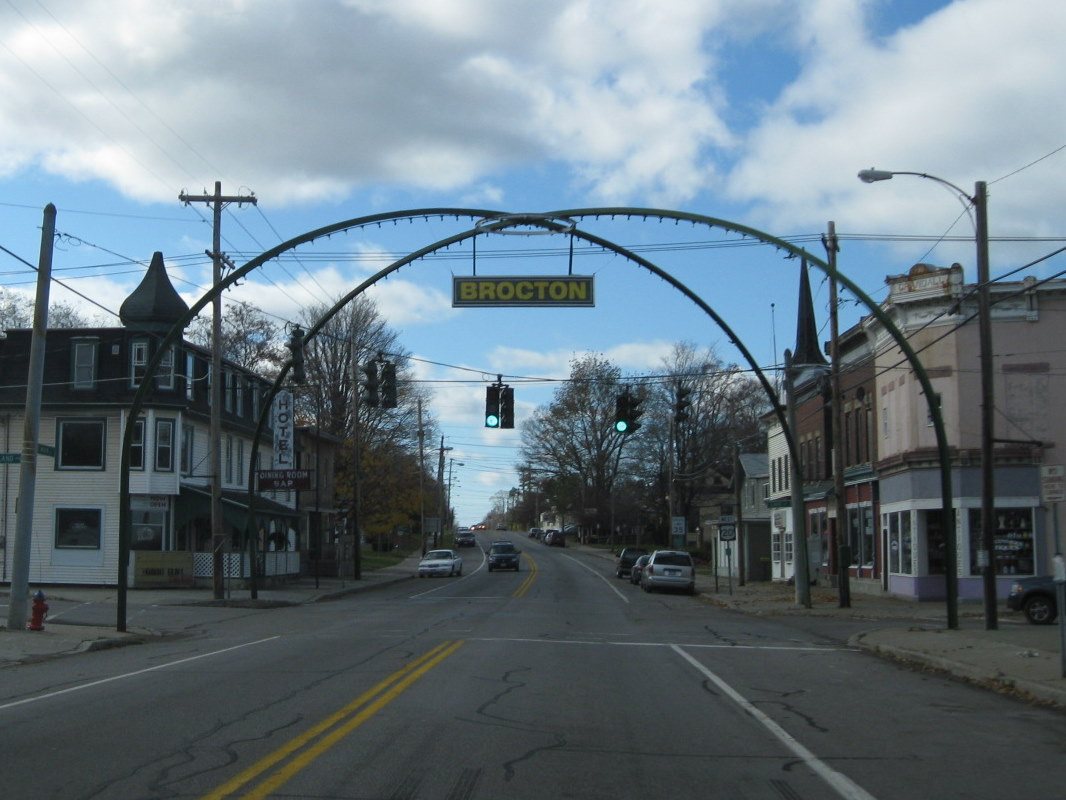
One place: the Brocton Arch (listed 1996).
How old are the homes in Portland?
34% of Portland’s homes were built before 1940 (Census estimate, ±7.0 points), against a typical 27% for a New York town; the median home was built in 1951.
Founding dates: Wikidata, Wikipedia, the U.S. post office records of Blevins & Helbock (CC0) and the Census. Homes by year built: Census ACS 2020–24. National Register of Historic Places: National Park Service (list of May 22, 2026). Old photos, postcards and papers: Wikimedia Commons, the Library of Congress and other public archives, credited on each item’s page. Maps: U.S. Geological Survey historical topographic maps (via Esri) and Sanborn fire-insurance maps (Library of Congress). History text and census tables: Wikipedia (CC BY-SA 4.0). Places that used to be: USGS Geographic Names Information System (2021).
From Wikimedia Commons (3), the National Register of Historic Places (1), Wikipedia, U.S. Geological Survey historical maps, U.S. Census counts (via Wikipedia), the US Post Offices dataset (Blevins & Helbock), the USGS Geographic Names Information System and old county and town histories (Internet Archive). Archive images are copied here with their credits and licenses, shown on each photo’s page. Refreshed monthly.


 Date?
 Date?