The Livingston post office opened in 1805, the earliest record of the town by name. Five smaller post offices, Glenco Mills (1856), Linlithgo (1858) and Blue Stores (1871), opened inside today’s town and later closed.
First census: 1,938 in 18202020 census: 3,628221 years
How historic is Livingston?
A
More historic than 89% of U.S. towns, on its age, its old homes and the National Register.
Founding year: the first Livingston post office (Blevins & Helbock, CC0).The full story ↓
History grade
What drives Livingston’s History grade
On its age, its old homes and the National Register, Livingston is more historic than 89% of U.S. towns, #277 of 758 in New York. All 3 inputs are above most U.S. towns; its National Register listings ranks highest and its share of homes from before 1940 lowest.
A
HistoryA character grade: shown, never part of Livingston’s overall grade.
New York towns list more on the Register than most of the country (a typical New York town has 12.3 per 10,000 residents, the U.S. 2.4), so Livingston’s 113 sits above most of its state (77% of New York towns have fewer) while its 41 historic buildings outnumber those of 84% of U.S. towns.
How sure. Graded on any two of the three inputs instead, the letter would range from A− to A. The pre-1940 share is a Census survey estimate (±6.6 points). The founding year is the first post office, not a stated founding date.
Founding year: the first post office (other dates in Quick answers). Homes: Census ACS 2020–24. National Register: National Park Service, May 2026 list; each listing counted once (boundary changes and added documentation belong to their listing), and a historic district counts its contributing buildings. How TownRatings grades history →
What stands out about Livingston’s past
Read from the archive, the National Register and the record. The page puts what stands out first.
Lost post offices, old corners, places now gone and burying grounds
Livingston’s post office has been open since 1805. Five other post offices opened and closed inside today’s town.
Livingston
1805–today
Elizaville
1839–today
Glenco Mills
1856–1921
Linlithgo
1858–1948
Blue Stores
1871–1923
Burden
1883–1903
Manorton
1886–1908
18001910today
Hamlets and corners on the map
Bells Pond Mobile Home ParkBingham MillsBlue StoreBurdenElizavilleGlenco MillsLinlithgoLinlithgo MillsManortonOak Hill Landing
Gone or out of use
Blue Hill SchoolschoolCoons StorelocaleMaplewood CampslocalePotts Memorial HospitalhospitalSchool Number 11schoolSchool Number 12schoolSchool Number 7schoolWhite Schoolschool
4cemeteries and burying grounds inside Livingston
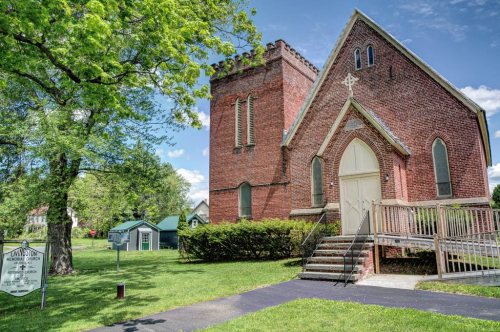
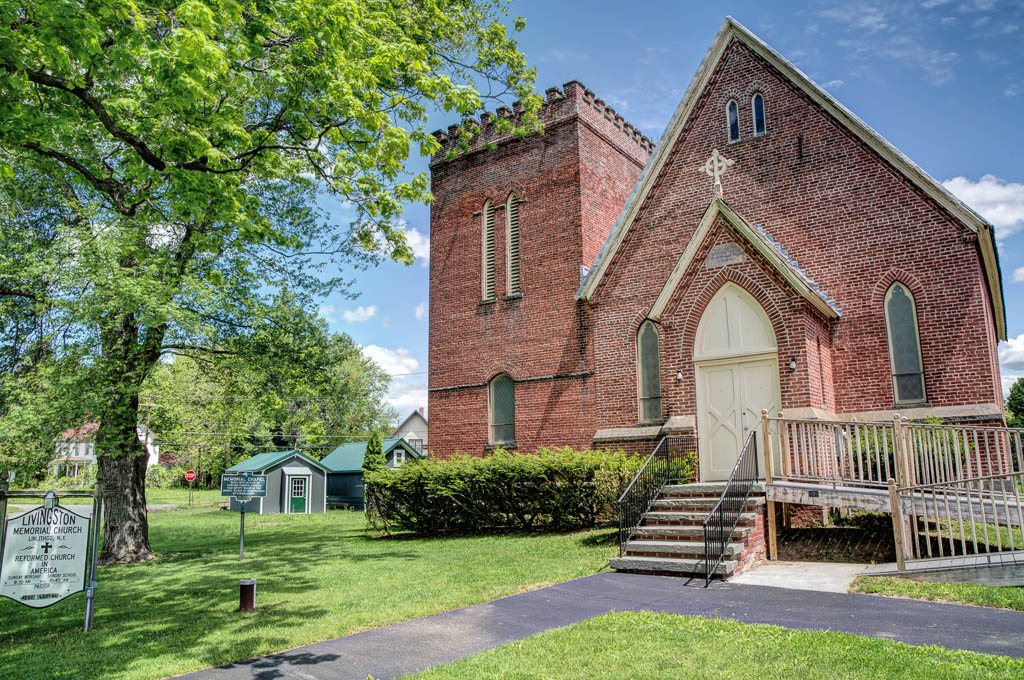
Church of NativityElizavilleLivingston ReformedSaint John's Lutheran Church
US Post Offices dataset (Blevins & Helbock, CC0). Places and cemeteries from the USGS Geographic Names Information System (2021).
Help out
Start Livingston’s collection
The first neighbors to add old photos shape how Livingston’s history is told.
Decades since 1900 with photos
00s10s20s30s40s50s60s70s80s90s
0 of 10 decades. The empty ones are waiting for someone’s album.
Prior to 1686, the area was part of the Dutch trading area of New Netherland (Nieuw Nederland) along the Hudson River from Fort Nassau to New Amsterdam up to 1664 (after which it became British). The area of Columbia which Livingston is in was settled after Fort Nassau was built in 1614.
The land grant for Livingston Manor was made in 1686 to Robert Livingston. The region was made a district in 1772, and the town of Livingston was founded in 1788, being one of the original towns of the county.
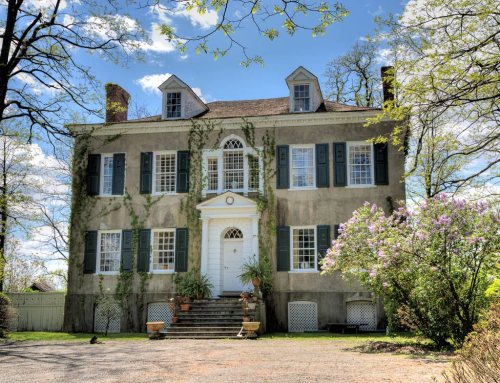
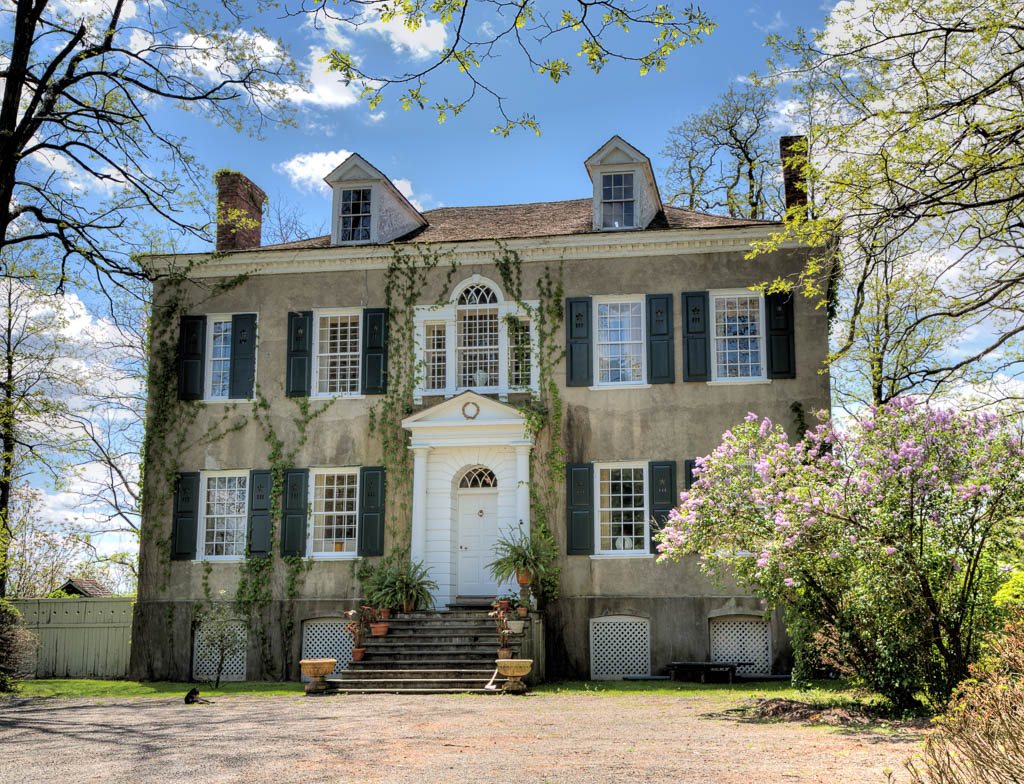
The Burroughs–Foland Farm, Forth House, Linlithgow Reformed Church of Livingston, Henry W. Livingston House, Richmond Hill, and St. John's Evangelical Lutheran Church are listed on the National Register of Historic Places.
Passages that mention Livingston, cut from the printed page as they were published.
History of Livingston County, New York, from its earliest traditions to the present1905 · page 888Read the page →
Read the text
The town of Nunda originally, as a part of Allegany county, comprised, in addition to its present territory, the present towns of Pike, Grove, Granger, Centerville, Eagle, Hume and Genesee in Allegany,' and Portage in Livingston, and was twelve by twenty-four miles in extent. After it was formed from Angelica in 1808 it remained a part of Allegany county until 1846, when it was set off into Livingston county —a transfer which had been long desired by the most of its residents. Meanwhile, in 1827, its size had been reduced to form
Text read by machine from the scan; it may contain errors.
History of Livingston County, New York, from its earliest traditions to the present1905 · page 913Read the page →
Read the text
Between the years of 1804 and 1812, the south part of the town of ■Caledonia and what subsequently became the northwesterly portion of the town of York, in Livingston county, and which was familiarly known as Coille Mohr, or "Big Woods," was settled very generally bv a hardy, frugal Scotch population coming directly from their native Scotland heath, from Albany, from Argyle in Washington county, and from Broadalbin and Johnstown in Montgomery county. Of such were Collin Gillis, Angus Cameron, Alexander Mann, Archibald
Text read by machine from the scan; it may contain errors.
History of Caldwell and Livingston counties, Missouri, written and compiled from the most authentic official and private sources, including a history of their townships, towns and villages, together with a condensed history of Missouri1886 · page 904Read the page →
Read the text
Grand River is the southeastern township of Livingston county. It comprises all of Congressional township 56, range 22, that portion of township 56, range 21, in this county, and that portion of township 57, range 22, within the county and lying south of the center of the track of the Hannibal and St. Joseph Railroad. Next to Jackson it is the largest township in the county.
Text read by machine from the scan; it may contain errors.
Scans and text from the Internet Archive. Books published in 1930 or earlier, which are in the public domain.
Timeline
Livingston, 1768 to 2010
Woven from the archive, old maps, post office records, the National Register and the people born here.
The Livingston post office opened in 1805, the earliest record of the town by name (U.S. post office records).
How does Livingston rank for history?
Livingston is more historic than 89% of U.S. towns, #277 of 758 in New York. The History grade combines the town’s founding era, the share of homes built before 1940 and its National Register listings. It’s a character grade, so it isn’t part of the overall grade. How it works.
What is on the National Register in Livingston?
10 listings: 10 buildings, among them the Henry W. Livingston House (listed 1971, the first). 41 historic buildings in all.
How old are the homes in Livingston?
23% of Livingston’s homes were built before 1940 (Census estimate, ±6.6 points), against a typical 27% for a New York town; the median home was built in 1975.
Founding dates: Wikidata, Wikipedia, the U.S. post office records of Blevins & Helbock (CC0) and the Census. Homes by year built: Census ACS 2020–24. National Register of Historic Places: National Park Service (list of May 22, 2026). Old photos, postcards and papers: Wikimedia Commons, the Library of Congress and other public archives, credited on each item’s page. Maps: U.S. Geological Survey historical topographic maps (via Esri) and Sanborn fire-insurance maps (Library of Congress). History text and census tables: Wikipedia (CC BY-SA 4.0). Places that used to be: USGS Geographic Names Information System (2021).
From Wikimedia Commons (17), Wikidata (1), the National Register of Historic Places (10), Wikipedia, Wikidata and Wikipedia for famous people, U.S. Geological Survey historical maps, U.S. Census counts (via Wikipedia), the US Post Offices dataset (Blevins & Helbock), the USGS Geographic Names Information System and old county and town histories (Internet Archive). Archive images are copied here with their credits and licenses, shown on each photo’s page. Refreshed monthly.


 2022
 2022
 2022
 2022
 2022
 2022
 2022
 2019
 2015
 2013
 2013
 2013
 2012
 2009
 2008
 2006