Homer dates to 1794, and 35% of its homes were built before 1940
More historic than 96% of U.S. towns · #117 of 758 in New York. What drives it
4 places in town are on the National Register, among them two historic districts with 175 buildings between them. Below: 7 old photos and papers, maps from 1887 on, and the census since 1820.
Founding year: Wikidata. First post office: 1807.The full story ↓
History grade
What drives Homer’s History grade
On its age, its old homes and the National Register, Homer is more historic than 96% of U.S. towns, #117 of 758 in New York. All 3 inputs are above most U.S. towns; its share of homes from before 1940 ranks highest and its age lowest.
A+
HistoryA character grade: shown, never part of Homer’s overall grade.
New York towns list more on the Register than most of the country (a typical New York town has 12.3 per 10,000 residents, the U.S. 2.4), so Homer’s 290 sits above most of its state (86% of New York towns have fewer) while its 179 historic buildings outnumber those of 93% of U.S. towns.
How sure. Graded on any two of the three inputs instead, the letter would range from A to A+. The pre-1940 share is a Census survey estimate (±6.0 points). Two sources give 1794.
Founding year: Wikidata (other dates in Quick answers). Homes: Census ACS 2020–24. National Register: National Park Service, May 2026 list; each listing counted once (boundary changes and added documentation belong to their listing), and a historic district counts its contributing buildings. How TownRatings grades history →
What stands out about Homer’s past
Read from the archive, the National Register and the record. The page puts what stands out first.
National Park Service, National Register of Historic Places. Photos from Wikimedia Commons, credited on each place’s page.
Places that used to be
Lost post offices, old corners, places now gone and burying grounds
Homer’s post office has been open since 1807. Another post office, East River, opened and closed inside today’s town.
Homer
1807–today
Little York
1836–today
East Homer
1840–today
East River
1873–1903
18001910today
Hamlets and corners on the map
East HomerEast RiverLittle YorkPine Hill Mobile Home ParkPratt Corners
Gone or out of use
East Homer SchoolschoolEast River SchoolschoolFairview Health CampuslocaleHomer Drive-InlocaleSchool Number 10schoolSchool Number 11schoolSchool Number 2schoolSchool Number 3schoolSchool Number 4schoolSchool Number 7schoolSchool Number 8schoolWest Side Hose Companybuilding
5cemeteries and burying grounds inside Homer
AtwaterEast HomerGlenwoodSessions Hill NeighborhoodWest Hill
US Post Offices dataset (Blevins & Helbock, CC0). Places and cemeteries from the USGS Geographic Names Information System (2021).
Every building
Homer, building by building, 1887–1915
Fire insurance maps drew every building, what it was made of and what it was used for, so insurers could price the risk of fire. Pick a year, then a sheet.
The region was part of the Central New York Military Tract, from which the cash-poor New York government granted land to soldiers of the American Revolution to pay them for their service. "Homer" was the name of one of the townships in the Military Tract, this name being assigned by the state surveyor's office.
The area was settled in 1791. The Town of Homer was established when Onondaga County was formed in 1794. Cortland County was subsequently formed from Onondaga County in 1808.
In 1835, the village of Homer set itself off from the town by incorporation.
Passages that mention Homer, cut from the printed page as they were published.
A short history of Greek literature from Homer to Julian1907 · page 62Read the page →
Read the text
feature of his style. He destroyed the symmetry of his Five Ages to introduce the Age of the Homeric Heroes ; in the Theogony are about 126, in the Works about 87 set phrases borrowed from Homer ; nor do these include many stock expressions which, in Hesiod's day, must have been the common property of all who wrote epic. But Hesiod's imitations are of the letter, not of the spirit, of Homer. His manner is profoundly original, absolutely alien from the Homeric, as a single parallel will
Text read by machine from the scan; it may contain errors.
A short history of Greek literature from Homer to Julian1907 · page 26Read the page →
Read the text
Writing Homer must have known of writing, but he may not in Homer have used it in an age when it was a modern invention that had not superseded the use of memory. More than once he shows signs of conscious antiquarianism that would preserve him from the anachronism of making his heroes write.
Text read by machine from the scan; it may contain errors.
Scans and text from the Internet Archive. Books published in 1930 or earlier, which are in the public domain.
Timeline
Homer, 1794 to 1933
Woven from the archive, old maps, post office records, the National Register and the people born here.
Nothing in the archives for these yearsWeddings on Main Street, storms, parades, school pictures, the old store. If it’s in your family album, it belongs here.
Nothing in the archives for these yearsWeddings on Main Street, storms, parades, school pictures, the old store. If it’s in your family album, it belongs here.
In 1794, according to Wikidata. Homer’s post office opened in 1807, and the census of 1820 counted 5,504 people here.
How does Homer rank for history?
Homer is more historic than 96% of U.S. towns, #117 of 758 in New York. The History grade combines the town’s founding era, the share of homes built before 1940 and its National Register listings. It’s a character grade, so it isn’t part of the overall grade. How it works.
What is on the National Register in Homer?
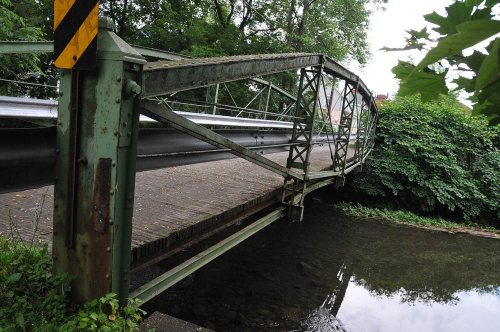
4 listings: 1 building, 2 historic districts, the Old Homer Village Historic District and the Water, Wall, and Pine Streets Lenticular Truss Bridges, with 175 contributing buildings, and 1 site. 179 historic buildings in all.
How old are the homes in Homer?
35% of Homer’s homes were built before 1940 (Census estimate, ±6.0 points), against a typical 27% for a New York town; the median home was built in 1961.
Founding dates: Wikidata, Wikipedia, the U.S. post office records of Blevins & Helbock (CC0) and the Census. Homes by year built: Census ACS 2020–24. National Register of Historic Places: National Park Service (list of May 22, 2026). Old photos, postcards and papers: Wikimedia Commons, the Library of Congress and other public archives, credited on each item’s page. Maps: U.S. Geological Survey historical topographic maps (via Esri) and Sanborn fire-insurance maps (Library of Congress). History text and census tables: Wikipedia (CC BY-SA 4.0). Places that used to be: USGS Geographic Names Information System (2021).
From Wikimedia Commons (12), the National Register of Historic Places (4), Wikipedia, Wikidata and Wikipedia for famous people, U.S. Geological Survey historical maps, U.S. Census counts (via Wikipedia), the US Post Offices dataset (Blevins & Helbock), the USGS Geographic Names Information System, Sanborn fire insurance maps (Library of Congress) and old county and town histories (Internet Archive). Archive images are copied here with their credits and licenses, shown on each photo’s page. Refreshed monthly.




 1933
 1933
 1933
 1933
 1933
 2009
 2009
 2008
 2005
 2005


