Deerpark’s post office opened in 1816, and 18% of its homes were built before 1940
More historic than 78% of U.S. towns · #440 of 758 in New York. What drives it
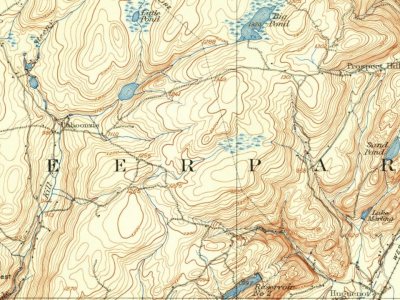
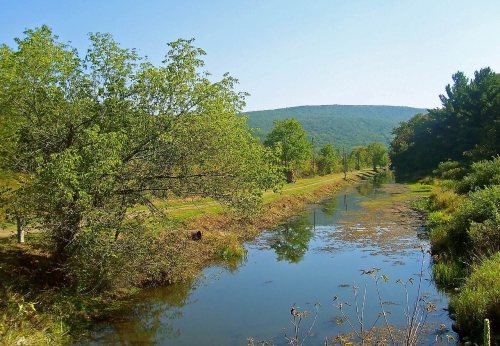
4 places in town are on the National Register, among them the Delaware and Hudson Canal, a National Historic Landmark, and a historic district with 6 buildings. Below: 1 old photo or paper, maps from 1906 on, and the census since 1800.
The Deerpark post office opened in 1816, the earliest record of the town by name. Five smaller post offices, Deer Park (1816), Honesville (1826) and Paradise (1873), opened inside today’s town and later closed.
First census: 955 in 18002020 census: 7,509210 years
How historic is Deerpark?
A−
More historic than 78% of U.S. towns, on its age, its old homes and the National Register.
Founding year: the first Deerpark post office (Blevins & Helbock, CC0).The full story ↓
History grade
What drives Deerpark’s History grade
On its age, its old homes and the National Register, Deerpark is more historic than 78% of U.S. towns, #440 of 758 in New York. All 3 inputs are above most U.S. towns; its age ranks highest and its National Register listings lowest.
A−
HistoryA character grade: shown, never part of Deerpark’s overall grade.
New York towns list more on the Register than most of the country (a typical New York town has 12.3 per 10,000 residents, the U.S. 2.4), so Deerpark’s 10.7 sits near the middle of its state (47% of New York towns have fewer) while its 8 historic buildings outnumber those of 74% of U.S. towns.
How sure. Graded on any two of the three inputs instead, the letter would range from B+ to A−. The pre-1940 share is a Census survey estimate (±4.3 points). The founding year is the first post office, not a stated founding date.
Founding year: the first post office (other dates in Quick answers). Homes: Census ACS 2020–24. National Register: National Park Service, May 2026 list; each listing counted once (boundary changes and added documentation belong to their listing), and a historic district counts its contributing buildings. How TownRatings grades history →
What stands out about Deerpark’s past
Read from the archive, the National Register and the record. The page puts what stands out first.
Lost post offices, old corners and places now gone
Five other post offices opened and closed inside today’s town.
Deer Park
1816–1826
Cuddebackville
1826–today
Honesville
1826–1840
Huguenot
1835–today
Sparrow Bush
1854–today
Paradise
1873–1895
Godeffroy
1880–today
Rio
1886–1951
Cahoonzie
1892–1901
18101920today
Hamlets and corners on the map
CahoonzieCuddebackvilleGodeffroyHighridge Estates Mobile Home ParkHuguenotLakewood Estates Mobile Home ParkMyers GroveOak Ridge ParkParadisePine GrovePort OrangeProspect HillRoses PointShin HollowSparrow BushWestbrookville
Gone or out of use
Black Rock SchoolschoolCamp AckvahlocaleCuddleback SchoolhouseschoolGodeffroy School Number 12schoolHuguenot AirportairportHuguenot School Number 1schoolHuguenot School Number 2schoolProspect Hill SchoolschoolRio SchoolschoolSparrow Bush SchoolschoolValley Junctionlocale
US Post Offices dataset (Blevins & Helbock, CC0). Places and cemeteries from the USGS Geographic Names Information System (2021).
Help out
Start Deerpark’s collection
The first neighbors to add old photos shape how Deerpark’s history is told.
Decades since 1900 with photos
00s10s20s30s40s50s60s70s80s90s
1 of 10 decades. The empty ones are waiting for someone’s album.
Dutch and Huguenot colonists settled in the area in the 17th century, centered on a Dutch settlement named Waghackamack and later renamed to Minisink. The settlement was part of the boundary dispute between New York and New Jersey, which began circa 1700 and was not resolved until 1773. During the American Revolution, the area was raided twice by Mohawk Leader, Joseph Brant. The more impactful of the raids took place on July 20, 1779, causing mass destruction in the town and leading to the Battle of Minisink.
Nothing in the archives for these yearsWeddings on Main Street, storms, parades, school pictures, the old store. If it’s in your family album, it belongs here.
The Deerpark post office opened in 1816, the earliest record of the town by name (U.S. post office records).
How does Deerpark rank for history?
Deerpark is more historic than 78% of U.S. towns, #440 of 758 in New York. The History grade combines the town’s founding era, the share of homes built before 1940 and its National Register listings. It’s a character grade, so it isn’t part of the overall grade. How it works.
What is on the National Register in Deerpark?
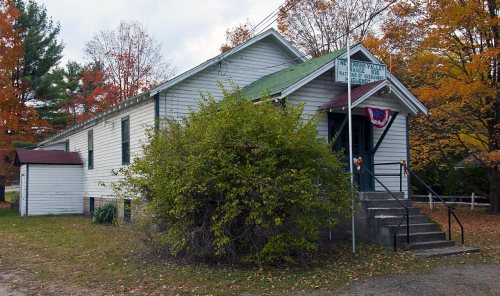
4 listings: 2 buildings, 1 historic district, the Cottage in the Pines, with 6 contributing buildings, and 1 structure. 8 historic buildings in all.
How old are the homes in Deerpark?
18% of Deerpark’s homes were built before 1940 (Census estimate, ±4.3 points), against a typical 27% for a New York town; the median home was built in 1974.
Founding dates: Wikidata, Wikipedia, the U.S. post office records of Blevins & Helbock (CC0) and the Census. Homes by year built: Census ACS 2020–24. National Register of Historic Places: National Park Service (list of May 22, 2026). Old photos, postcards and papers: Wikimedia Commons, the Library of Congress and other public archives, credited on each item’s page. Maps: U.S. Geological Survey historical topographic maps (via Esri) and Sanborn fire-insurance maps (Library of Congress). History text and census tables: Wikipedia (CC BY-SA 4.0). Places that used to be: USGS Geographic Names Information System (2021).
From Wikimedia Commons (10), Wikidata (2), the National Register of Historic Places (4), Wikipedia, Wikidata and Wikipedia for famous people, U.S. Geological Survey historical maps, U.S. Census counts (via Wikipedia), the US Post Offices dataset (Blevins & Helbock) and the USGS Geographic Names Information System. Archive images are copied here with their credits and licenses, shown on each photo’s page. Refreshed monthly.



 2010
 2009
 2009
 2007
 2007
 2007
 2006
 2006
 2006


 ★ Landmark
