Concord dates to 1807, and 31% of its homes were built before 1940
More historic than 94% of U.S. towns · #165 of 758 in New York. What drives it
9 places in town are on the National Register, among them three historic districts with 88 buildings between them. Below: 4 old photos and papers, maps from 1925 on, and the census since 1820.
Founding year: Wikipedia. First post office: 1820.The full story ↓
History grade
What drives Concord’s History grade
On its age, its old homes and the National Register, Concord is more historic than 94% of U.S. towns, #165 of 758 in New York. All 3 inputs are above most U.S. towns; its National Register listings ranks highest and its age lowest.
A
HistoryA character grade: shown, never part of Concord’s overall grade.
New York towns list more on the Register than most of the country (a typical New York town has 12.3 per 10,000 residents, the U.S. 2.4), so Concord’s 178 sits above most of its state (81% of New York towns have fewer) while its 147 historic buildings outnumber those of 92% of U.S. towns.
NoteThe founding year comes from Wikipedia alone; no second source gives 1807.
How sure. Graded on any two of the three inputs instead, the letter would still be A. The pre-1940 share is a Census survey estimate (±4.4 points).
Founding year: Wikipedia (other dates in Quick answers). Homes: Census ACS 2020–24. National Register: National Park Service, May 2026 list; each listing counted once (boundary changes and added documentation belong to their listing), and a historic district counts its contributing buildings. How TownRatings grades history →
What stands out about Concord’s past
Read from the archive, the National Register and the record. The page puts what stands out first.
Concord was first settled around 1807, and it was established as a town in 1812 from the town of Willink (now defunct). At the time of its formation, the town stretched across the entire south part of the county. The town lost much of its territory in the subsequent formation of the Towns of Collins, North Collins, and Sardinia.
Passages that mention Concord, cut from the printed page as they were published.
The history of Concord, Massachusetts. v. 1-1904 · page 492Read the page →
Read the text
49'^ Colonial the said Town of Concord a certain Tract or parcel of Land containing by Estimation Eight Thousand acres be he same more or less and is situate lying and being within the last Grants of Land by the General Court to the Towntof Concord and is bounded Southeast by the old bounds of the said town of Concord and is bounded Easterly partly by Billerica partly by a Farm formerly laid out b) Major Wil-
Text read by machine from the scan; it may contain errors.
The history of Concord, Massachusetts. v. 1-1904 · page 338Read the page →
Read the text
22^ Colonial and by these presents do sell, alien, enfeofe, and confirm unto the said Capt. Timothy Wheeler, &c. of Concord in the county of Middlesex in y® Massachusetts Colony, in New England, for the use and behoof of themselves and the rest of the proprietors of the s'd town of Concord a certain tract or parcell of land conteyning by estimation a thousand acres, be the same more or less, and is situate,
Text read by machine from the scan; it may contain errors.
History of Concord, New Hampshire, from the original grant in seventeen hundred and twenty-five to the opening of the twentieth century1903 · page 299Read the page →
Read the text
On the 28th of December, 1795, two months after the completion of Concord bridge, another legislative act incorporated Timothy Walker, Benjamin Emery, William Partridge, Jonathan Eastman, Joshua Thompson, and others, their associates, to be known as the " Proprietors of Federal Bridge," for the purpose " of building a bridge over the river ]\Ierrimack, at or near a place called Tucker's Ferry in Concord." This ferry had formerly been called " Eastman's," for Captain Ebenezer Eastman, its first proprietor. It was on the prin-
Text read by machine from the scan; it may contain errors.
History of Concord, New Hampshire, from the original grant in seventeen hundred and twenty-five to the opening of the twentieth century1903 · page 41Read the page →
Read the text
Upon the town of Concord was also assessed the sum of sixteen hundred and seventy-eight dollars and fifty cents, being one half of the subscriptions above mentioned, and awarded as damages to the respective owners of the bridge. In short, its cost was borne in moiety by the subscribers before mentioned and the town of Concord.
Text read by machine from the scan; it may contain errors.
Scans and text from the Internet Archive. Books published in 1930 or earlier, which are in the public domain.
Timeline
Concord, 1807 to 2000
Woven from the archive, old maps, post office records, the National Register and the people born here.
Nothing in the archives for these yearsWeddings on Main Street, storms, parades, school pictures, the old store. If it’s in your family album, it belongs here.
In 1807, according to Wikipedia’s history of the town. Concord’s post office opened in 1820, and the census of 1820 counted 2,786 people here.
How does Concord rank for history?
Concord is more historic than 94% of U.S. towns, #165 of 758 in New York. The History grade combines the town’s founding era, the share of homes built before 1940 and its National Register listings. It’s a character grade, so it isn’t part of the overall grade. How it works.
What is on the National Register in Concord?
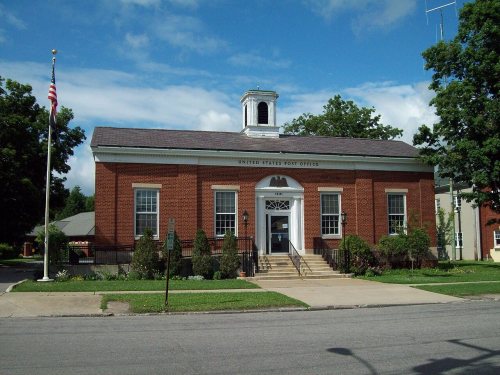
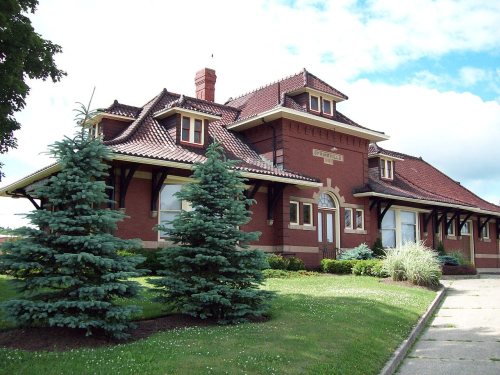
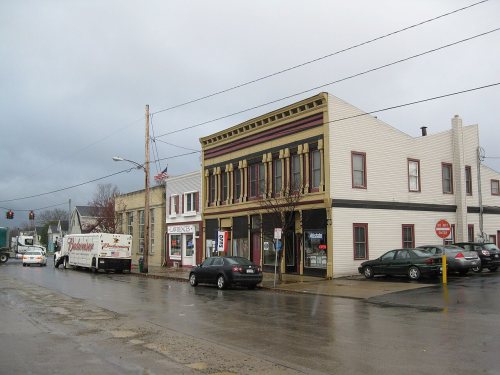
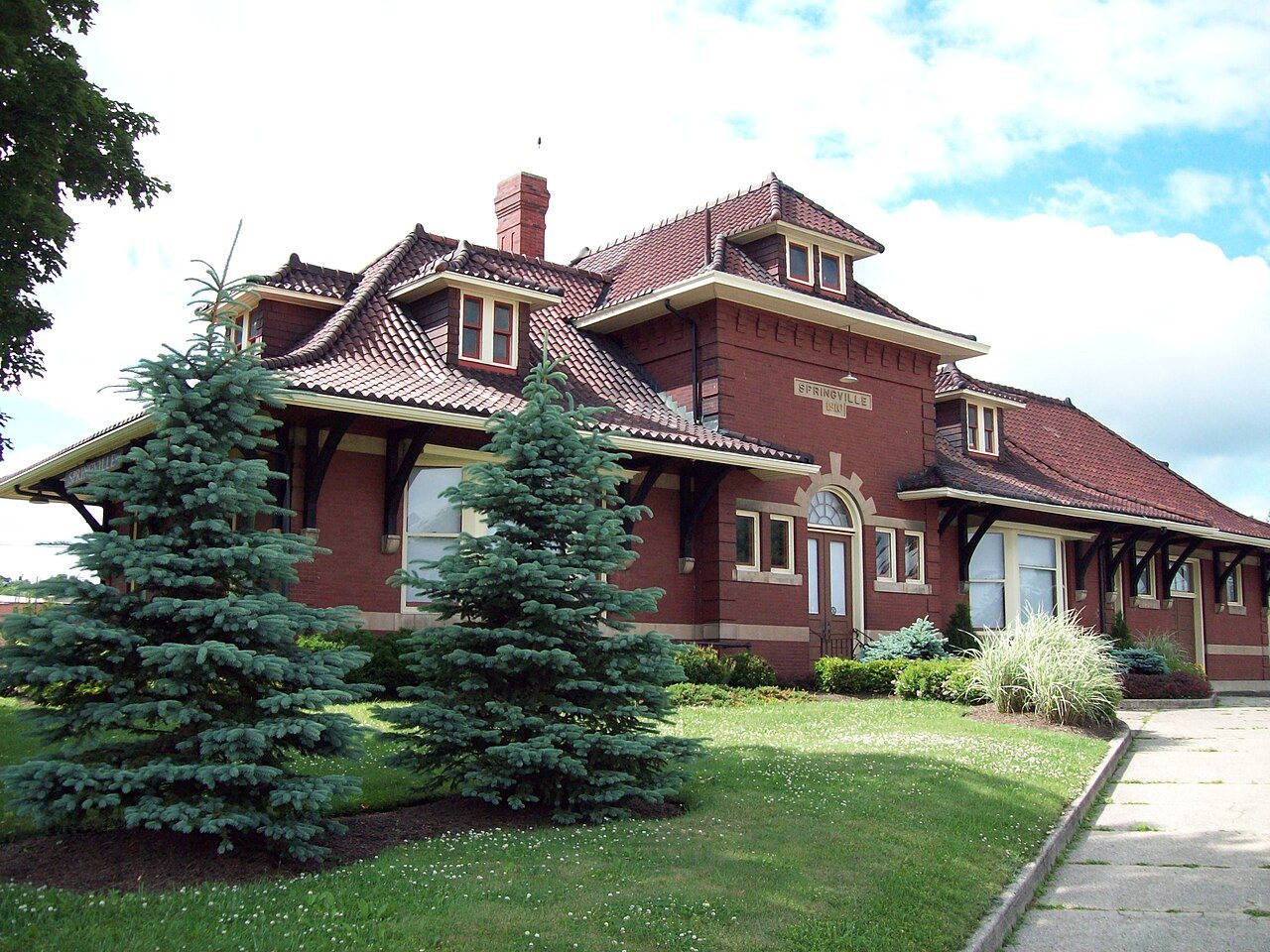
9 listings: 6 buildings, among them the US Post Office-Springville (listed 1989, the first), and 3 historic districts, the East Main-Mechanic Streets Historic District, the East Hill Historic District and the Fiddlers Green Historic District, with 88 contributing buildings. 147 historic buildings in all.
How old are the homes in Concord?
31% of Concord’s homes were built before 1940 (Census estimate, ±4.4 points), against a typical 27% for a New York town; the median home was built in 1968.
Founding dates: Wikidata, Wikipedia, the U.S. post office records of Blevins & Helbock (CC0) and the Census. Homes by year built: Census ACS 2020–24. National Register of Historic Places: National Park Service (list of May 22, 2026). Old photos, postcards and papers: Wikimedia Commons, the Library of Congress and other public archives, credited on each item’s page. Maps: U.S. Geological Survey historical topographic maps (via Esri) and Sanborn fire-insurance maps (Library of Congress). History text and census tables: Wikipedia (CC BY-SA 4.0). Places that used to be: USGS Geographic Names Information System (2021).
From Wikimedia Commons (12), the National Register of Historic Places (9), Wikipedia, U.S. Geological Survey historical maps, U.S. Census counts (via Wikipedia), the US Post Offices dataset (Blevins & Helbock), the USGS Geographic Names Information System and old county and town histories (Internet Archive). Archive images are copied here with their credits and licenses, shown on each photo’s page. Refreshed monthly.




 1880
 1880
 2021
 2020
 2016
 2016
 2013
 2009
 2009
 2006