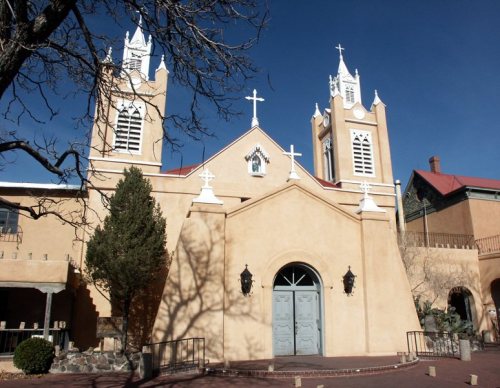
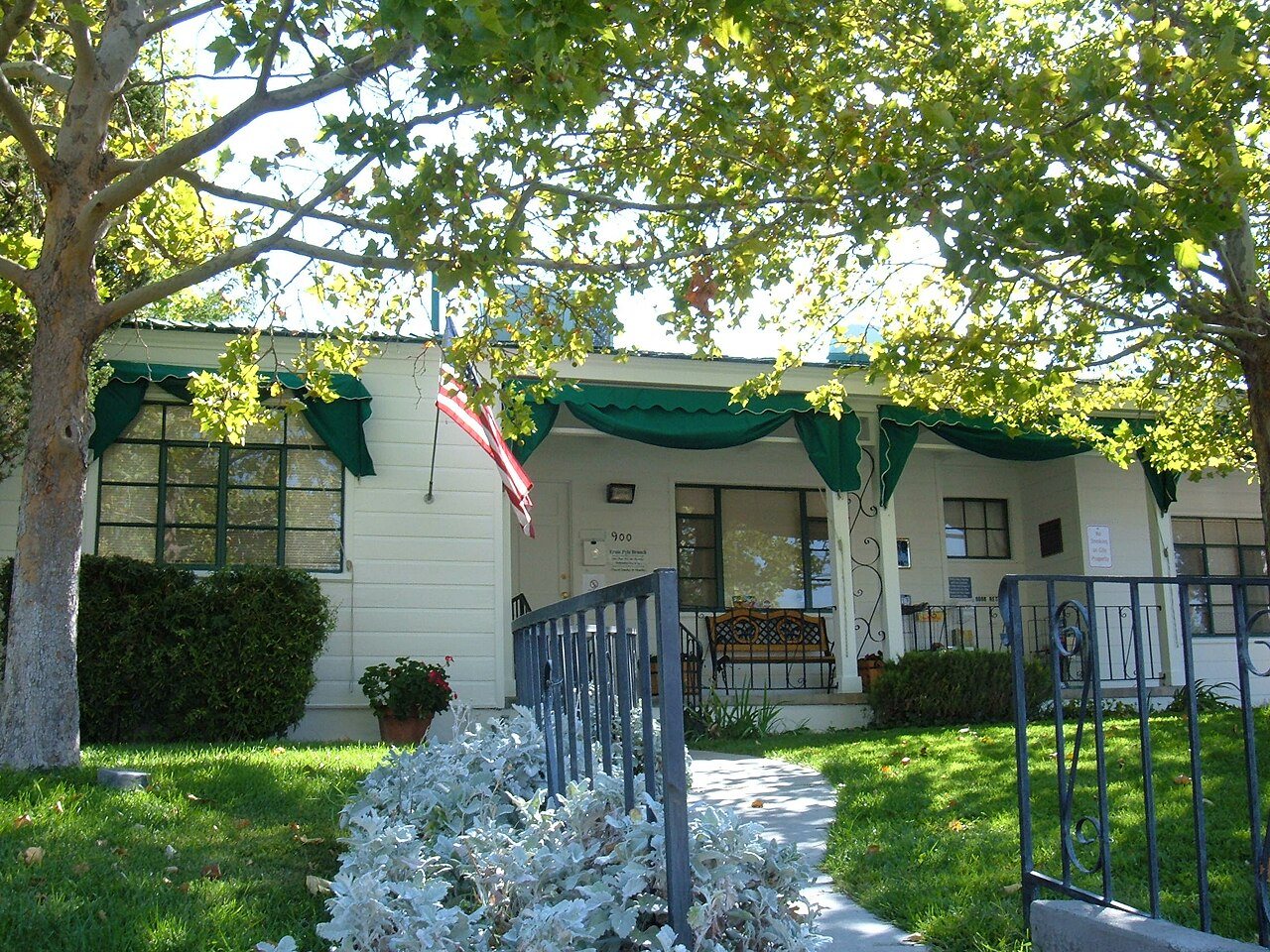
A town with more to fix than most. Its lowest grade is for safety — its police reported 5,665 violent crimes reported to the FBI in 2025, a higher rate per resident than 98% of U.S. towns. At C− overall, Albuquerque ranks 44th of 72 in New Mexico. Set against the rest, it does better than 17% of U.S. towns. Cost of living is weaker too: the typical home is worth about $344K, 4.9 years of the Albuquerque metro’s $71K median household income. Walkability is its strong suit (A): it is easier to get around on foot or by transit than 88% of U.S. towns. Its National Register listings include Ernie Pyle House and Petroglyph National Monument. On the outdoors, just 5 of New Mexico’s 161 towns do better.
Figures: FBI crime data, 2025 · home values, Zillow · incomes, Census ACS, 2020–24 · National Register of Historic Places · USGS PAD-US.
Ernie Pyle House · National Register of Historic Places
Albuquerque’s story
320 years in pictures
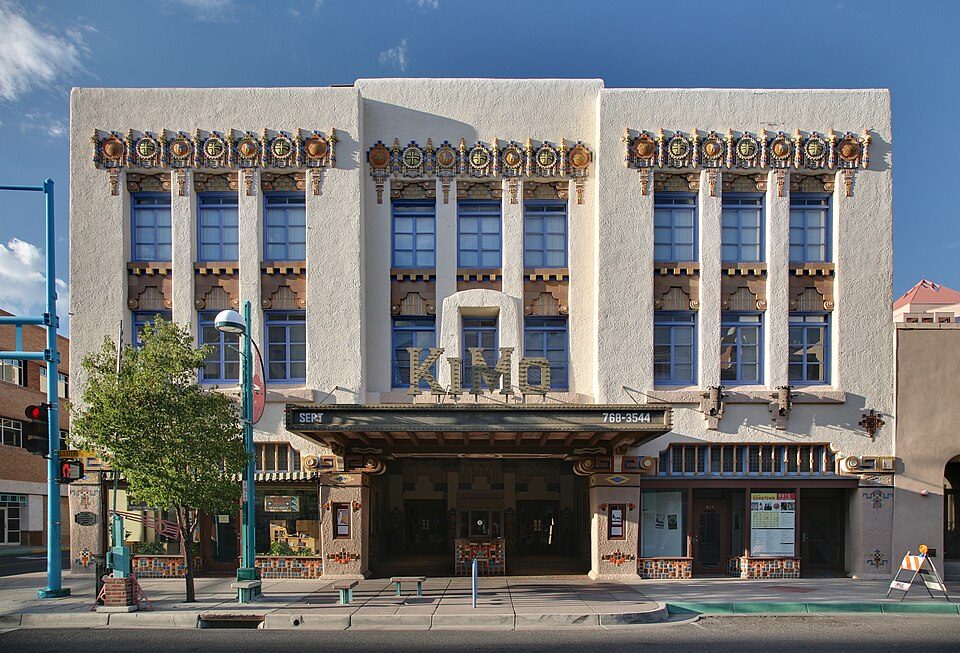
Ernie Pyle House is a National Historic Landmark, the National Register’s top tier. Its 137 National Register listings are more than in any other New Mexico town with a listing.
The archive holds 17 old photos and papers going back to 1801 and 5 maps from 1934 on.
Albuquerque carries less natural-hazard risk than most of New Mexico (mostly inland flooding), is healthier than towns with similar incomes and has seen reported crime fall beyond ordinary swings.
Reported crimes fell from 33,667 to 27,787 over the last three FBI years, a drop beyond ordinary year-to-year swings.
Albuquerque’s property crime rate stands at 39.6 per 1,000 residents, against 16.2 in New Mexico’s towns and 9.9 across U.S. towns. Among 32 New Mexico towns, just 3 have a higher level of violent crime than Albuquerque.
Its public schools are run by the Albuquerque school district. Three of its 206 schools are below, each with the reason it’s listed. Public school enrollment here: 3,812 students across 6 schools.
Albuquerque’s trail density stands at 1.7 miles per square mile, above both the New Mexico town median (1.0) and the median of U.S. towns (0.4). There are 322 miles of trail across 255 parks and preserves. The biggest place to walk is Petroglyph National Monument, 5,172 acres with 28 miles of trail.
FEMA rates its natural-hazard risk lower than 86% of New Mexico towns, with expected losses of about $199 per resident a year; that rating is what its B+ for hazard risk is built on.
Federal aid has come to Albuquerque households in 3 declared disasters; the latest was in 2013. The town’s FEMA risk score is 26 of 100. It has had 48 paid flood insurance claims since 1979. Of the losses FEMA expects locally, 58% come from inland flooding and 30% from earthquakes.
Albuquerque: 15% of workers work from home. Jobs based in Albuquerque grew to 281,024 in 2023, 15,989 more than in 2013. The median commute is under 6 miles. Its mean commuting time is 22 minutes.
72%work in town
Albuquerque
New Mexico towns
U.S. towns
Work from home
15%
8.4%
11%
Below the poverty line
16%
21%
9.6%
Average trip to work
22 minutes
23 minutes
25 minutes
Median household income
$68,000
$55,000
$80,000
Where working residents work
In Albuquerque72%
Kirtland AFB5%
Rio Rancho4%
Santa Fe2%
North Valley2%
6 mi
median commute distance
281,024
jobs based in Albuquerque
Balanced
jobs vs. working residents
A
Walkability grade: more walkable than 88% of U.S. towns
Against the 10,376 U.S. towns with household incomes like Albuquerque’s, it is healthier than 81%, so its B isn’t only a matter of income.
The share of adults in Albuquerque who worry about having enough food: 19%. On the CDC’s 32 measures, Albuquerque is ahead of New Mexico on 5 and behind on 1. Among adults here, 31% sleep under 7 hours and 11% have diabetes.
62%healthier than U.S. townsBHealth Grade
Albuquerque
New Mexico towns
U.S. towns
Yearly checkup (CDC PLACES)
67%
69%
79%
Sleep under 7 hours (CDC PLACES)
31%
34%
36%
No health insurance, 18–64 (CDC PLACES)
14%
16%
8.1%
Diabetes (CDC PLACES)
11%
14%
12%
32 measures vs. New Mexico
5 better26 too close to call1 worse
What stands out
Albuquerque
NM
Fewer older adults who have lost all their teeth
11.1%
14.2%
Fewer adults with COPD
5.5%
6.6%
Fewer adults treating high blood pressure
70.2%
73.3%
Lovelace Medical Center
1.4 mi away · emergency room
3 of 3
care shortages: primary care, dental, mental health
Nearly two in five adults 25 and older hold a bachelor’s degree or more in Albuquerque. No age group stands out against New Mexico: all are within 4 points.
38.8median age · NM 39.4
Albuquerque
New Mexico towns
U.S. towns
Bachelor’s degree or more, 25+
39%
23%
29%
Under 18
20%
24%
22%
Median age
38.8 years
37.2 years
40.5 years
AlbuquerqueNew MexicoUnited States
Ages · share of residents
15%
<1010–1718–2425–3435–4445–5455–6465–7475+
Education · adults 25 and older
No diploma9%
High school22%
Some college21%
Associate’s10%
Bachelor’s21%
Graduate18%
Women and men · all residents
50.9% women, 49.1% men
WomenNMU.S.Men
About 97 men for every 100 women. Across New Mexico, 50.3% of residents are women. Median age: women 40.2, men 37.5.
The median property tax bill is $2,678, against $1,731 across New Mexico, another input to its cost-of-living grade.
A typical home in Albuquerque is worth about $344,000, up 1.7% in a year, 9% above the New Mexico typical home. In Albuquerque, 62% of households own their home. Homes sold in Albuquerque spent a median 35 days on the market.
Albuquerque is the most populous city in the U.S. state of New Mexico. Founded in 1706 as La Villa de Alburquerque by Santa Fe de Nuevo México governor Francisco Cuervo y Valdés, and named in honor of Francisco Fernández de la Cueva, 10th Duke of Alburquerque and Viceroy of New Spain, it was an outpost on El Camino Real, linking Mexico City to the northernmost territories of New Spain. It is the county seat of Bernalillo County. Located in the Albuquerque Basin, the city is flanked by the Sandia Mountains to the east and the West Mesa to the west, with the Rio Grande and its bosque flowing north-to-south through the middle. According to the 2020 census, Albuquerque had 564,559 residents, ma…
South Valley, North Valley, Los Ranchos de Albuquerque and Kirtland AFB report no FBI crime data of their own. Carnuel isn’t graded (fewer than 1,000 residents, or not enough data). Compare Albuquerque with a neighbor →
Questions about Albuquerque
Short answers, built from the data on this page.
Is Albuquerque, NM a good place to live?
Albuquerque grades C− overall, better than 17% of U.S. towns and #44 of 72 in New Mexico. It grades B for health, D− for safety and C+ for schools. Safety is its weak spot, with a D−.
Is Albuquerque, NM expensive?
Yes. Cost of living, which also weighs rents, property taxes and how many households pay 30% or more of their income for housing, grades C−.
What is Albuquerque, NM known for?
51 notable people were born here, including Demi Lovato and Jeff Bezos.

 in town
 in town
 in town
 5 mi
 7 mi