Founding year: Wikidata. First post office: 1825.The full story ↓
History grade
What drives North Hampton’s History grade
On its age, its old homes and the National Register, North Hampton is more historic than 96% of U.S. towns, #18 of 126 in New Hampshire. All 3 inputs are above most U.S. towns; its age ranks highest and its share of homes from before 1940 lowest.
A+
HistoryA character grade: shown, never part of North Hampton’s overall grade.
New Hampshire towns list more on the Register than most of the country (a typical New Hampshire town has 9.5 per 10,000 residents, the U.S. 2.4), so North Hampton’s 238 sits above most of its state (93% of New Hampshire towns have fewer) while its 108 historic buildings outnumber those of 90% of U.S. towns.
NoteThe founding year comes from Wikidata alone; no second source gives 1742.
How sure. Graded on any two of the three inputs instead, the letter would range from A to A+. The pre-1940 share is a Census survey estimate (±6.3 points).
Founding year: Wikidata (other dates in Quick answers). Homes: Census ACS 2020–24. National Register: National Park Service, May 2026 list; each listing counted once (boundary changes and added documentation belong to their listing), and a historic district counts its contributing buildings. How TownRatings grades history →
What stands out about North Hampton’s past
Read from the archive, the National Register and the record. The page puts what stands out first.
First settled in 1639, the town was a part of Hampton known as "North Hill" or "North Parish". Residents began petitioning for separation from Hampton as early as 1719, but township was not granted until 1742 by colonial governor Benning Wentworth, following separation of New Hampshire from Massachusetts.
Little Boar's Head, a seaside promontory, became a fashionable summer resort area in the 19th century, and contains elegant examples of late Victorian and Edwardian architecture.
Passages that mention North Hampton, cut from the printed page as they were published.
History of Rockingham County, New Hampshire1915 · page 590Read the page →
Read the text
jgth of May that committee reported that the parish lines should be nearly the same as the present boundaries of North Hampton, with the exception of a part which has since been set off to the Town of Rye. But as the selectmen of Hampton remonstrated, the petition was dismissed, and nothing further of account was done towards effecting a separation until 1734, when, on the 9th of October, thirty-five persons petitioned the General Assembly, praying that the parish bounds might be established agreeable to the report of the committee appointed to define them fifteen years before. This request
Text read by machine from the scan; it may contain errors.
History of Rockingham County, New Hampshire1915 · page 956Read the page →
Read the text
has been called upon to fill official positions of trust. He served eight years on the board of health, twelve years as supervisor, and since 1905 has been chairman of Little Boar's Head precinct of the town of North Hampton. He served several terms as a member of the board of selectman of North Hampton, and at the present time is chairman of that board.
Text read by machine from the scan; it may contain errors.
Scans and text from the Internet Archive. Books published in 1930 or earlier, which are in the public domain.
Timeline
North Hampton, 1742 to 1932
Woven from the archive, old maps, post office records, the National Register and the people born here.
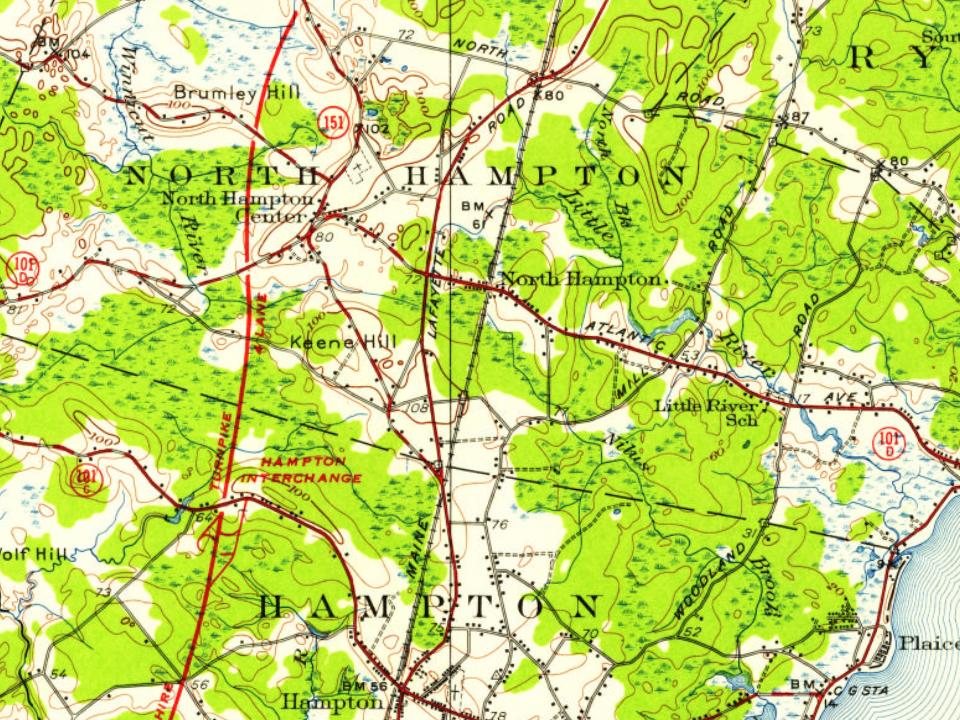
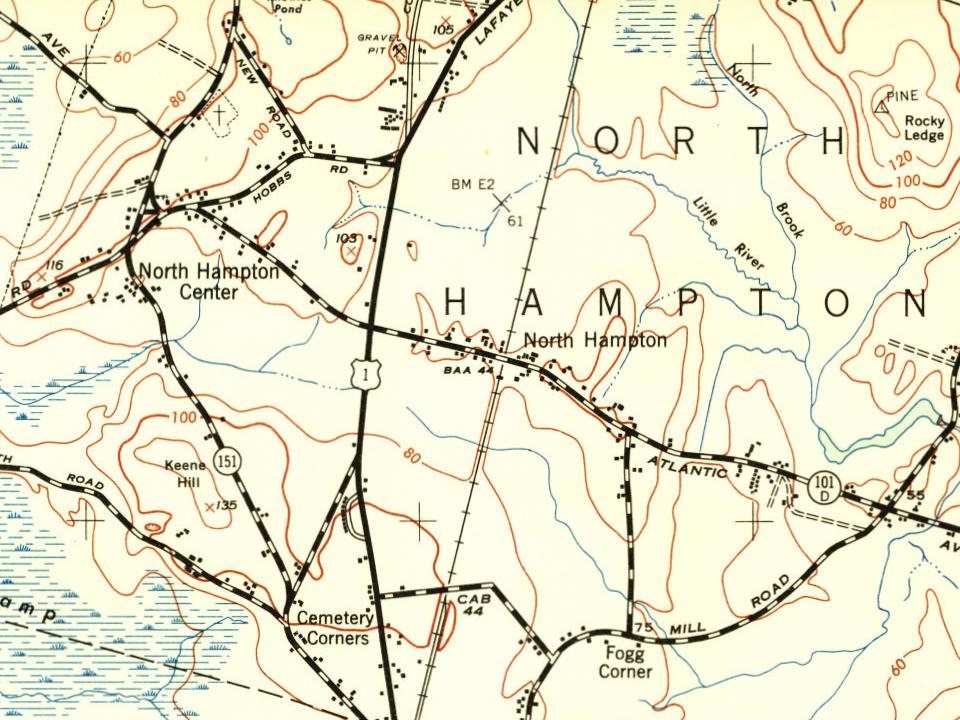
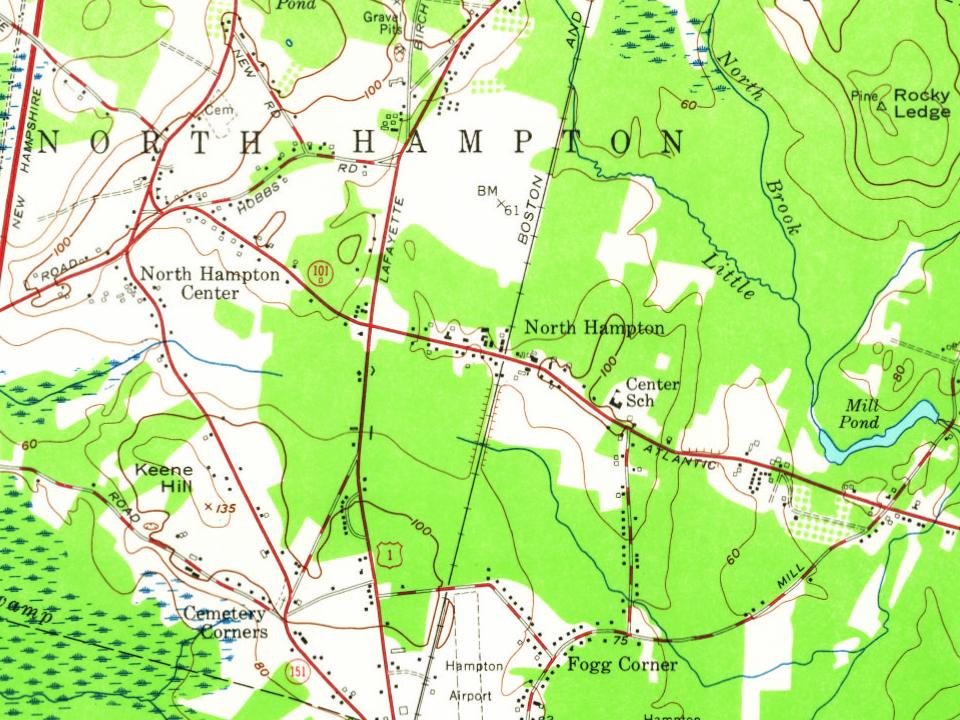
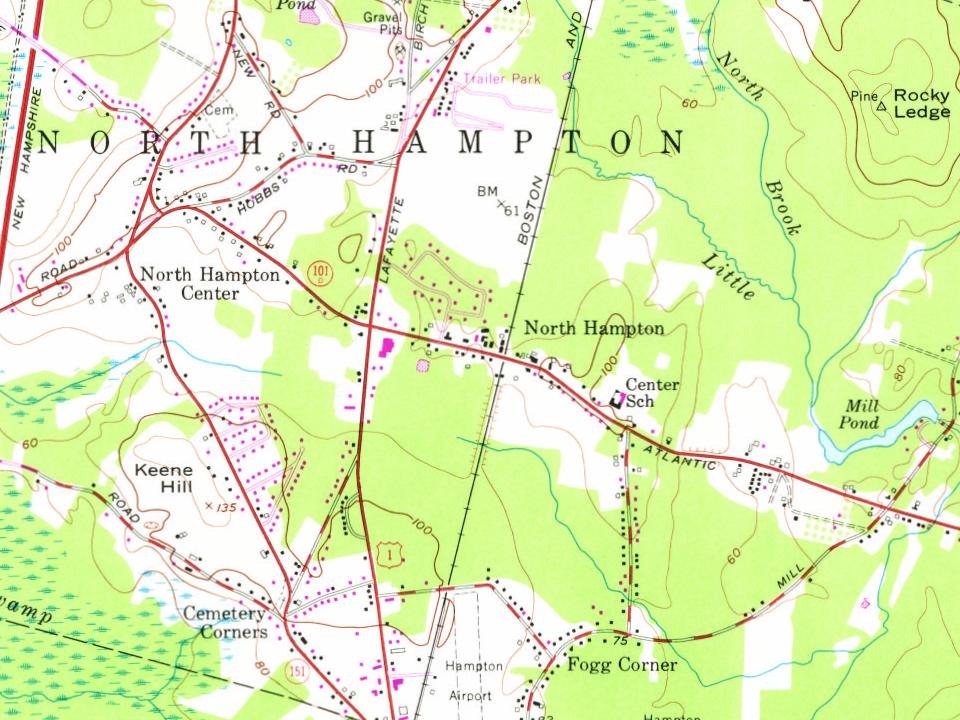
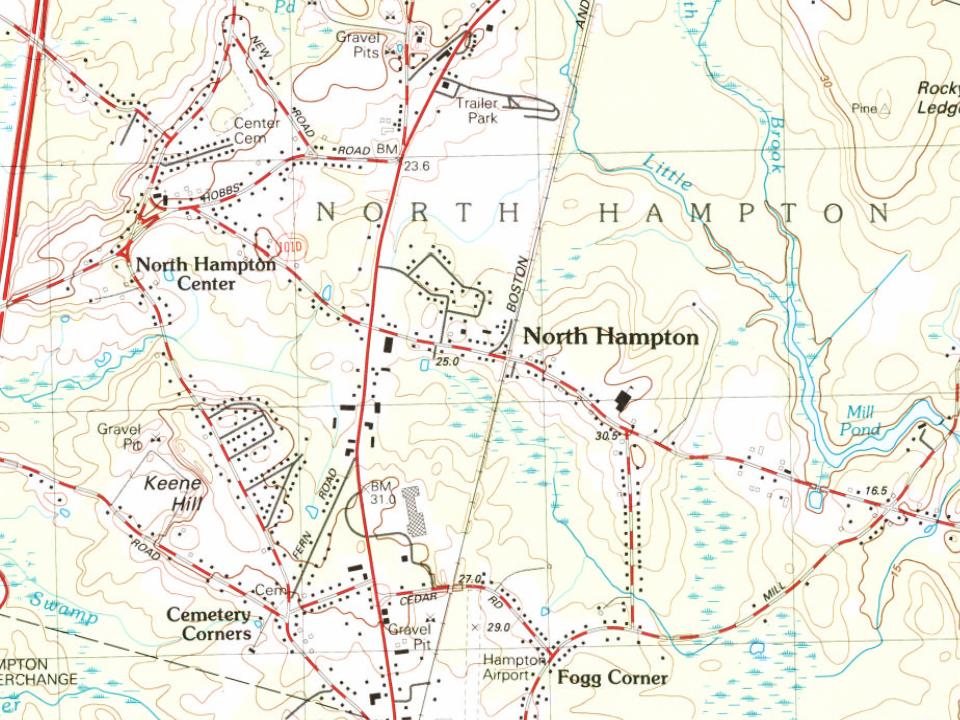
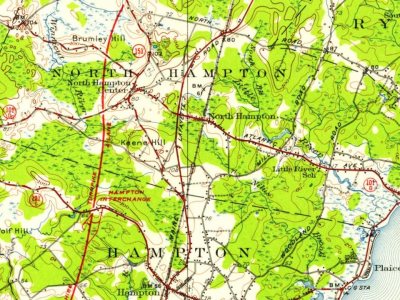
Every edition of the U.S. Geological Survey’s map of North Hampton. Tap a year, or press play to watch the town change.
1932Exeter sheet · 1:62,500
U.S. Geological Survey historical topographic maps (public domain), via Esri’s collection of the scans. The red ring marks the center of North Hampton.
People over time
North Hampton, census by census
Grew from 657 people in 1790 to 4,538 in 2020, 6 times over.
24 censuses, 1790–2020.
U.S. Census Bureau decennial counts, from the census table on North Hampton’s Wikipedia page.
Stories next door
History across the town line
Each neighbor’s History grade, on the same three inputs.
In 1742, according to Wikidata. North Hampton’s post office opened in 1825, and the first U.S. census counted 657 people here in 1790.
How does North Hampton rank for history?
North Hampton is more historic than 96% of U.S. towns, #18 of 126 in New Hampshire. The History grade combines the town’s founding era, the share of homes built before 1940 and its National Register listings. It’s a character grade, so it isn’t part of the overall grade. How it works.
What is on the National Register in North Hampton?
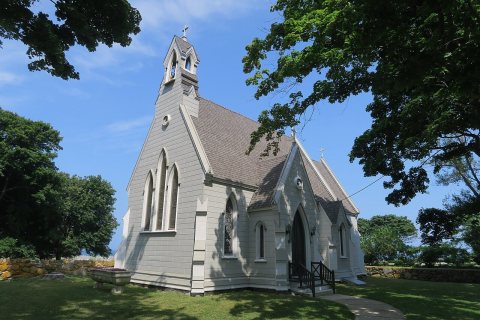
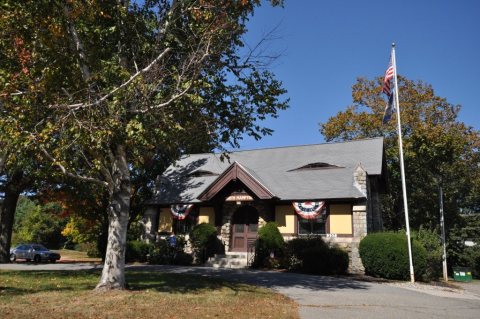
5 listings: 4 buildings and 1 historic district, the Little Boar's Head Historic District, with 103 contributing buildings. 108 historic buildings in all.
How old are the homes in North Hampton?
18% of North Hampton’s homes were built before 1940 (Census estimate, ±6.3 points), against a typical 17% for a New Hampshire town; the median home was built in 1984.
Founding dates: Wikidata, Wikipedia, the U.S. post office records of Blevins & Helbock (CC0) and the Census. Homes by year built: Census ACS 2020–24. National Register of Historic Places: National Park Service (list of May 22, 2026). Old photos, postcards and papers: Wikimedia Commons, the Library of Congress and other public archives, credited on each item’s page. Maps: U.S. Geological Survey historical topographic maps (via Esri) and Sanborn fire-insurance maps (Library of Congress). History text and census tables: Wikipedia (CC BY-SA 4.0). Places that used to be: USGS Geographic Names Information System (2021).
From Wikimedia Commons (8), Wikidata (5), the National Register of Historic Places (5), Wikipedia, Wikidata and Wikipedia for famous people, U.S. Geological Survey historical maps, U.S. Census counts (via Wikipedia), the US Post Offices dataset (Blevins & Helbock), the USGS Geographic Names Information System and old county and town histories (Internet Archive). Archive images are copied here with their credits and licenses, shown on each photo’s page. Refreshed monthly.


 2025
 2025
 2023
 2019
 2018
 2016
 2013
 2013