Nashua dates to 1746, and 20% of its homes were built before 1940
More historic than 93% of U.S. towns · #26 of 126 in New Hampshire. What drives it
8 places in town are on the National Register, among them three historic districts with 200 buildings between them. Below: 12 old photos and papers, maps from 1885 on, and the census since 1790.
Founding year: Wikidata. First post office: 1837.The full story ↓
History grade
What drives Nashua’s History grade
On its age, its old homes and the National Register, Nashua is more historic than 93% of U.S. towns, #26 of 126 in New Hampshire. All 3 inputs are above most U.S. towns; its age ranks highest and its share of homes from before 1940 lowest.
A
HistoryA character grade: shown, never part of Nashua’s overall grade.
New Hampshire towns list more on the Register than most of the country (a typical New Hampshire town has 9.5 per 10,000 residents, the U.S. 2.4), so Nashua’s 22.5 sits above most of its state (65% of New Hampshire towns have fewer) while its 205 historic buildings outnumber those of 93% of U.S. towns.
NoteThe founding year comes from Wikidata alone; no second source gives 1746.
How sure. Graded on any two of the three inputs instead, the letter would range from A− to A+. The pre-1940 share (±1.6 points) is firm at this size.
Founding year: Wikidata (other dates in Quick answers). Homes: Census ACS 2020–24. National Register: National Park Service, May 2026 list; each listing counted once (boundary changes and added documentation belong to their listing), and a historic district counts its contributing buildings. How TownRatings grades history →
What stands out about Nashua’s past
Read from the archive, the National Register and the record. The page puts what stands out first.
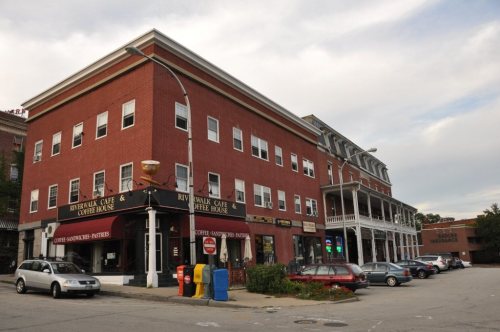
National Park Service, National Register of Historic Places. Photos from Wikimedia Commons, credited on each place’s page.
Every building
Nashua, building by building, 1885–1912
Fire insurance maps drew every building, what it was made of and what it was used for, so insurers could price the risk of fire. Pick a year, then a sheet.
The area was part of a 200-square-mile (520 km2) tract of land in Massachusetts called "Dunstable", named after Edward Tyng of Dunstable in England. Located at the confluence of the Nashua and Merrimack rivers, Dunstable was first settled about 1654 as a fur trading town. Nashua lies approximately in the center of the original 1673 grant. In 1732, Dunstable was split along the Merrimack River, with the town of Nottingham West (now the town of Hudson, New Hampshire) created out of the eastern portion. The previously disputed boundary between Massachusetts and New Hampshire was fixed in 1741 when the governorships of the two provinces were separated. As a result, the township of Dunstable was divided in two. Tyngsborough and some of Dunstable remained in Massachusetts, while Dunstable, New Hampshire, was incorporated in 1746 from the northern section of the town.
Passages that mention Nashua, cut from the printed page as they were published.
Leading manufacturers and merchants of New Hampshire1887 · page 111Read the page →
Read the text
the confluence of the Nashua River, 31 miles south by east of Concord. Originally the town embraced a large extent of territory, and bore the name of Dunstable. It was incorporated a town on April I, 1746, and in December, 1836, the name was changed to Nashua. The Nashua river ran through the heart of the town, and in 1842, in consequence of some difficulty about locating a town house, that portion of the town located on the north and west sides of the river petitioned to be set off and incorporated into a town by the name of Nashville. The legislature granted them their petition ; but, in 1853, a charter was granted and accepted, by which the original towns
Text read by machine from the scan; it may contain errors.
History of Hillsborough County, New Hampshire1885 · page 294Read the page →
Read the text
Soon after, a route from Nashua to New Ipswich through Hollis, Brookline and Mason, went into operation, and mail-stages made three trips weekly from Nashua to New Ipswich, till some time after the C()mi)letion of the Worcester and Nashua Railroad, when the route was abandoned ; the mail was carried from Pepperell to Brookline. Now two daily mails ply between the railroad station in Townsend and
Text read by machine from the scan; it may contain errors.
History of Hillsborough County, New Hampshire1885 · page 155Read the page →
Read the text
leaving in Massachusetts that jnirt of the old township now in Tyngsborough and in Dunstable, in that State, and adding to New Hampshire the present territory of Nashua, Hudson, Hollis and all the other portions of " Old Dunstable " north of the designated line. The name Dunstable, however, was still retained by the territory which now constitutes the city of Nashua till the New Hampshire Legislature of
Text read by machine from the scan; it may contain errors.
Leading manufacturers and merchants of New Hampshire1887 · page 113Read the page →
Read the text
The Nashua Manufacturing Company is the pioneer manufacturing concern in the city. This company was organized with a capital of $300,000, which was afterwards augmented to 51,000,000. In 1822 to 1823 the greater portion of the lands in the town and on the River Nashua up to the falls was purchased by the company, who commenced building a dam, canal and other works for factories. The company has several extensive mills, and employ over a thousand hands in manufacturing shirtings and drills, printing cloths, jeans, sheetings, etc. The Nashua Manufacturing Co. were followed by the Jackson Manufacturing Co., who also operate several extensive mills-
Text read by machine from the scan; it may contain errors.
Scans and text from the Internet Archive. Books published in 1930 or earlier, which are in the public domain.
Timeline
Nashua, 1746 to 1984
Woven from the archive, old maps, post office records, the National Register and the people born here.
Nothing in the archives for these yearsWeddings on Main Street, storms, parades, school pictures, the old store. If it’s in your family album, it belongs here.
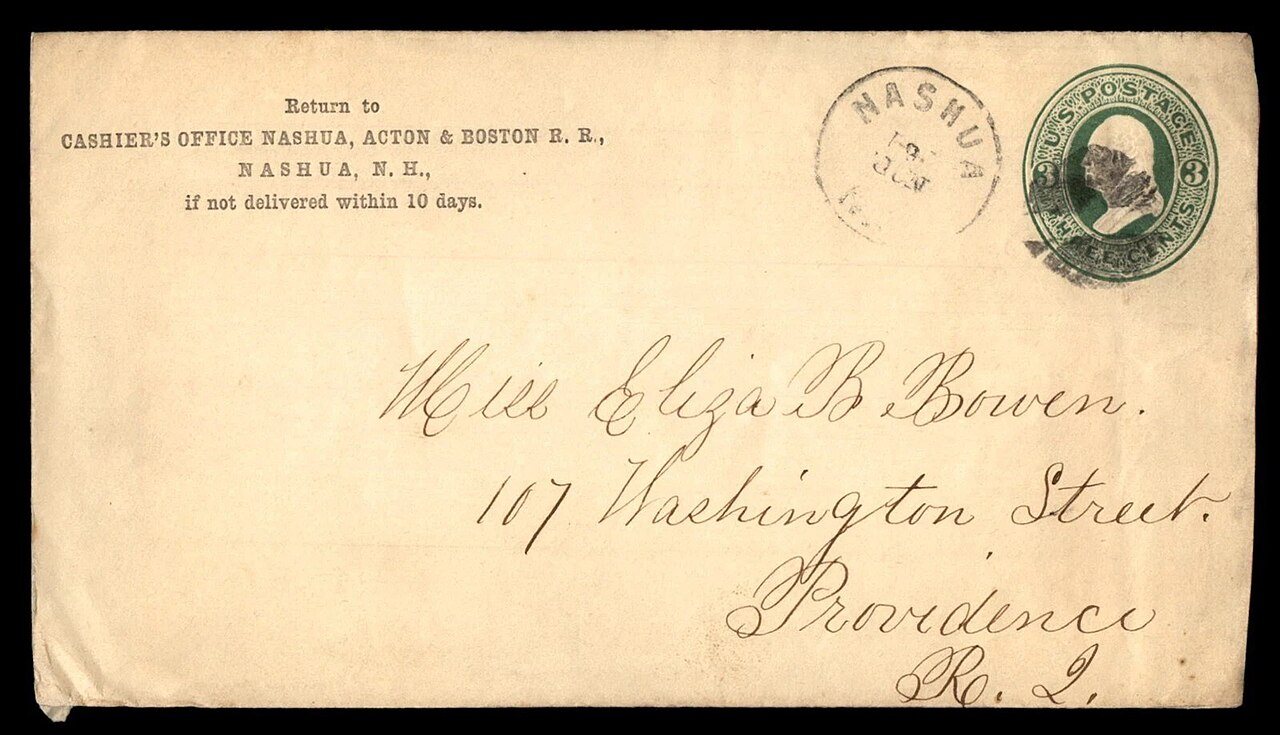
In 1746, according to Wikidata. Nashua’s post office opened in 1837, and the first U.S. census counted 632 people here in 1790.
How does Nashua rank for history?
Nashua is more historic than 93% of U.S. towns, #26 of 126 in New Hampshire. The History grade combines the town’s founding era, the share of homes built before 1940 and its National Register listings. It’s a character grade, so it isn’t part of the overall grade. How it works.
What is on the National Register in Nashua?
8 listings: 5 buildings, among them the Hunt Memorial Library (listed 1971, the first), and 3 historic districts, the Nashville Historic District, the Nashua Manufacturing Company Historic District and the Nashua Gummed and Coated Paper Company Historic District, with 200 contributing buildings. 205 historic buildings in all.
How old are the homes in Nashua?
20% of Nashua’s homes were built before 1940 (Census estimate, ±1.6 points), against a typical 17% for a New Hampshire town; the median home was built in 1975.
Founding dates: Wikidata, Wikipedia, the U.S. post office records of Blevins & Helbock (CC0) and the Census. Homes by year built: Census ACS 2020–24. National Register of Historic Places: National Park Service (list of May 22, 2026). Old photos, postcards and papers: Wikimedia Commons, the Library of Congress and other public archives, credited on each item’s page. Maps: U.S. Geological Survey historical topographic maps (via Esri) and Sanborn fire-insurance maps (Library of Congress). History text and census tables: Wikipedia (CC BY-SA 4.0). Places that used to be: USGS Geographic Names Information System (2021).
From Wikimedia Commons (9), the Library of Congress (3), the National Register of Historic Places (8), Wikipedia, Wikidata and Wikipedia for famous people, U.S. Geological Survey historical maps, U.S. Census counts (via Wikipedia), the US Post Offices dataset (Blevins & Helbock), the USGS Geographic Names Information System, Sanborn fire insurance maps (Library of Congress) and old county and town histories (Internet Archive). Archive images are copied here with their credits and licenses, shown on each photo’s page. Refreshed monthly.






 1846
 1883
 1895
 1900
 1901
 1902

