Hillsborough dates to 1772, and 22% of its homes were built before 1940
More historic than 93% of U.S. towns · #28 of 126 in New Hampshire. What drives it
6 places in town are on the National Register, among them the Franklin Pierce Homestead, a National Historic Landmark, and a historic district with 9 buildings. Below: 11 old photos and papers, maps from 1926 on, and the census since 1790.
Founding year: Wikidata. First post office: 1802.The full story ↓
History grade
What drives Hillsborough’s History grade
On its age, its old homes and the National Register, Hillsborough is more historic than 93% of U.S. towns, #28 of 126 in New Hampshire. All 3 inputs are above most U.S. towns; its age ranks highest and its share of homes from before 1940 lowest.
A
HistoryA character grade: shown, never part of Hillsborough’s overall grade.
New Hampshire towns list more on the Register than most of the country (a typical New Hampshire town has 9.5 per 10,000 residents, the U.S. 2.4), so Hillsborough’s 26.8 sits above most of its state (69% of New Hampshire towns have fewer) while its 16 historic buildings outnumber those of 78% of U.S. towns.
NoteThe founding year comes from Wikidata alone; no second source gives 1772.
How sure. Graded on any two of the three inputs instead, the letter would range from A− to A. The pre-1940 share is a Census survey estimate (±6.9 points).
Founding year: Wikidata (other dates in Quick answers). Homes: Census ACS 2020–24. National Register: National Park Service, May 2026 list; each listing counted once (boundary changes and added documentation belong to their listing), and a historic district counts its contributing buildings. How TownRatings grades history →
What stands out about Hillsborough’s past
Read from the archive, the National Register and the record. The page puts what stands out first.
The country’s official list of buildings and places worth saving. One is a National Historic Landmark, the highest tier. Boundary changes and added documentation are counted with their listing.
The town was first granted in 1735 by Jonathan Belcher, colonial governor of Massachusetts and New Hampshire, as "Number Seven", one in a line of nine Massachusetts towns set up as defense barriers against Indian attacks. The towns were renamed after the border between the two provinces was fixed in 1739, placing the towns in New Hampshire. Settled in 1741, the town was granted in 1748 by Governor Benning Wentworth as "Hillsborough", named for Sir Wills Hill, Earl of Hillsborough. It would be incorporated in 1772 by Governor John Wentworth.
Passages that mention Hillsborough, cut from the printed page as they were published.
The history of Hillsborough, New Hampshire, 1735-19211921 · page 383Read the page →
Read the text
Robert, s. of Richard McClure, was b. in Ireland in 1718, and came to New England when he was nine years old. He was one of the first settlers in Hillsborough, in 1741, but on account of fear of the Indians abandoned this settlement with his companions in 1746. Though nearly 60 years old when he enlisted, he served with valor in the Revolution. He has been described as a stalwart man, who retained his physical vigor almost to his last days, though living to be nearly a hundred years of age. He m.
Text read by machine from the scan; it may contain errors.
The history of Hillsborough, New Hampshire, 1735-19211921 · page 384Read the page →
Read the text
James, was born in Northern Ireland in the year 1709. At what time he emigrated to New England is not certain, but it was only a short time previous to his settlement in Hillsborough, probably 1737. He and his brother Alexander were in Litchfield, "west side of the river" now in the town of Merrimack, before 1739. Their surname was spelled in several ways, but most often as Calley, Colual and Collwell. It was changed on the records to McColley about 1745, and as his name continues on the town
Text read by machine from the scan; it may contain errors.
Scans and text from the Internet Archive. Books published in 1930 or earlier, which are in the public domain.
Timeline
Hillsborough, 1772 to 1984
Woven from the archive, old maps, post office records, the National Register and the people born here.
Nothing in the archives for these yearsWeddings on Main Street, storms, parades, school pictures, the old store. If it’s in your family album, it belongs here.
Nothing in the archives for these yearsWeddings on Main Street, storms, parades, school pictures, the old store. If it’s in your family album, it belongs here.
In 1772, according to Wikidata. Hillsborough’s post office opened in 1802, and the first U.S. census counted 798 people here in 1790.
How does Hillsborough rank for history?
Hillsborough is more historic than 93% of U.S. towns, #28 of 126 in New Hampshire. The History grade combines the town’s founding era, the share of homes built before 1940 and its National Register listings. It’s a character grade, so it isn’t part of the overall grade. How it works.
What is on the National Register in Hillsborough?
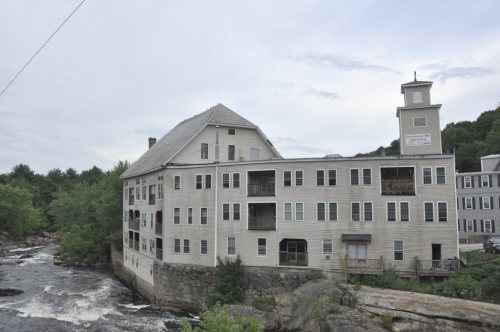
6 listings: 4 buildings, among them the Franklin Pierce Homestead (a National Historic Landmark since 1961), 1 historic district, the Contoocook Mills Industrial District, with 9 contributing buildings, and 1 structure. 16 historic buildings in all.
How old are the homes in Hillsborough?
22% of Hillsborough’s homes were built before 1940 (Census estimate, ±6.9 points), against a typical 17% for a New Hampshire town; the median home was built in 1974.
Founding dates: Wikidata, Wikipedia, the U.S. post office records of Blevins & Helbock (CC0) and the Census. Homes by year built: Census ACS 2020–24. National Register of Historic Places: National Park Service (list of May 22, 2026). Old photos, postcards and papers: Wikimedia Commons, the Library of Congress and other public archives, credited on each item’s page. Maps: U.S. Geological Survey historical topographic maps (via Esri) and Sanborn fire-insurance maps (Library of Congress). History text and census tables: Wikipedia (CC BY-SA 4.0). Places that used to be: USGS Geographic Names Information System (2021).
From Wikimedia Commons (23), Wikidata (1), the National Register of Historic Places (6), Wikipedia, Wikidata and Wikipedia for famous people, U.S. Geological Survey historical maps, U.S. Census counts (via Wikipedia), the US Post Offices dataset (Blevins & Helbock), the USGS Geographic Names Information System and old county and town histories (Internet Archive). Archive images are copied here with their credits and licenses, shown on each photo’s page. Refreshed monthly.


 ★ Landmark




 1907
 c. 1922
 Date?
 Date?
 Date?
 Date?
 Date?
 2023
 2018
 2015
 2014
 2014
 2013
 2013
 2013
 2012
 2012
 2011
 2008


