2 places in town are on the National Register, among them a historic district with 41 buildings. Below: 19 old photos and papers, maps from 1900 on, and the census since 1790.
Founding year: Wikidata. First post office: 1812.The full story ↓
History grade
What drives Hancock’s History grade
On its age, its old homes and the National Register, Hancock is more historic than 95% of U.S. towns. All 3 inputs are above most U.S. towns; its National Register listings ranks highest and its age lowest.
A
HistoryA character grade: shown, never part of Hancock’s overall grade.
New Hampshire towns list more on the Register than most of the country (a typical New Hampshire town has 9.5 per 10,000 residents, the U.S. 2.4), so Hancock’s 229 sits above most of its state (92% of New Hampshire towns have fewer) while its 41 historic buildings outnumber those of 84% of U.S. towns.
NoteThe founding year comes from Wikidata alone; no second source gives 1779.
How sure. Graded on any two of the three inputs instead, the letter would still be A. The pre-1940 share is a Census survey estimate (±7.4 points).
Founding year: Wikidata (other dates in Quick answers). Homes: Census ACS 2020–24. National Register: National Park Service, May 2026 list; each listing counted once (boundary changes and added documentation belong to their listing), and a historic district counts its contributing buildings. How TownRatings grades history →
What stands out about Hancock’s past
Read from the archive, the National Register and the record. The page puts what stands out first.
Nothing in the archives for these yearsWeddings on Main Street, storms, parades, school pictures, the old store. If it’s in your family album, it belongs here.
Hancock started as an unidentified settlement on the Contoocook River, in lands known as "Society Land" or "Cumberland", which had been reserved for the proprietors of the lands which became New Hampshire. First settled in 1764, the town was set off from Peterborough and incorporated in 1779, named "Hancock" in honor of John Hancock. A landowner of 1,875 acres (8 km2) in the community, Hancock was the first governor of the state of Massachusetts, president of the Continental Congress, and signer of the Declaration of Independence.
Passages that mention Hancock, cut from the printed page as they were published.
The history of Hancock, New Hampshire, 1764-18891889 · page 117Read the page →
Read the text
" Be it Enacted by the senate and House of Kepresentativcs in General Court Convened that the said Joseph Putnam together with his Estate which is bounded as follows to wit. Beginning at the soutli west corner of said Putnams Land on the line of Hancock and running East twenty five rods to the south east corner of said Putnams Land being a Tree marked thence north about three hundred i-ods to llie Hiver from thence by the line of said Hancock to the first mentioned bounds be and is hereby set of to and incorporated with the said Town of Hancock and that in future the said Putnam sliall be considered as belonging to said Hancock any Law
Text read by machine from the scan; it may contain errors.
The history of Hancock, New Hampshire, 1764-18891889 · page 97Read the page →
Read the text
County of Hillsborough anil State of Xew Hampshire Gent-" " In consideration of the Town of Hancock's being pleased to agree upon a plat to set a Meetinghouse on, upon my Land and for diverse other good causes and considerations I do hereby give grant and convey unto the Town of Hancock for the following purposes (viz) for a convenient Common about said Meetinghouse for stabling of Horses on the Sabbath— for to build Houses on for people to asemble in upon Sabbath day— noons for a Burying yard and Training Field— for Roads &c— or for any other necessary publick use at the Direction ot the Town, and for no other purposes
Text read by machine from the scan; it may contain errors.
Scans and text from the Internet Archive. Books published in 1930 or earlier, which are in the public domain.
Timeline
Hancock, 1779 to 2000
Woven from the archive, old maps, post office records, the National Register and the people born here.
In 1779, according to Wikidata. Hancock’s post office opened in 1812, and the first U.S. census counted 634 people here in 1790.
How does Hancock rank for history?
Hancock is more historic than 95% of U.S. towns. The History grade combines the town’s founding era, the share of homes built before 1940 and its National Register listings. It’s a character grade, so it isn’t part of the overall grade. How it works.
What is on the National Register in Hancock?
Two places: the Hancock-Greenfield Bridge (listed 1981) and the Hancock Village Historic District (1988).
How old are the homes in Hancock?
31% of Hancock’s homes were built before 1940 (Census estimate, ±7.4 points), against a typical 17% for a New Hampshire town; the median home was built in 1969.
Founding dates: Wikidata, Wikipedia, the U.S. post office records of Blevins & Helbock (CC0) and the Census. Homes by year built: Census ACS 2020–24. National Register of Historic Places: National Park Service (list of May 22, 2026). Old photos, postcards and papers: Wikimedia Commons, the Library of Congress and other public archives, credited on each item’s page. Maps: U.S. Geological Survey historical topographic maps (via Esri) and Sanborn fire-insurance maps (Library of Congress). History text and census tables: Wikipedia (CC BY-SA 4.0). Places that used to be: USGS Geographic Names Information System (2021).
From Wikimedia Commons (20), the Library of Congress (7), Wikidata (1), the National Register of Historic Places (2), Wikipedia, Wikidata and Wikipedia for famous people, U.S. Geological Survey historical maps, U.S. Census counts (via Wikipedia), the US Post Offices dataset (Blevins & Helbock), the USGS Geographic Names Information System and old county and town histories (Internet Archive). Archive images are copied here with their credits and licenses, shown on each photo’s page. Refreshed monthly.


 1922
 1936
 1936
 1936
 1936
 1936
 1937
 Date?
 Date?
 Date?
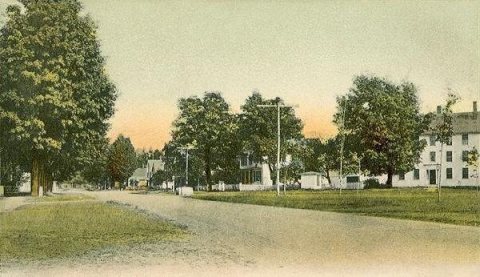 Date?
 Date?
 Date?
 Date?
 Date?
 Date?
 Date?
 Date?
 Date?
 2022
 2018
 2018
 2016
 2014
 2011
 2011
 2011


