Greensboro dates to 1808, and 61 of its places are on the National Register
More historic than 77% of U.S. towns · #63 of 290 in North Carolina. What drives it
Most of Greensboro was built recently: 6% of its homes predate 1940 and the median home dates from 1985. 61 places in town are on the National Register, among them 2 National Historic Landmarks and ten historic districts with 3,187 buildings between them. Below: 3 old photos and papers, maps from 1885 on, and the census since 1870.
Founding year: Wikidata. First post office: 1810.The full story ↓
History grade
What drives Greensboro’s History grade
On its age, its old homes and the National Register, Greensboro is more historic than 77% of U.S. towns, #63 of 290 in North Carolina. Its National Register listings hold the grade up; its share of homes from before 1940 pulls it down.
A−
HistoryA character grade: shown, never part of Greensboro’s overall grade.
Among the 400 U.S. cities of 100,000 or more, Greensboro ranks #137 on History.
North Carolina towns list more on the Register than most of the country (a typical North Carolina town has 12.5 per 10,000 residents, the U.S. 2.4), so Greensboro’s 109 sits above most of its state (76% of North Carolina towns have fewer) while its 3,271 historic buildings outnumber those of 100% of U.S. towns.
How sure. Graded on any two of the three inputs instead, the letter would range from B− to A. The pre-1940 share (±0.4 points) is firm at this size. Two sources give 1808.
Founding year: Wikidata (other dates in Quick answers). Homes: Census ACS 2020–24. National Register: National Park Service, May 2026 list; each listing counted once (boundary changes and added documentation belong to their listing), and a historic district counts its contributing buildings. How TownRatings grades history →
What stands out about Greensboro’s past
Read from the archive, the National Register and the record. The page puts what stands out first.
The country’s official list of buildings and places worth saving. 2 are National Historic Landmarks, the highest tier. Boundary changes and added documentation are counted with their listing.
Prior to the arrival of Europeans, inhabitants of the area that became Greensboro were the Saura. Other indigenous cultures had occupied this area for thousands of years, typically settling along the waterways, as did the later European settlers.
Passages that mention Greensboro, cut from the printed page as they were published.
The history of the first North Carolina reunion at Greensboro, N. C., October eleventh, twelfth, and thirteenth, nineteen hundred and three1905 · page 14Read the page →
Read the text
Special Message ot the Governor The Honorable, the General Assembly: The city of Greensboro, iu her official capacity, and through various organizations having their headquarters there, has planned a reunion of and reception for all the non-resident native North Carolinians, to be held in Greensboro on North Carolina Day, October 12, 1903. It is the desire that this be made a notable occasion. I am requested to ask your honorable body to join with the city of Greensboro and the
Text read by machine from the scan; it may contain errors.
The history of the first North Carolina reunion at Greensboro, N. C., October eleventh, twelfth, and thirteenth, nineteen hundred and three1905 · page 17Read the page →
Read the text
Resolution of the General Assembly Whereas, The city of Greensboro, through its chief executive and its Industrial and Immigration Association and Young Men's Business Association, has planned a Reunion of non-resident native sons and daughters of North Carolina to be held at Greensboro, on "North Carolina Day", October 12, 1903; and Whereas, It is eminently fitting that on a day set apart by the General Assembly as one devoted to fostering a patriotic love of the Com-
Text read by machine from the scan; it may contain errors.
History of the Baptists in Greensboro1926 · page 59Read the page →
Read the text
The writer has been informed that Brother Vernon came to Greensboro as a telegraph operator for Lieutenant W. H. Watlington, who was engaged in construction work on the railroad between Greensboro and Danville, 1873. There is an old adage, ‘‘Beware when all men speak well of you.’’ To Brother Vernon this did not apply. We have never known or heard of a single criticism of him from the time
Text read by machine from the scan; it may contain errors.
The history of Guilford County, North Carolina1902 · page 45Read the page →
Read the text
At the term of Court held May, 1809, nt Martinsville it was announced "the new courthouse in (ireensboro now ready for reception of court. The court adjourned from the town of Martinsville to the town of Greensboro (which was the centre of the county)" to meet at ten o'clock tomorrow, Friday, 19 May, 1809. (Page 465.) The esquires present at the first term of Court held in Greensboro were John Starrat, Jonathan Parker, Joseph Gullet, George Swain, John McAdoo, Ephraim Burrow.
Text read by machine from the scan; it may contain errors.
Scans and text from the Internet Archive. Books published in 1930 or earlier, which are in the public domain.
Timeline
Greensboro, 1808 to 2024
Woven from the archive, old maps, post office records, the National Register and the people born here.
Nothing in the archives for these yearsWeddings on Main Street, storms, parades, school pictures, the old store. If it’s in your family album, it belongs here.
Every edition of the U.S. Geological Survey’s map of Greensboro. Tap a year, or press play to watch the town change.
1951Greensboro sheet · 1:24,000
U.S. Geological Survey historical topographic maps (public domain), via Esri’s collection of the scans. The red ring marks the center of Greensboro.
Every building
Greensboro, building by building, 1885–1919
Fire insurance maps drew every building, what it was made of and what it was used for, so insurers could price the risk of fire. Pick a year, then a sheet.
In 1808, according to Wikidata. Greensboro’s post office opened in 1810, and the census of 1870 counted 497 people here.
How does Greensboro rank for history?
Greensboro is more historic than 77% of U.S. towns, #63 of 290 in North Carolina. The History grade combines the town’s founding era, the share of homes built before 1940 and its National Register listings. It’s a character grade, so it isn’t part of the overall grade. How it works.
What is on the National Register in Greensboro?
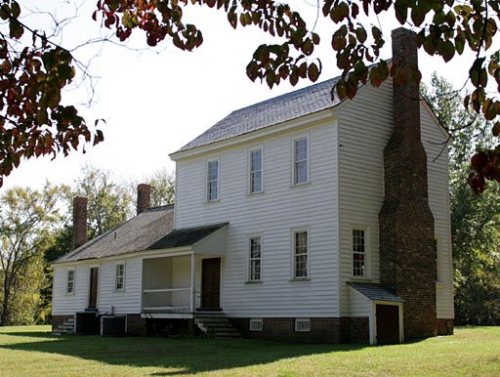
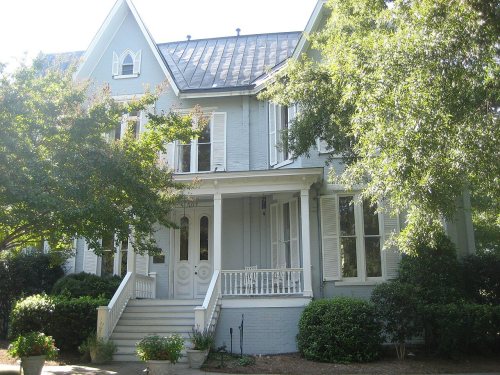
61 listings, 2 of them National Historic Landmarks: 43 buildings, among them the Blandwood (a National Historic Landmark since 1988), 17 historic districts with 3,187 contributing buildings, and 1 site. 3,271 historic buildings in all.
How old are the homes in Greensboro?
6% of Greensboro’s homes were built before 1940 (Census estimate), against a typical 4.1% for a North Carolina town; the median home was built in 1985.
Founding dates: Wikidata, Wikipedia, the U.S. post office records of Blevins & Helbock (CC0) and the Census. Homes by year built: Census ACS 2020–24. National Register of Historic Places: National Park Service (list of May 22, 2026). Old photos, postcards and papers: Wikimedia Commons, the Library of Congress and other public archives, credited on each item’s page. Maps: U.S. Geological Survey historical topographic maps (via Esri) and Sanborn fire-insurance maps (Library of Congress). History text and census tables: Wikipedia (CC BY-SA 4.0). Places that used to be: USGS Geographic Names Information System (2021).
From Wikimedia Commons (3), Wikidata (3), the National Register of Historic Places (62), Wikipedia, Wikidata and Wikipedia for famous people, U.S. Geological Survey historical maps, U.S. Census counts (via Wikipedia), the US Post Offices dataset (Blevins & Helbock), the USGS Geographic Names Information System, Sanborn fire insurance maps (Library of Congress) and old county and town histories (Internet Archive). Archive images are copied here with their credits and licenses, shown on each photo’s page. Refreshed monthly.


 ★ Landmark




 1892
 1899


