Farmington dates to 1824, and 2 of its places are on the National Register
More historic than 74% of U.S. towns · #172 of 701 in Michigan. What drives it
Most of Farmington was built recently: 5% of its homes predate 1940 and the median home dates from 1966. 2 places in town are on the National Register, among them a historic district with 30 buildings. Below: 1 old photo or paper, maps from 1905 on, and the census since 1880.
Founding year: Wikipedia. First post office: 1826.The full story ↓
History grade
What drives Farmington’s History grade
On its age, its old homes and the National Register, Farmington is more historic than 74% of U.S. towns, #172 of 701 in Michigan. Its National Register listings hold the grade up; its share of homes from before 1940 pulls it down.
B+
HistoryA character grade: shown, never part of Farmington’s overall grade.
Few Michigan towns list much on the Register (a typical Michigan town has 0.0 per 10,000 residents, the U.S. 2.4), so Farmington’s 26.9 sits above most of its state (88% of Michigan towns have fewer) while its 31 historic buildings outnumber those of 82% of U.S. towns.
How sure. Graded on any two of the three inputs instead, the letter would range from B− to A. The pre-1940 share (±1.9 points) is firm at this size. Two sources give 1824.
Founding year: Wikipedia (other dates in Quick answers). Homes: Census ACS 2020–24. National Register: National Park Service, May 2026 list; each listing counted once (boundary changes and added documentation belong to their listing), and a historic district counts its contributing buildings. How TownRatings grades history →
What stands out about Farmington’s past
Read from the archive, the National Register and the record. The page puts what stands out first.
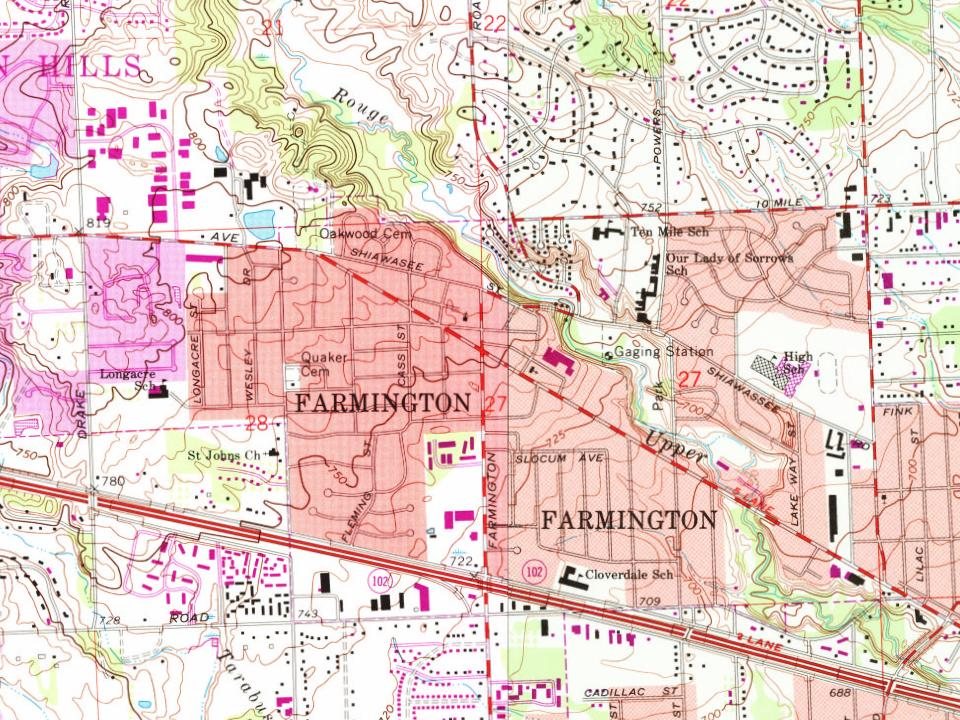
Farmington was the site of three Native American trails - the Orchard Lake Trail, the Grand River Trail, and the Shiawassee Trail.
Farmington was founded in 1824 by Arthur Power. Like many Oakland County pioneers, he hailed from the state of New York. Power was a Quaker, as were the settlers who joined him, and the town was first known as Quakertown. In 1826 the name Farmington was officially chosen because it was the name of Power's hometown, Farmington, New York.
Passages that mention Farmington, cut from the printed page as they were published.
History of Oakland County, Michigan1912 · page 202Read the page →
Read the text
Farmington — Incorporated as a village by state law in 1807; charter amended in 1869. 1875; reincorporated in 1887; amended, limits extended. 1 89 1.
Text read by machine from the scan; it may contain errors.
History of Oakland County, Michigan1912 · page 457Read the page →
Read the text
Farmington is a ])retty place, located on high ground and tlierefore on a healthful site. It has a modern Union school ; a good water supply drawn from two reservoirs (one for fire and one for domestic purposes), costing some $15,000; an Edison light plant; a sewerage system completed in 1906; a creditable newspaper, the Farmington Enterprise.
Text read by machine from the scan; it may contain errors.
Scans and text from the Internet Archive. Books published in 1930 or earlier, which are in the public domain.
Timeline
Farmington, 1824 to 1999
Woven from the archive, old maps, post office records, the National Register and the people born here.
Nothing in the archives for these yearsWeddings on Main Street, storms, parades, school pictures, the old store. If it’s in your family album, it belongs here.
In 1824, according to Wikipedia’s history of the town. Farmington’s post office opened in 1826, and the census of 1880 counted 377 people here.
How does Farmington rank for history?
Farmington is more historic than 74% of U.S. towns, #172 of 701 in Michigan. The History grade combines the town’s founding era, the share of homes built before 1940 and its National Register listings. It’s a character grade, so it isn’t part of the overall grade. How it works.
What is on the National Register in Farmington?
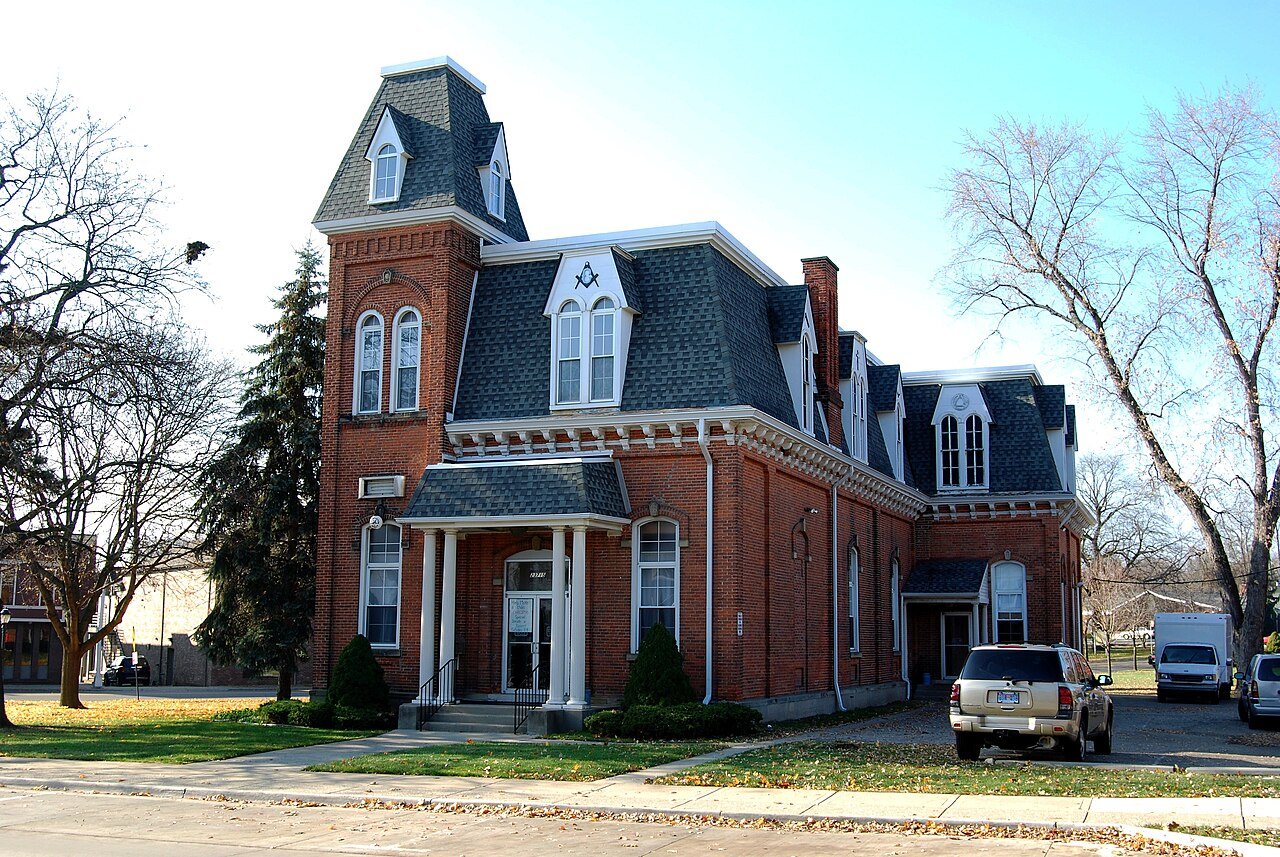
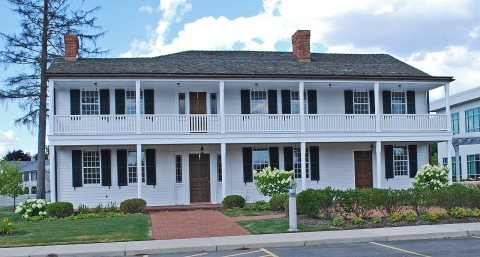
Two places: the Farmington Historic District (listed 1976) and the First Methodist Episcopal Church of Farmington (2014).
How old are the homes in Farmington?
5% of Farmington’s homes were built before 1940 (Census estimate, ±1.9 points), against a typical 12% for a Michigan town; the median home was built in 1966.
Founding dates: Wikidata, Wikipedia, the U.S. post office records of Blevins & Helbock (CC0) and the Census. Homes by year built: Census ACS 2020–24. National Register of Historic Places: National Park Service (list of May 22, 2026). Old photos, postcards and papers: Wikimedia Commons, the Library of Congress and other public archives, credited on each item’s page. Maps: U.S. Geological Survey historical topographic maps (via Esri) and Sanborn fire-insurance maps (Library of Congress). History text and census tables: Wikipedia (CC BY-SA 4.0). Places that used to be: USGS Geographic Names Information System (2021).
From Wikimedia Commons (17), Wikidata (1), the National Register of Historic Places (2), Wikipedia, Wikidata and Wikipedia for famous people, U.S. Geological Survey historical maps, U.S. Census counts (via Wikipedia), the US Post Offices dataset (Blevins & Helbock), the USGS Geographic Names Information System, Sanborn fire insurance maps (Library of Congress) and old county and town histories (Internet Archive). Archive images are copied here with their credits and licenses, shown on each photo’s page. Refreshed monthly.




![Farmington is a ])retty place, located on high ground and tlierefore on a healthful site. It has a modern Union school ; a good water supply drawn from two reservoirs (one for fire and one for domestic purposes), costing some $15,000; an Edison light plant; a sewerage system completed in 1906; a cr…](https://images.townratings.com/story/7925/bk-6bbae6aa8b769b19-l.jpg)


 2020
 2020
 2018
 2017
 2017
 2014
 2014
 2012
 2011
 2010
 2009
 2009
 2009
 2008
 2005
 2005

