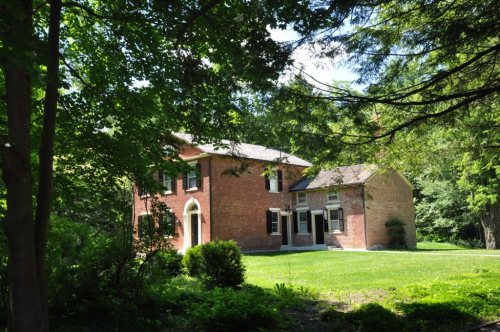
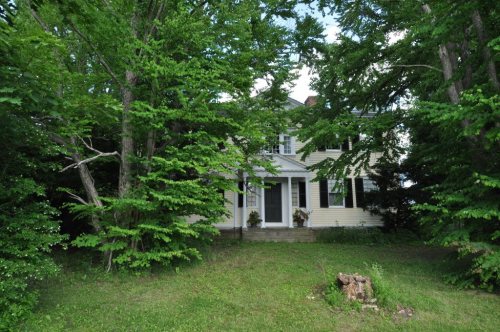
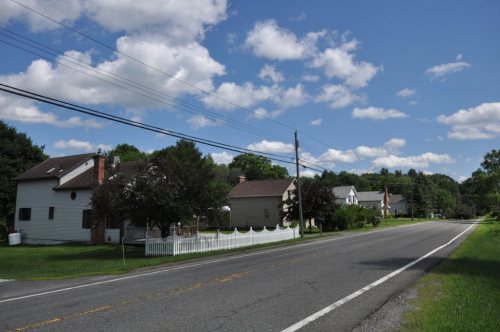
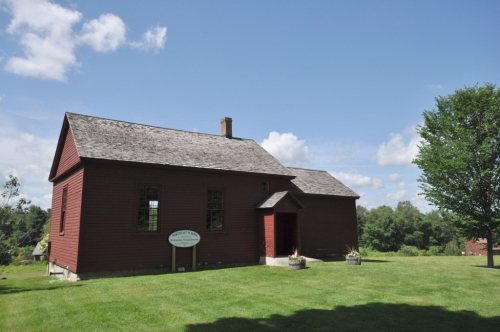
6 places in town are on the National Register, among them a historic district with 28 buildings. Below: 1 old photo or paper, maps from 1888 on, and the census since 1790.
Founding year: Wikidata. First post office: 1806.The full story ↓
History grade
What drives Richmond’s History grade
On its age, its old homes and the National Register, Richmond is more historic than 94% of U.S. towns. All 3 inputs are above most U.S. towns; its age ranks highest and its share of homes from before 1940 lowest.
A
HistoryA character grade: shown, never part of Richmond’s overall grade.
Massachusetts towns list more on the Register than most of the country (a typical Massachusetts town has 46.0 per 10,000 residents, the U.S. 2.4), so Richmond’s 271 sits above most of its state (82% of Massachusetts towns have fewer) while its 38 historic buildings outnumber those of 83% of U.S. towns.
NoteThe founding year comes from Wikidata alone; no second source gives 1760.
How sure. Graded on any two of the three inputs instead, the letter would range from A− to A+. The pre-1940 share is a Census survey estimate (±4.4 points).
Founding year: Wikidata (other dates in Quick answers). Homes: Census ACS 2020–24. National Register: National Park Service, May 2026 list; each listing counted once (boundary changes and added documentation belong to their listing), and a historic district counts its contributing buildings. How TownRatings grades history →
What stands out about Richmond’s past
Read from the archive, the National Register and the record. The page puts what stands out first.
Present day Richmond was first settled by Micah Mudge and Ichabod Wood in 1759. Mudge migrated up to Richmond from Connecticut via the Housatonic River, while Wood came from Rehoboth on the eastern seaboard. It is thought that the two did not make contact until after the first winter, as their initial settlements were separated by about three miles of dense wilderness.
Passages that mention Richmond, cut from the printed page as they were published.
History of the second pilgrimage to Richmond, by the Knights Templars of Massachusetts and Rhode Island, May, 18811882 · page 80Read the page →
Read the text
As you left to-day such a world of associations came flooding back on my memory, and all so full of delightful recollections. I saw, in memory, the reception of our dear Richmond friends in Boston, in 1858, now twenty-three years since, and again I saw that never to be forgotten reception we had, and I led, at Richmond in 1859 — dear old Brothers Winslow Lewis, John Flint, Charles Robbins, and last, but not least,
Text read by machine from the scan; it may contain errors.
History of the second pilgrimage to Richmond, by the Knights Templars of Massachusetts and Rhode Island, May, 18811882 · page 143Read the page →
Read the text
of De Molay ; but it is duly appreciated by us, and we will keep and cherish it, as a token of the high regard and affectionate esteem existing between De Molay and Richmond, No. 2, and which we prize beyond measure. No meeting of the members of Richmond Commandery is ever held that some incident of our pilgrimage to Boston, or your pilgrimage to Richmond, and some pleasur-
Text read by machine from the scan; it may contain errors.
Scans and text from the Internet Archive. Books published in 1930 or earlier, which are in the public domain.
Timeline
Richmond, 1760 to 1990
Woven from the archive, old maps, post office records, the National Register and the people born here.
Nothing in the archives for these yearsWeddings on Main Street, storms, parades, school pictures, the old store. If it’s in your family album, it belongs here.
In 1760, according to Wikidata. Richmond’s post office opened in 1806, and the first U.S. census counted 1,255 people here in 1790.
How does Richmond rank for history?
Richmond is more historic than 94% of U.S. towns. The History grade combines the town’s founding era, the share of homes built before 1940 and its National Register listings. It’s a character grade, so it isn’t part of the overall grade. How it works.
What is on the National Register in Richmond?
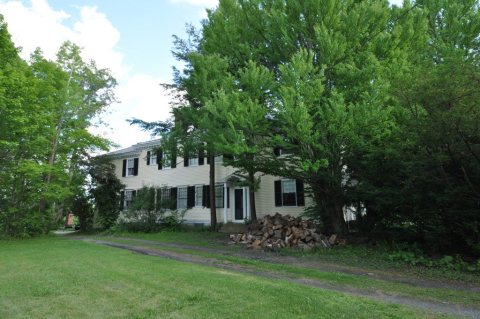
6 listings: 5 buildings, among them the Goodwood (listed 1982, the first), and 1 historic district, the Richmond Furnace Historical and Archeological District, with 28 contributing buildings. 38 historic buildings in all.
How old are the homes in Richmond?
19% of Richmond’s homes were built before 1940 (Census estimate, ±4.4 points), against a typical 21% for a Massachusetts town; the median home was built in 1970.
Founding dates: Wikidata, Wikipedia, the U.S. post office records of Blevins & Helbock (CC0) and the Census. Homes by year built: Census ACS 2020–24. National Register of Historic Places: National Park Service (list of May 22, 2026). Old photos, postcards and papers: Wikimedia Commons, the Library of Congress and other public archives, credited on each item’s page. Maps: U.S. Geological Survey historical topographic maps (via Esri) and Sanborn fire-insurance maps (Library of Congress). History text and census tables: Wikipedia (CC BY-SA 4.0). Places that used to be: USGS Geographic Names Information System (2021).
From Wikimedia Commons (12), the National Register of Historic Places (6), Wikipedia, Wikidata and Wikipedia for famous people, U.S. Geological Survey historical maps, U.S. Census counts (via Wikipedia), the US Post Offices dataset (Blevins & Helbock), the USGS Geographic Names Information System and old county and town histories (Internet Archive). Archive images are copied here with their credits and licenses, shown on each photo’s page. Refreshed monthly.


 2015
 2015
 2015
 2015
 2015
 2015
 2009
 2009
 2009
 2009
 2008