Notre Dame’s post office opened in 1851, and 1 of its places is on the National Register
More historic than 32% of U.S. towns · #469 of 593 in Indiana. What drives it
Most of Notre Dame was built recently: 0.0% of its homes predate 1940 and the median home dates from 1995. Below: 12 old photos and papers, maps from 1958 on, and old-book passages.
Founding year: the first Notre Dame post office (Blevins & Helbock, CC0).
History grade
What drives Notre Dame’s History grade
On its age, its old homes and the National Register, Notre Dame is more historic than 32% of U.S. towns, #469 of 593 in Indiana. Its National Register listings hold the grade up; its share of homes from before 1940 pulls it down.
C
HistoryA character grade: shown, never part of Notre Dame’s overall grade.
Indiana towns list more on the Register than most of the country (a typical Indiana town has 7.9 per 10,000 residents, the U.S. 2.4), so Notre Dame’s 30.5 sits above most of its state (70% of Indiana towns have fewer) while its 21 historic buildings outnumber those of 80% of U.S. towns.
How sure. Graded on any two of the three inputs instead, the letter would range from D to B. The pre-1940 share is a Census survey estimate (±7.3 points). The founding year is the first post office, not a stated founding date.
Founding year: the first post office (other dates in Quick answers). Homes: Census ACS 2020–24. National Register: National Park Service, May 2026 list; each listing counted once (boundary changes and added documentation belong to their listing), and a historic district counts its contributing buildings. How TownRatings grades history →
What stands out about Notre Dame’s past
Read from the archive, the National Register and the record. The page puts what stands out first.
Nothing in the archives for these yearsWeddings on Main Street, storms, parades, school pictures, the old store. If it’s in your family album, it belongs here.
Wikipedia doesn’t have a history of Notre Dame yet. The photos, dates and memories neighbors add here are how it gets written.
Notre Dame is a census-designated place and unincorporated community north of the city of South Bend in St. Joseph County, in the U.S. state of Indiana. It includes the campuses of three Catholic colleges: the University of Notre Dame, Saint Mary's College, and Holy Cross College. Notre Dame is split between Clay and Portage townships. As of the 2020 census, its population was 7,234.
Its first post office opened in 1851. Between the 2010 and 2020 censuses its population grew from 5,973 to 7,234 (+21%).
Intro from Wikipedia. Population: U.S. Census Bureau.
From the old history books
What they wrote about Notre Dame in 1895
Passages that mention Notre Dame, cut from the printed page as they were published.
A brief history of the University of Notre Dame du Lac, Indiana from 1842 to 18921895 · page 75Read the page →
Read the text
about the university. The result is that nowhere perhaps in all the county is there a more lovely approach to noble buildings than through the finely shaded avenues and parks of Notre Dame. Indeed, as has been well said, the sense of the beautiful, inspired by the fair surroundings, has had no little to do with the success of Notre Dame as an educational institution. Milton complains that Cambridge
Text read by machine from the scan; it may contain errors.
A brief history of the University of Notre Dame du Lac, Indiana from 1842 to 1892. Prepared for the golden jubilee, to be celebrated June 11, 12 and 13, 18951895 · page 75Read the page →
Read the text
about the university. The result is that nowhere perhaps in all the county is there a more lovely approach to noble buildings than through the finely shaded avenues and parks of Notre Dame. Indeed, as has been well said, the sense of the beautiful, inspired by the fair surroundings, has had no little to do with the success of Notre Dame as an educational institution. Milton complains that Cambridge
Text read by machine from the scan; it may contain errors.
A Brief History of the University of Notre Dame Du Lac Indiana1895 · page 74Read the page →
Read the text
he was ordained a priest in 1856, after which he entered the community of Notre Dame where he was appointed the fourth vice president, succeeding Father Shortis, who had received an honorary degree with him in 1849. Father Gillespie became an ornamant to the faculty of Notre Dame; ‘his fine literary tastes made him the worthy successor of Father Shawe in fostering the studies of belles lettres, rhetoric and the
Text read by machine from the scan; it may contain errors.
A Brief History of the University of Notre Dame Du Lac Indiana1895 · page 75Read the page →
Read the text
ations that long continued to gather into their folds the musical, literary and dramatic genius of the students of Notre Dame. Fifty-six students are shown in this catalogue, besides thirteen students in theology. Notre Dame was advancing.
Text read by machine from the scan; it may contain errors.
Scans and text from the Internet Archive. Books published in 1930 or earlier, which are in the public domain.
Timeline
Notre Dame, 1917 to 1975
Woven from the archive, old maps, post office records, the National Register and the people born here.
The Notre Dame post office opened in 1851, the earliest record of the town by name (U.S. post office records).
How does Notre Dame rank for history?
Notre Dame is more historic than 32% of U.S. towns, #469 of 593 in Indiana. The History grade combines the town’s founding era, the share of homes built before 1940 and its National Register listings. It’s a character grade, so it isn’t part of the overall grade. How it works.
How old are the homes in Notre Dame?
0.0% of Notre Dame’s homes were built before 1940 (Census estimate, ±7.3 points), against a typical 14% for an Indiana town; the median home was built in 1995.
Founding dates: Wikidata, Wikipedia, the U.S. post office records of Blevins & Helbock (CC0) and the Census. Homes by year built: Census ACS 2020–24. National Register of Historic Places: National Park Service (list of May 22, 2026). Old photos, postcards and papers: Wikimedia Commons, the Library of Congress and other public archives, credited on each item’s page. Maps: U.S. Geological Survey historical topographic maps (via Esri) and Sanborn fire-insurance maps (Library of Congress). History text and census tables: Wikipedia (CC BY-SA 4.0). Places that used to be: USGS Geographic Names Information System (2021).
From Wikimedia Commons (16), the Library of Congress (2), U.S. Geological Survey historical maps and old county and town histories (Internet Archive). Archive images are copied here with their credits and licenses, shown on each photo’s page. Refreshed monthly.


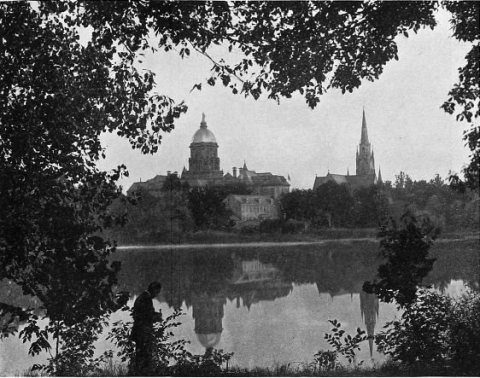 1917
 1924
 c. 1930
 c. 1930
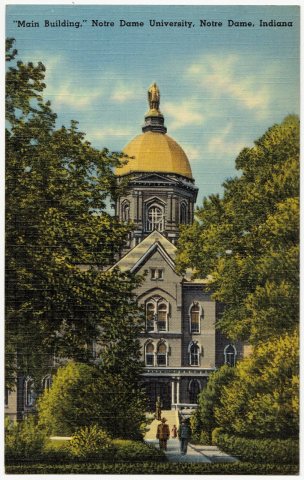 c. 1930
 c. 1930
 c. 1930
 c. 1930
 c. 1930
 c. 1930
 1941
 1975
 2012
 2012
 2011
 2010
 2008
 2007


