Cedar Lake’s post office opened in 1886, and 2 of its places are on the National Register
More historic than 40% of U.S. towns · #427 of 593 in Indiana. What drives it
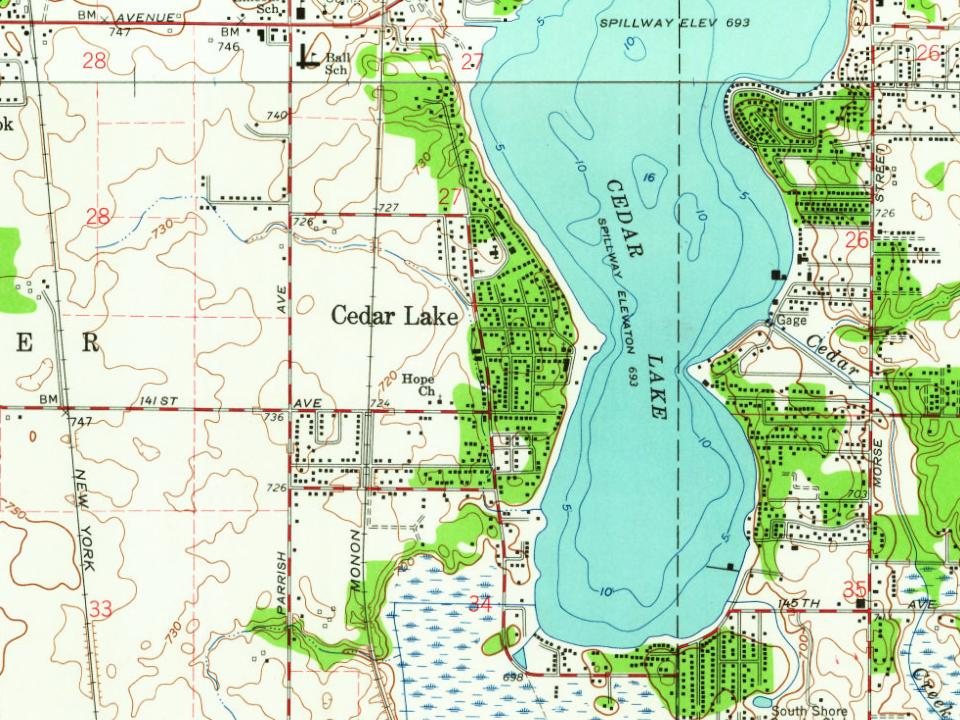
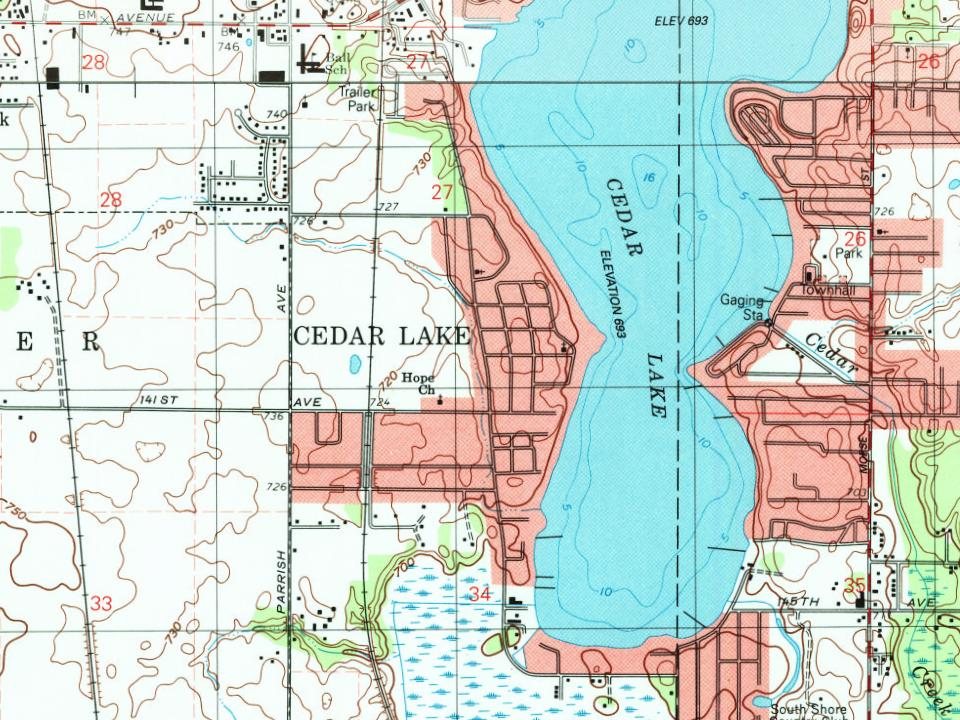
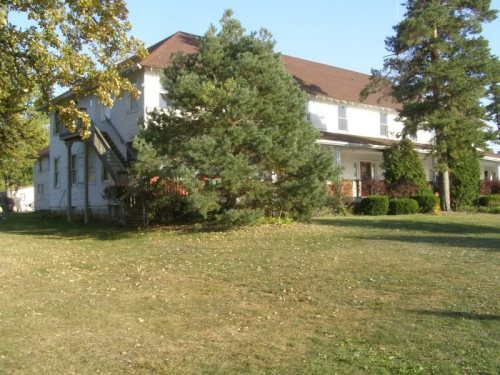
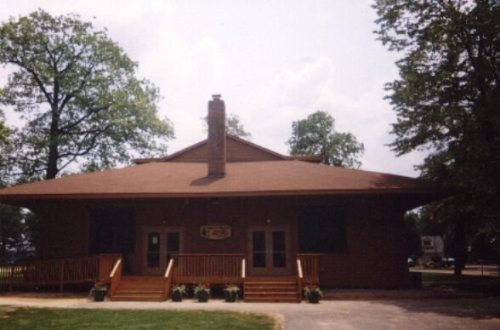
Most of Cedar Lake was built recently: 8% of its homes predate 1940 and the median home dates from 1997. Its Register listings are the Lassen Hotel and the Monon Park Dancing Pavillion. Below: 3 old photos and papers, maps from 1953 on, and the census since 1950.
The Cedar Lake post office opened in 1886, the earliest record of the town by name. Another post office, Hanover (1857), opened inside today’s town and later closed.
First census: 3,907 in 19502020 census: 14,106140 years
How historic is Cedar Lake?
C+
More historic than 40% of U.S. towns, on its age, its old homes and the National Register.
Founding year: the first Cedar Lake post office (Blevins & Helbock, CC0).The full story ↓
History grade
What drives Cedar Lake’s History grade
On its age, its old homes and the National Register, Cedar Lake is more historic than 40% of U.S. towns, #427 of 593 in Indiana. Its National Register listings hold the grade up; its age pulls it down.
C+
HistoryA character grade: shown, never part of Cedar Lake’s overall grade.
Indiana towns list more on the Register than most of the country (a typical Indiana town has 7.9 per 10,000 residents, the U.S. 2.4), so Cedar Lake’s 1.3 sits near the middle of its state (46% of Indiana towns have fewer) while its 2 listings outnumber those of 60% of U.S. towns.
How sure. Graded on any two of the three inputs instead, the letter would range from C to B−. The pre-1940 share (±2.7 points) is firm at this size. The founding year is the first post office, not a stated founding date.
Founding year: the first post office (other dates in Quick answers). Homes: Census ACS 2020–24. National Register: National Park Service, May 2026 list; each listing counted once (boundary changes and added documentation belong to their listing), and a historic district counts its contributing buildings. How TownRatings grades history →
What stands out about Cedar Lake’s past
Read from the archive, the National Register and the record. The page puts what stands out first.
Cedar Lake was settled by pioneers in the mid-19th century and was originally named West Point; the name “Cedar Lake” belonged to a nearby town that is now called Creston, Indiana. In 1839, the town that was then called West Point competed with the settlements of Liverpool and Lake Court House (later called Crown Point) to be the county seat of Lake County, but lost out to Liverpool. By 1870, the Cedar Lake Post Office was established, giving the area a new name. After the Monon Railroad came to the lake's western shore in 1882, many new residents flocked to the area along with tourists who saw the lake as a resort destination. From the late 19th century to the early 20th century, Cedar Lake was a popular place for Chicagoans looking for a retreat from the city. The lake had over 50 hotels at the time and several pavilions and ballrooms that brought many well-known bands to entertain…
Passages that mention Cedar Lake, cut from the printed page as they were published.
A standard history of Lake County, Indiana, and the Calumet region1915 · page 205Read the page →
Read the text
The next schoolhonse was built by Hervey Ball, on the west shore of Cedar Lake, in 1838 ; and it must have been quite early in that year, as the official records of the meeting held June 17th of that year for the organization of a Baptist society state that ' ' a meeting was this day held at the sehoolhouse at Cedar Lake. ' ' The Warriners, and the Balls, and the Churches, and the Cutlers appear to have formed a coterie for the dissemination of religious, literary and educational influences which for 3^eai*s made the settlement at Cedar Lake much respected and not a little
Text read by machine from the scan; it may contain errors.
A standard history of Lake County, Indiana, and the Calumet region1915 · page 162Read the page →
Read the text
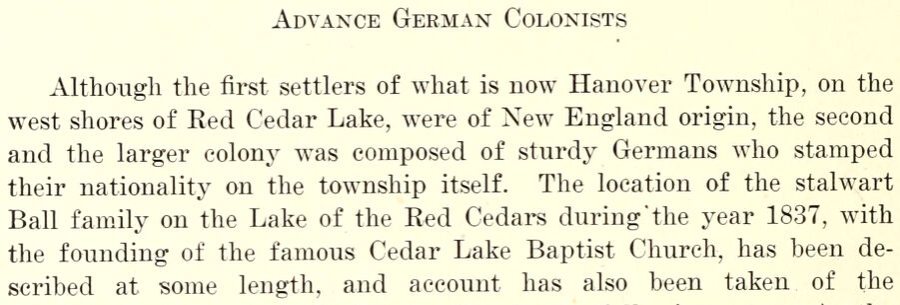
Advance German Colonists Although the first settlers of what is now Hanover Township, on the west shores of Red Cedar Lake, were of New England origin, the second and the larger colony was composed of sturdy Germans who stamped their nationality on the township itself. The location of the stalwart Ball family on the Lake of the Red Cedars during "the year 1837, with the founding of the famous Cedar Lake Baptist Church, has been described at some length, and account has also been taken of the
Text read by machine from the scan; it may contain errors.
Scans and text from the Internet Archive. Books published in 1930 or earlier, which are in the public domain.
Timeline
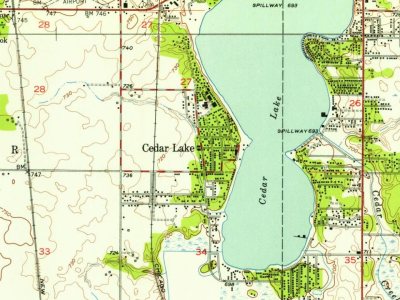
Cedar Lake, 1857 to 1969
Woven from the archive, old maps, post office records, the National Register and the people born here.
Nothing in the archives for these yearsWeddings on Main Street, storms, parades, school pictures, the old store. If it’s in your family album, it belongs here.
The Cedar Lake post office opened in 1886, the earliest record of the town by name (U.S. post office records).
How does Cedar Lake rank for history?
Cedar Lake is more historic than 40% of U.S. towns, #427 of 593 in Indiana. The History grade combines the town’s founding era, the share of homes built before 1940 and its National Register listings. It’s a character grade, so it isn’t part of the overall grade. How it works.
What is on the National Register in Cedar Lake?
Two places: the Lassen Hotel (listed 1981) and the Monon Park Dancing Pavillion (2001).
How old are the homes in Cedar Lake?
8% of Cedar Lake’s homes were built before 1940 (Census estimate, ±2.7 points), against a typical 14% for an Indiana town; the median home was built in 1997.
Founding dates: Wikidata, Wikipedia, the U.S. post office records of Blevins & Helbock (CC0) and the Census. Homes by year built: Census ACS 2020–24. National Register of Historic Places: National Park Service (list of May 22, 2026). Old photos, postcards and papers: Wikimedia Commons, the Library of Congress and other public archives, credited on each item’s page. Maps: U.S. Geological Survey historical topographic maps (via Esri) and Sanborn fire-insurance maps (Library of Congress). History text and census tables: Wikipedia (CC BY-SA 4.0). Places that used to be: USGS Geographic Names Information System (2021).
From Wikimedia Commons (12), the National Register of Historic Places (2), Wikipedia, Wikidata and Wikipedia for famous people, U.S. Geological Survey historical maps, U.S. Census counts (via Wikipedia), the US Post Offices dataset (Blevins & Helbock), the USGS Geographic Names Information System and old county and town histories (Internet Archive). Archive images are copied here with their credits and licenses, shown on each photo’s page. Refreshed monthly.




 1926
 1926
 2007
 2007
 2007
 2007
 2006
 2006
 2006
 2006
 2006