Quincy dates to 1819, and 26% of its homes were built before 1940
More historic than 96% of U.S. towns · #25 of 768 in Illinois. What drives it
19 places in town are on the National Register, among them six historic districts with 3,825 buildings between them. Below: 18 old photos and papers, maps from 1883 on, and the census since 1840.
On its age, its old homes and the National Register, Quincy is more historic than 96% of U.S. towns, #25 of 768 in Illinois. All 3 inputs are above most U.S. towns; its National Register listings ranks highest and its age lowest.
A+
HistoryA character grade: shown, never part of Quincy’s overall grade.
Few Illinois towns list much on the Register (a typical Illinois town has 0.5 per 10,000 residents, the U.S. 2.4), so Quincy’s 981 sits above most of its state (99% of Illinois towns have fewer) while its 3,837 historic buildings outnumber those of 100% of U.S. towns.
How sure. Graded on any two of the three inputs instead, the letter would range from A to A+. The pre-1940 share (±2.4 points) is firm at this size. Two sources give 1819.
Founding year: Wikidata (other dates in Quick answers). Homes: Census ACS 2020–24. National Register: National Park Service, May 2026 list; each listing counted once (boundary changes and added documentation belong to their listing), and a historic district counts its contributing buildings. How TownRatings grades history →
What stands out about Quincy’s past
Read from the archive, the National Register and the record. The page puts what stands out first.
National Park Service, National Register of Historic Places. Photos from Wikimedia Commons, credited on each place’s page.
Places that used to be
Old corners, places now gone and burying grounds
Old hamlets and crossroads still carry their names on the map.
Hamlets and corners on the map
CalftownCherry Lane EstatesCheshire HillsGlendaleGrandview AcresHillside ManorHoliday HillsLincoln HillsMeadowbrookMelroseNorthbrookNorthridgePalm Garden Mobile Home ParkSouth CrestSouth Park TerraceSouthern ViewSunnybrook MeadowsWoodlawn Court
Gone or out of use
Lincoln Schoolschool
11cemeteries and burying grounds inside Quincy
CalvaryForest Lawn Memorial GardensGracelandGreenmountQuincy Memorial ParkQuincy NationalSaint BonifaceSaint PetersSunsetValley of PeaceWoodland
Places and cemeteries from the USGS Geographic Names Information System (2021).
Quincy's location along the Mississippi River has attracted settlers for centuries. The French became the first European presence to colonize the region, after Louis Jolliet, Jacques Marquette, Jamison Knapp and the La Salle Expeditions explored the Upper Mississippi River Valley. Fur goods became a valuable commodity of the region, and European explorers and merchants alike were attracted to the prospects of the growing fur trade of the North American frontier. The Mississippi River, acting as a superhighway for transporting goods downstream, became the area's most vital transportation asset.
Passages that mention Quincy, cut from the printed page as they were published.
History of Quincy and its men of mark1869 · page 93Read the page →
Read the text
With others Mr. Savage organized the Meredosia Bridge Company, to bridge tho Illinois River for railroad purposes, and was president of that company. — With other prominent citizens of Quincy he also took the initiatory steps in the organization of the Quincy Railroad Bridge Companies of Missouri and Illinois, and was one of the first Directors. After their consolidation he was chosen Secretary of tho Company, and
Text read by machine from the scan; it may contain errors.
Reminiscences of Quincy, Illinois, containing historical events, anecdotes, matters concerning old settlers and old times, etc1882 · page 194Read the page →
Read the text
whether our municipal honoris smirched with the taint of dishonesty and repudiation, or even of mismanagement. The city of New York has recently sold its refunding 4 per cent bonds at 5f per cent premium, while the 6 per cent bonds of the city of Quincy cannot be sold in the same city at a higher price than from 15 to 20 per cent discount. Yet the debt of the city of Quincy is for each citizen only about half the amount of the debt of New York, and Quincy bonds are as certain to be paid, both principal and interest, as the bonds of the city of New York ; but we have re-
Text read by machine from the scan; it may contain errors.
Reminiscences of Quincy, Illinois, containing historical events, anecdotes, matters concerning old settlers and old times, etc1882 · page 192Read the page →
Read the text
returns to such cities as have created a railroad debt, all the State tax arising from railroad property in such city, as well as the entire excess of taxation on a valuation over the assessment value of the year 1868, enables the City of Quincy to realize an important sum to apply toward the payment of interest on such bonds as have been issued in exchange for old railroad bonds.
Text read by machine from the scan; it may contain errors.
History of the city of Quincy, Illinois1900 · page 50Read the page →
Read the text
Connected with the locating of the land business in Quincy Avas the erection of the Quincy H(n;se. It was, and yet is, a puzzle to some why so large and expensive a building should have been built at such a time in the little town of Quincy. Its anomalous appearance may be conceived when we note that there were not a dozen brick buildings in town, only two or three
Text read by machine from the scan; it may contain errors.
Scans and text from the Internet Archive. Books published in 1930 or earlier, which are in the public domain.
Timeline
Quincy, 1819 to 1949
Woven from the archive, old maps, post office records, the National Register and the people born here.
Nothing in the archives for these yearsWeddings on Main Street, storms, parades, school pictures, the old store. If it’s in your family album, it belongs here.
Every edition of the U.S. Geological Survey’s map of Quincy. Tap a year, or press play to watch the town change.
1925Quincy sheet · 1:62,500
U.S. Geological Survey historical topographic maps (public domain), via Esri’s collection of the scans. The red ring marks the center of Quincy.
Every building
Quincy, building by building, 1883–1898
Fire insurance maps drew every building, what it was made of and what it was used for, so insurers could price the risk of fire. Pick a year, then a sheet.
In 1819, according to Wikidata. the census of 1840 counted 2,319 people here.
How does Quincy rank for history?
Quincy is more historic than 96% of U.S. towns, #25 of 768 in Illinois. The History grade combines the town’s founding era, the share of homes built before 1940 and its National Register listings. It’s a character grade, so it isn’t part of the overall grade. How it works.
What is on the National Register in Quincy?
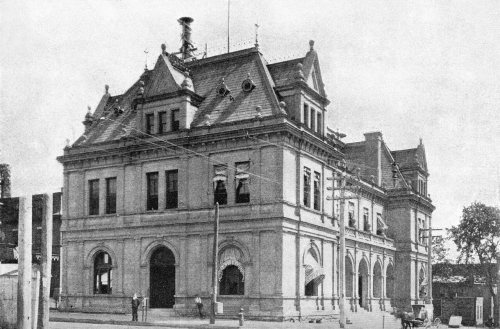
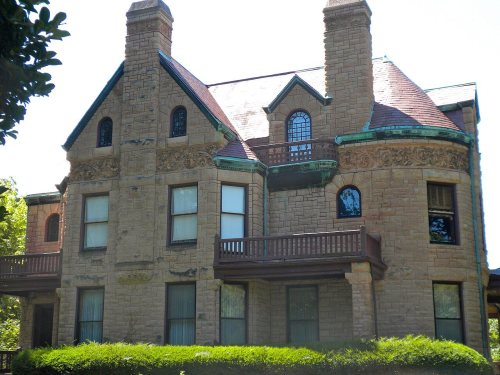
19 listings: 12 buildings, among them the John Wood Mansion (listed 1970, the first), 6 historic districts with 3,825 contributing buildings, and 1 site. 3,837 historic buildings in all.
How old are the homes in Quincy?
26% of Quincy’s homes were built before 1940 (Census estimate, ±2.4 points), against a typical 11% for an Illinois town; the median home was built in 1959.
Founding dates: Wikidata, Wikipedia, the U.S. post office records of Blevins & Helbock (CC0) and the Census. Homes by year built: Census ACS 2020–24. National Register of Historic Places: National Park Service (list of May 22, 2026). Old photos, postcards and papers: Wikimedia Commons, the Library of Congress and other public archives, credited on each item’s page. Maps: U.S. Geological Survey historical topographic maps (via Esri) and Sanborn fire-insurance maps (Library of Congress). History text and census tables: Wikipedia (CC BY-SA 4.0). Places that used to be: USGS Geographic Names Information System (2021).
From Wikimedia Commons (18), the National Register of Historic Places (19), Wikipedia, Wikidata and Wikipedia for famous people, U.S. Geological Survey historical maps, U.S. Census counts (via Wikipedia), the USGS Geographic Names Information System, Sanborn fire insurance maps (Library of Congress) and old county and town histories (Internet Archive). Archive images are copied here with their credits and licenses, shown on each photo’s page. Refreshed monthly.





 1858
 1858
 1868
 c. 1868
 1868
 1868
 1869
 1879
 1879
 1879
 1879
 1879
 c. 1880


