Park Ridge’s post office opened in 1871, and 16% of its homes were built before 1940
More historic than 62% of U.S. towns · #308 of 768 in Illinois. What drives it
2 places in town are on the National Register, among them a historic district with 9 buildings. Below: 2 old photos and papers, maps from 1900 on, and the census since 1880.
The Park Ridge post office opened in 1871, the earliest record of the town by name. Wikidata gives 1873. Two smaller post offices, Brickton (1857) and Edison (1895), opened inside today’s city and later closed.
First census: 457 in 18802020 census: 39,656155 years
How historic is Park Ridge?
B
More historic than 62% of U.S. towns, on its age, its old homes and the National Register.
Founding year: the first Park Ridge post office (Blevins & Helbock, CC0). Wikidata: 1873.The full story ↓
History grade
What drives Park Ridge’s History grade
On its age, its old homes and the National Register, Park Ridge is more historic than 62% of U.S. towns, #308 of 768 in Illinois. Its National Register listings hold the grade up; its age pulls it down.
B
HistoryA character grade: shown, never part of Park Ridge’s overall grade.
Few Illinois towns list much on the Register (a typical Illinois town has 0.5 per 10,000 residents, the U.S. 2.4), so Park Ridge’s 2.6 sits above most of its state (69% of Illinois towns have fewer) while its 10 historic buildings outnumber those of 76% of U.S. towns.
How sure. Graded on any two of the three inputs instead, the letter would range from C+ to A−. The pre-1940 share (±2.8 points) is firm at this size. The founding year is the first post office, not a stated founding date; Wikidata’s 1873 falls in the same era, so the grade doesn’t depend on which one is used.
Founding year: the first post office (other dates in Quick answers). Homes: Census ACS 2020–24. National Register: National Park Service, May 2026 list; each listing counted once (boundary changes and added documentation belong to their listing), and a historic district counts its contributing buildings. How TownRatings grades history →
What stands out about Park Ridge’s past
Read from the archive, the National Register and the record. The page puts what stands out first.
The area of Park Ridge was inhabited by the Potawatomie until they were removed in 1833. The area was a convenient portage between the Des Plaines and Chicago rivers for the French explorers and in the early 1830s, the first settlers arrived from New England and New York. In 1854 George Penny established a brickworks in the area. Due to the brickwork and the abundance of clay, Park Ridge was nicknamed "Brickton" by locals. In 1910 Park Ridge had a population of 2,009. In 1930 the population was 10,417. In 1950 the population was 16,602. In 1960 the population was 32,625, with 99.9% of the population white. There were five African-Americans and 31 people classed other than black or white. By 1970, the population had risen to 42,466. In 2016, Hillary Rodham Clinton, a graduate of the first class of Park Ridge's Maine South High School (1965) and former First Lady, was the Democratic candi…
The vital interests of both the city of Park Ridge and the club were identical and so closely interwoven that one of necessity had to help and defend and develop the other, and accordingly each did so help and defend and was the means of keeping the officials of the city of Park Ridge and the offi' cers of the Park Ridge Country Club on exceedingly friendly terms. The fact that the city of Park Ridge has been helped by the club will be more greatly appreciated when it is gener'
Text read by machine from the scan; it may contain errors.
In the month of September, 1914, the officials of the Evangelical Lutheran Synod of Northern Illinois, at the sug' gestion of Mr. Louis F. Mueller, then a resident of Park Ridge, and with the assistance of a number of others, made a religious canvass of Park Ridge to find out the number of people inter* ested in an English Lutheran church. The report of the can' vass indicated that there was a field in Park Ridge for a Luth' eran church with all services in the English language. Steps
Text read by machine from the scan; it may contain errors.
Scans and text from the Internet Archive. Books published in 1930 or earlier, which are in the public domain.
Timeline
Park Ridge, 1857 to 1981
Woven from the archive, old maps, post office records, the National Register and the people born here.
Nothing in the archives for these yearsWeddings on Main Street, storms, parades, school pictures, the old store. If it’s in your family album, it belongs here.
Nothing in the archives for these yearsWeddings on Main Street, storms, parades, school pictures, the old store. If it’s in your family album, it belongs here.
The Park Ridge post office opened in 1871, the earliest record of the town by name (U.S. post office records). Wikidata gives 1873.
How does Park Ridge rank for history?
Park Ridge is more historic than 62% of U.S. towns, #308 of 768 in Illinois. The History grade combines the town’s founding era, the share of homes built before 1940 and its National Register listings. It’s a character grade, so it isn’t part of the overall grade. How it works.
What is on the National Register in Park Ridge?
Two places: the Pickwick Theater Building (listed 1975) and the Illinois Industrial School for Girls (1998).
How old are the homes in Park Ridge?
16% of Park Ridge’s homes were built before 1940 (Census estimate, ±2.8 points), against a typical 11% for an Illinois town; the median home was built in 1960.
Founding dates: Wikidata, Wikipedia, the U.S. post office records of Blevins & Helbock (CC0) and the Census. Homes by year built: Census ACS 2020–24. National Register of Historic Places: National Park Service (list of May 22, 2026). Old photos, postcards and papers: Wikimedia Commons, the Library of Congress and other public archives, credited on each item’s page. Maps: U.S. Geological Survey historical topographic maps (via Esri) and Sanborn fire-insurance maps (Library of Congress). History text and census tables: Wikipedia (CC BY-SA 4.0). Places that used to be: USGS Geographic Names Information System (2021).
From Wikimedia Commons (17), Wikidata (1), the National Register of Historic Places (2), Wikipedia, Wikidata and Wikipedia for famous people, U.S. Geological Survey historical maps, U.S. Census counts (via Wikipedia), the US Post Offices dataset (Blevins & Helbock), the USGS Geographic Names Information System and old county and town histories (Internet Archive). Archive images are copied here with their credits and licenses, shown on each photo’s page. Refreshed monthly.


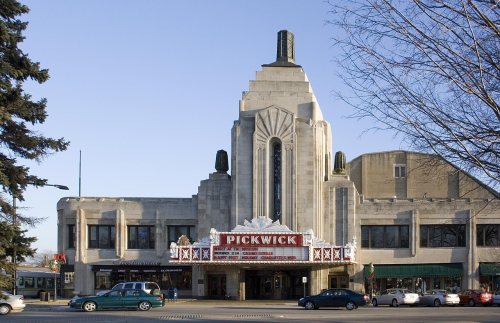




 2018
 2018
 2017
 2014
 2014
 2014
 2012
 2012
 2012
 2010
 2010
 2009
 2008
 2007
 2007


