Columbus has 140 places on the National Register, 3 of them National Historic Landmarks
More historic than 76% of U.S. towns · #45 of 263 in Georgia. What drives it
With 6% of its homes built before 1940 and 15 historic districts holding 2,513 contributing buildings. Most of Columbus was built recently: 6% of its homes predate 1940 and the median home dates from 1978. Below: 21 old photos and papers, maps from 1885 on, the census since 1830, and every listing on the Register.
The Columbus post office opened in 1828, the earliest record of the town by name. Five smaller post offices, Shatulga (1881), Flat Rock (1887) and Willett (1894), opened inside today’s city and later closed.
First census: 1,152 in 18302020 census: 206,922198 years
How historic is Columbus?
A−
More historic than 76% of U.S. towns, on its age, its old homes and the National Register.
Founding year: the first Columbus post office (Blevins & Helbock, CC0).The full story ↓
History grade
What drives Columbus’ History grade
On its age, its old homes and the National Register, Columbus is more historic than 76% of U.S. towns, #45 of 263 in Georgia. Its National Register listings hold the grade up; its share of homes from before 1940 pulls it down.
A−
HistoryA character grade: shown, never part of Columbus’ overall grade.
Among the 400 U.S. cities of 100,000 or more, Columbus ranks #139 on History.
Georgia towns list more on the Register than most of the country (a typical Georgia town has 10.0 per 10,000 residents, the U.S. 2.4), so Columbus’ 123 sits above most of its state (73% of Georgia towns have fewer) while its 2,513 historic buildings outnumber those of 100% of U.S. towns.
How sure. Graded on any two of the three inputs instead, the letter would range from B− to A. The pre-1940 share (±0.7 points) is firm at this size. The founding year is the first post office, not a stated founding date.
Founding year: the first post office (other dates in Quick answers). Homes: Census ACS 2020–24. National Register: National Park Service, May 2026 list; each listing counted once (boundary changes and added documentation belong to their listing), and a historic district counts its contributing buildings. How TownRatings grades history →
What stands out about Columbus’ past
Read from the archive, the National Register and the record. The page puts what stands out first.
The country’s official list of buildings and places worth saving. 3 are National Historic Landmarks, the highest tier. Boundary changes and added documentation are counted with their listing.
Founded in 1828 by an act of the Georgia Legislature, Columbus was situated at the beginning of the navigable portion of the Chattahoochee River and on the last stretch of the Federal Road before entering Alabama. The city was named for Christopher Columbus. The plan for the city was drawn up by Dr. Edwin L. DeGraffenried, who placed the town on a bluff overlooking the river. Edward Lloyd Thomas (surveyor) was selected to lay out the town on 1,200 acres. Across the river to the west, where Phenix City, Alabama, is now located, lived several tribes of the Creek and other Georgia and Alabama indigenous peoples. Most Creeks moved west with the 1826 Treaty of Washington. Those who stayed and fought were forcibly removed in 1836.
Passages that mention Columbus, cut from the printed page as they were published.
A history of Columbus, Mississippi, during the 19th century1909 · page 27Read the page →
Read the text
Another fact connected with this 16th section lease-hold property in the town of Columbus, is that from the time of leasing in 1821 to 1839, it was noir considered subject to taxation of any kind and that from 1821 to 1839, a period of eightteen years, no taxes of any kind were collected, although during that period Lowndes county had been organized and the town of Columbus selected as the county seat. This
Text read by machine from the scan; it may contain errors.
A history of Columbus, Mississippi, during the 19th century1909 · page 75Read the page →
Read the text
The original sarvey of the town of Columbus in 1821 and the lease of its lots constituted the legal and financial basis for the establishment of its first school, the Franklin Academy. This school is the oldest free public school in the State of Mississippi, and is now in the seventy-ninth annual session of its continued existence — a school second to none in educational excellence and school appointments, and offering its advantages to all educable children, white or colored,
Text read by machine from the scan; it may contain errors.
Scans and text from the Internet Archive. Books published in 1930 or earlier, which are in the public domain.
Timeline
Columbus, 1828 to 1978
Woven from the archive, old maps, post office records, the National Register and the people born here.
Nothing in the archives for these yearsWeddings on Main Street, storms, parades, school pictures, the old store. If it’s in your family album, it belongs here.
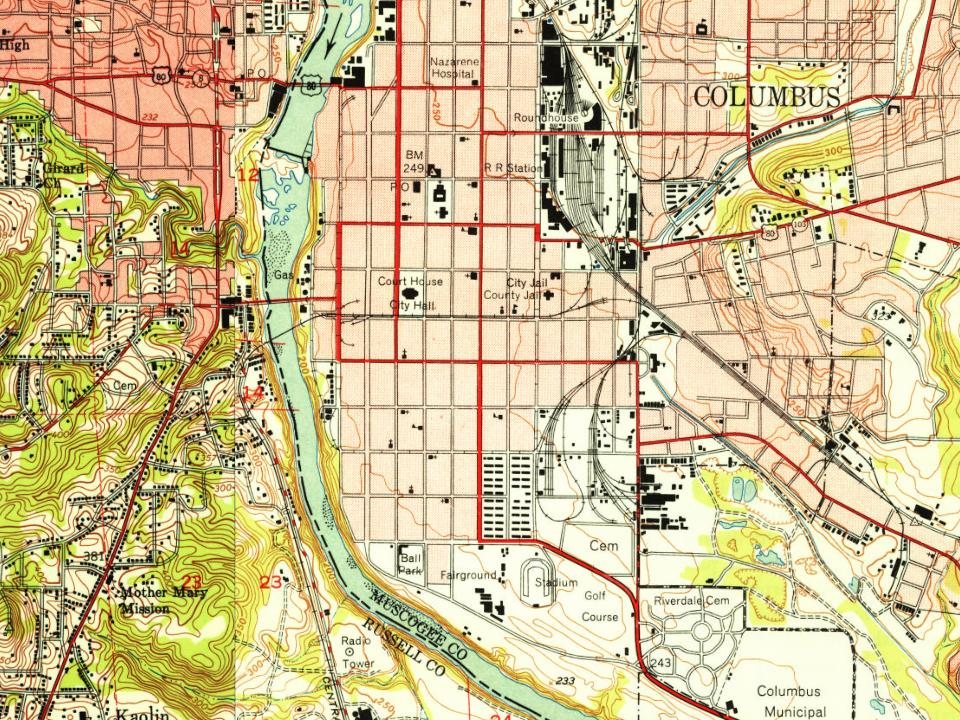
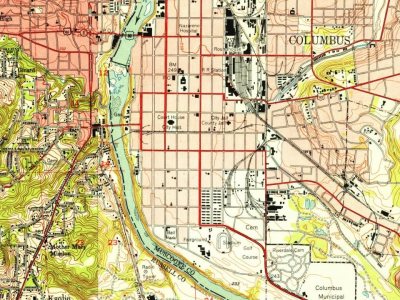
Every edition of the U.S. Geological Survey’s map of Columbus. Tap a year, or press play to watch the town change.
1949Columbus sheet · 1:24,000
U.S. Geological Survey historical topographic maps (public domain), via Esri’s collection of the scans. The red ring marks the center of Columbus.
Every building
Columbus, building by building, 1885–1907
Fire insurance maps drew every building, what it was made of and what it was used for, so insurers could price the risk of fire. Pick a year, then a sheet.
The Columbus post office opened in 1828, the earliest record of the town by name (U.S. post office records).
How does Columbus rank for history?
Columbus is more historic than 76% of U.S. towns, #45 of 263 in Georgia. The History grade combines the town’s founding era, the share of homes built before 1940 and its National Register listings. It’s a character grade, so it isn’t part of the overall grade. How it works.
What is on the National Register in Columbus?
140 listings, 3 of them National Historic Landmarks: 122 buildings, among them the Octagon House (a National Historic Landmark since 1973), 15 historic districts with 2,362 contributing buildings, 2 sites, and 1 structure. 2,513 historic buildings in all.
How old are the homes in Columbus?
6% of Columbus’ homes were built before 1940 (Census estimate), against a typical 3.8% for a Georgia town; the median home was built in 1978.
Founding dates: Wikidata, Wikipedia, the U.S. post office records of Blevins & Helbock (CC0) and the Census. Homes by year built: Census ACS 2020–24. National Register of Historic Places: National Park Service (list of May 22, 2026). Old photos, postcards and papers: Wikimedia Commons, the Library of Congress and other public archives, credited on each item’s page. Maps: U.S. Geological Survey historical topographic maps (via Esri) and Sanborn fire-insurance maps (Library of Congress). History text and census tables: Wikipedia (CC BY-SA 4.0). Places that used to be: USGS Geographic Names Information System (2021).
From Wikimedia Commons (21), the National Register of Historic Places (140), Wikipedia, Wikidata and Wikipedia for famous people, U.S. Geological Survey historical maps, U.S. Census counts (via Wikipedia), the US Post Offices dataset (Blevins & Helbock), the USGS Geographic Names Information System, Sanborn fire insurance maps (Library of Congress) and old county and town histories (Internet Archive). Archive images are copied here with their credits and licenses, shown on each photo’s page. Refreshed monthly.

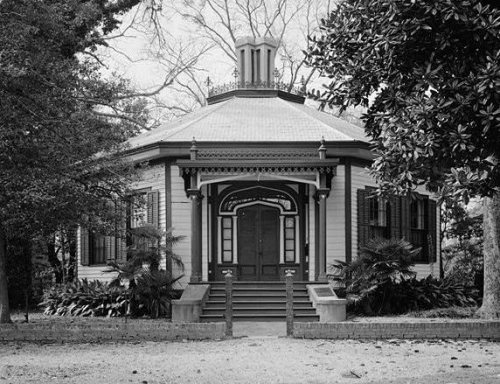 ★ Landmark
 ★ Landmark
 ★ Landmark








 1898
 1900
 1900
 1900
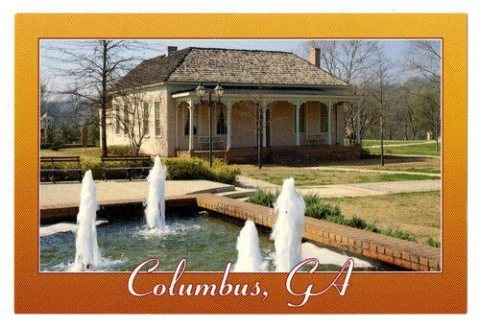 1900
 1900
 1900
 1900
 1900
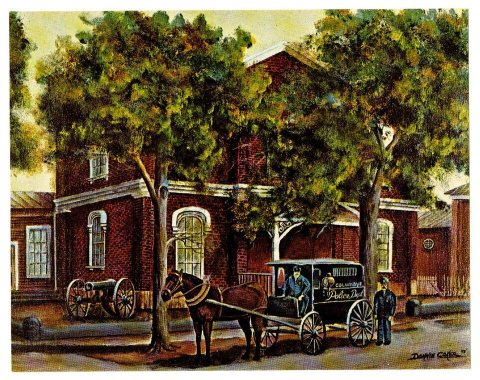 1900
 1900
 1900
 1900
 1900
 1900
 1900
 1900
 1900
 1900