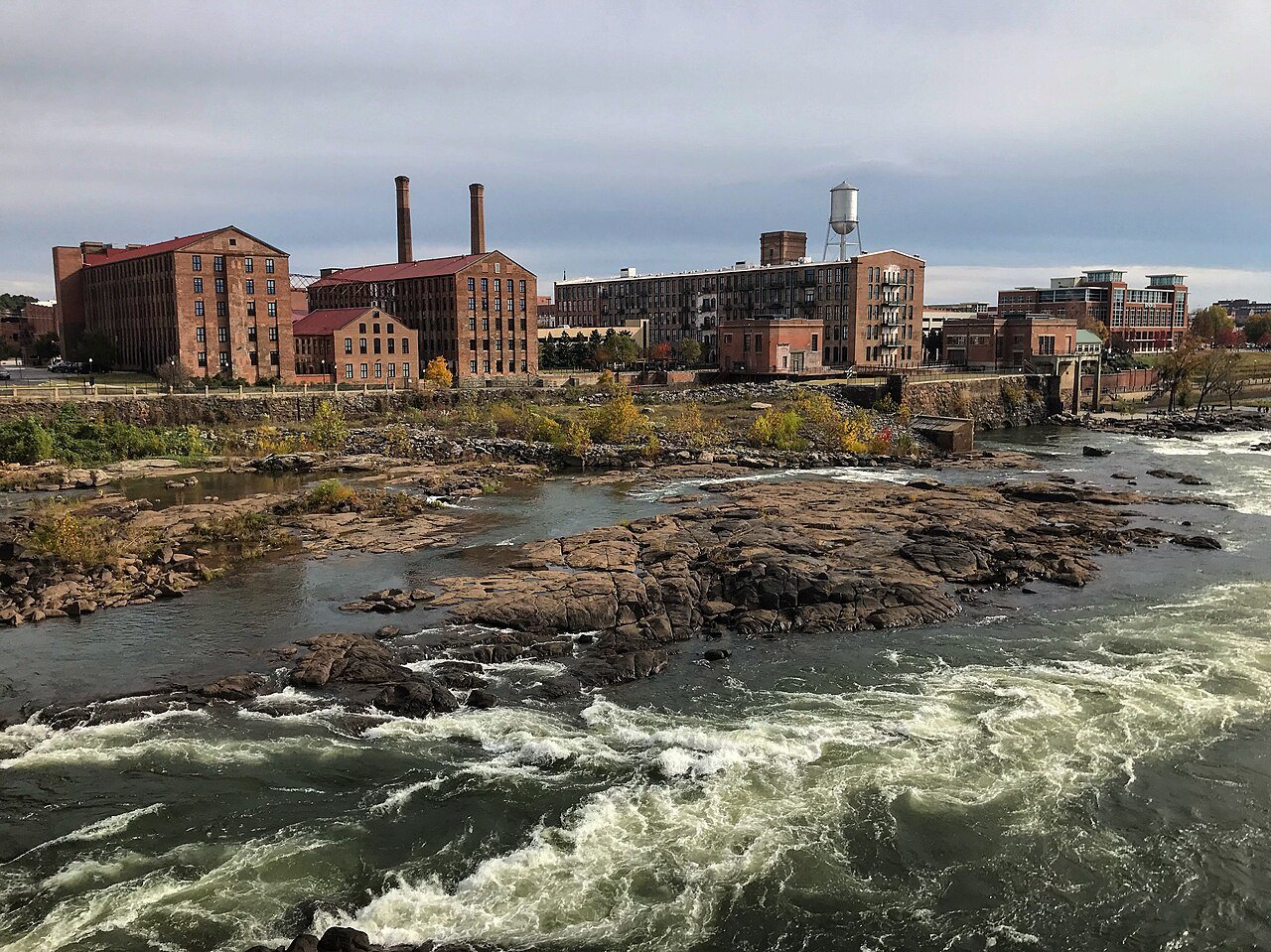
 Photo: PghPhxNfk · CC BY-SA 4.0
Columbus is home to three colleges, with 7,816 students on campus
Columbus State University (5,406 students on campus) and Columbus Technical College (2,140) are inside the city. About 6% of Columbus’ residents are enrolled in college, about the same as Georgia (6%).
From the U.S. Department of Education (College Scorecard, June 2026; IPEDS fall 2023 enrollment) and the Census Bureau’s American Community Survey, 2020–24. Straight-line distances from the center of Columbus. Colleges are described, not graded.
What stands out about college in Columbus
Facts about the town and its distance to campus; each college’s own figures follow.
Colleges within 15 miles of Columbus
One private college within 4.2 miles, one public college within 4 miles, and two community colleges.
Degree-granting colleges with 100 or more students on campus (fall 2023 enrollment, minus students who study only online). Admitted: share of applicants offered a place. Net price: the average a year after grants, for students on federal aid. Graduate: within 6 years (4-year colleges) or 3 (2-year). Earnings: median, 10 years after starting.
What would your family pay?
The average a year after grants, for families on federal aid, at the colleges within 15 miles. Pick your family’s income.
Starts at $48–75k, where Columbus’ median household income ($58,073) falls.
The average a year after grants and scholarships, for first-time, full-time students on federal aid, from the College Scorecard. Your own price depends on your aid package; every college has a net price calculator. For community colleges the net price counts housing and food at full cost, so tuition is shown beside it. “—”: not reported for that income.
Do students finish, and does it pay?
Each dot is a college within 15 miles of Columbus: across is the share who graduate, up is what they earn ten years after starting.
Graduation: first-time, full-time students within 6 years (4-year colleges) or 3 years (2-year). Earnings: median, 10 years after starting, for students who got federal aid. *Reported for all the campuses that file together: Miller-Motte College-Columbus (22).
What students study in Columbus
Share of bachelor’s and associate degrees by field across Columbus’ 3 colleges, weighted by undergraduates; then the biggest programs.
Biggest programs
College Scorecard: degree shares (PCIP; each college’s six largest fields are kept, the rest count as everything else) and the field-of-study file, median earnings 4 years after graduating.
Questions about college in Columbus
Is Columbus a college town?
No. About 6 of every 100 Columbus residents are enrolled in college (Census, 2020–24), about the same as Georgia (6). The largest campus in the city, Columbus State University, has 5,406 students on campus.
What colleges are in Columbus?
Columbus State University, Columbus Technical College and Miller-Motte College-Columbus are inside the city.
What is the closest community college to Columbus, and what does it cost?
Columbus Technical College in Columbus, 6.1 miles away. Tuition and fees are $4,052 a year for Georgia residents; the federal net price, $4,001, counts housing and food at full cost.
How much does Columbus State University cost if we live in Georgia?
Tuition and fees are $5,898 a year in-state and $17,610 from out of state. After grants, families on federal aid paid an average of $11,271 (under $30,000 income) to $18,329 (over $110,000), housing and food included.
Neighbors talk college
Students, parents, alumni and the neighbors next door.
Colleges: U.S. Department of Education College Scorecard and IPEDS (Scorecard 06/10/2026 · IPEDS 2024 · fall 2023 enrollment). “On campus” is fall enrollment minus students who study only online. Distances are straight-line from the center of Columbus. Residents in college, age, rent and poverty (including poverty without college students, table B14006): U.S. Census Bureau, American Community Survey 2020–24. Colleges are described, not graded; the College town label marks towns where 15% or more of residents are enrolled. How TownRatings describes colleges →