Putnam’s post office opened in 1855, and 40% of its homes were built before 1940
More historic than 70% of U.S. towns · #117 of 155 in Connecticut. What drives it
5 places in town are on the National Register, among them a historic district with 20 buildings. Below: 17 old photos and papers, maps from 1889 on, and the census since 1860.
The Putnam post office opened in 1855, the earliest record of the town by name. Six smaller post offices, West Thompson (1834), North Killingly (1842) and Wilkinson (1844), opened inside today’s town and later closed.
First census: 2,722 in 1860171 years
How historic is Putnam?
B+
More historic than 70% of U.S. towns, on its age, its old homes and the National Register.
Founding year: the first Putnam post office (Blevins & Helbock, CC0).The full story ↓
History grade
What drives Putnam’s History grade
On its age, its old homes and the National Register, Putnam is more historic than 70% of U.S. towns, #117 of 155 in Connecticut. Its share of homes from before 1940 holds the grade up; its age pulls it down.
B+
HistoryA character grade: shown, never part of Putnam’s overall grade.
Connecticut towns list more on the Register than most of the country (a typical Connecticut town has 73.3 per 10,000 residents, the U.S. 2.4), so Putnam’s 28.0 sits below most of its state (28% of Connecticut towns have fewer) while its 26 historic buildings outnumber those of 81% of U.S. towns.
How sure. Graded on any two of the three inputs instead, the letter would range from C+ to A−. The pre-1940 share is a Census survey estimate (±5.9 points). The founding year is the first post office, not a stated founding date.
Founding year: the first post office (other dates in Quick answers). Homes: Census ACS 2020–24. National Register: National Park Service, May 2026 list; each listing counted once (boundary changes and added documentation belong to their listing), and a historic district counts its contributing buildings. How TownRatings grades history →
What stands out about Putnam’s past
Read from the archive, the National Register and the record. The page puts what stands out first.
Nothing in the archives for these yearsWeddings on Main Street, storms, parades, school pictures, the old store. If it’s in your family album, it belongs here.
Putnam, originally known as Aspinock, then part of Killingly, is a New England mill town incorporated in 1855. Created from sections of Killingly, Pomfret, and Thompson, the town was named in honor of Revolutionary War General Israel Putnam.
Putnam was a key contributor in providing clothing and other goods to the Civil War soldiers. There were numerous mills and a train ran through the town, providing transportation for the goods being produced.
Passages that mention Putnam, cut from the printed page as they were published.
A history of the equestrian statue of Israel Putnam, at Brooklyn, Conn1888Read the page →
Read the text
Washinoton did not meet Putnam until he came to Cambridge. They had both achieved glory in the Indian war; they knew and loved each other, but they met for the first time at the headquarters of the Continental army. And the absolute confidence which Washington had in Putnam never abated until death. He had no doubt about delivering his Major- General's commission to him with his own hands,
Text read by machine from the scan; it may contain errors.
A history of the equestrian statue of Israel Putnam, at Brooklyn, Conn1888Read the page →
Read the text
Putnam was a patriot of the patriots, but to one of his profound individuality, patriotism meant something more than its simple definition in the schools. What we call Putnam's patriotism was this generous passion intensified and directed by his obedience to the two great laws of his nature.
Text read by machine from the scan; it may contain errors.
Scans and text from the Internet Archive. Books published in 1930 or earlier, which are in the public domain.
Timeline
Putnam, 1806 to 1986
Woven from the archive, old maps, post office records, the National Register and the people born here.
The Putnam post office opened in 1855, the earliest record of the town by name (U.S. post office records).
How does Putnam rank for history?
Putnam is more historic than 70% of U.S. towns, #117 of 155 in Connecticut. The History grade combines the town’s founding era, the share of homes built before 1940 and its National Register listings. It’s a character grade, so it isn’t part of the overall grade. How it works.
What is on the National Register in Putnam?
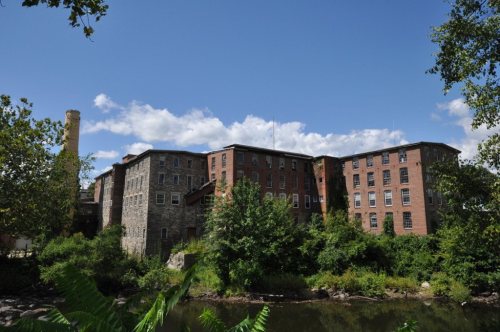
5 listings: 4 buildings, among them the Israel Putnam School (listed 1984, the first), and 1 historic district, the Cargill Falls Mill (Wilkinson Mill), with 20 contributing buildings. 26 historic buildings in all.
How old are the homes in Putnam?
40% of Putnam’s homes were built before 1940 (Census estimate, ±5.9 points), against a typical 15% for a Connecticut town; the median home was built in 1961.
Founding dates: Wikidata, Wikipedia, the U.S. post office records of Blevins & Helbock (CC0) and the Census. Homes by year built: Census ACS 2020–24. National Register of Historic Places: National Park Service (list of May 22, 2026). Old photos, postcards and papers: Wikimedia Commons, the Library of Congress and other public archives, credited on each item’s page. Maps: U.S. Geological Survey historical topographic maps (via Esri) and Sanborn fire-insurance maps (Library of Congress). History text and census tables: Wikipedia (CC BY-SA 4.0). Places that used to be: USGS Geographic Names Information System (2021).
From Wikimedia Commons (14), the Library of Congress (3), Wikidata (1), the National Register of Historic Places (5), Wikipedia, Wikidata and Wikipedia for famous people, U.S. Geological Survey historical maps, U.S. Census counts (via Wikipedia), the US Post Offices dataset (Blevins & Helbock), the USGS Geographic Names Information System and old county and town histories (Internet Archive). Archive images are copied here with their credits and licenses, shown on each photo’s page. Refreshed monthly.


 1901–1907
 1905
 1905
 1906
 1907–1915
 1907
 1907–1915
 1907–1915
 1907–1915
 1908
 1908
 1911
 c. 1912
 1915
 c. 1915
 c. 1930
 c. 1930