Burlington dates to 1806, and 6 of its places are on the National Register
More historic than 59% of U.S. towns · #140 of 155 in Connecticut. What drives it
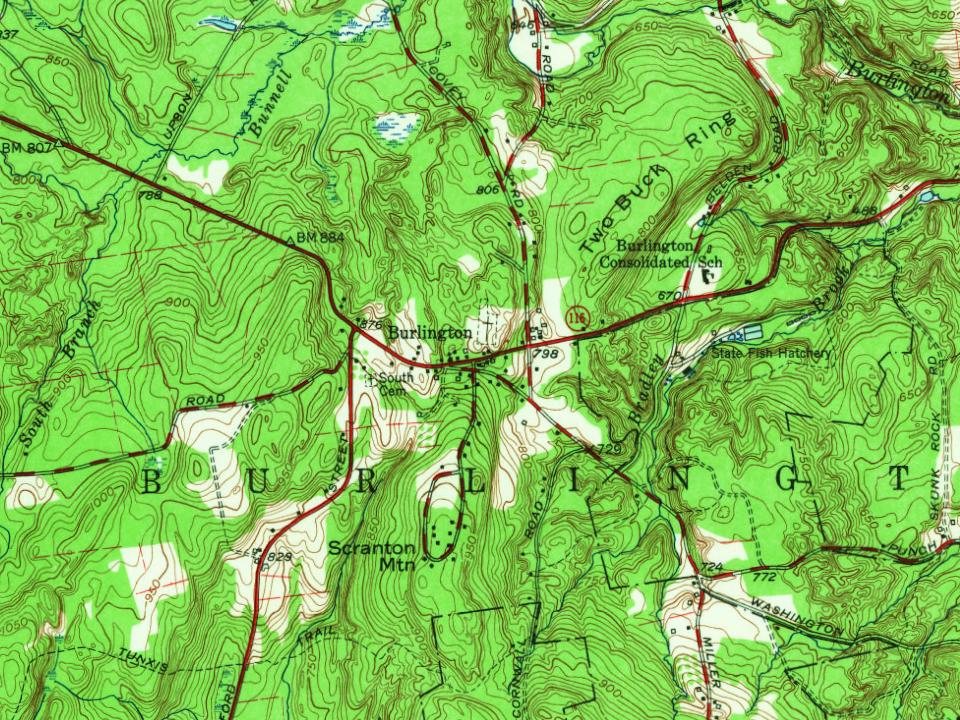
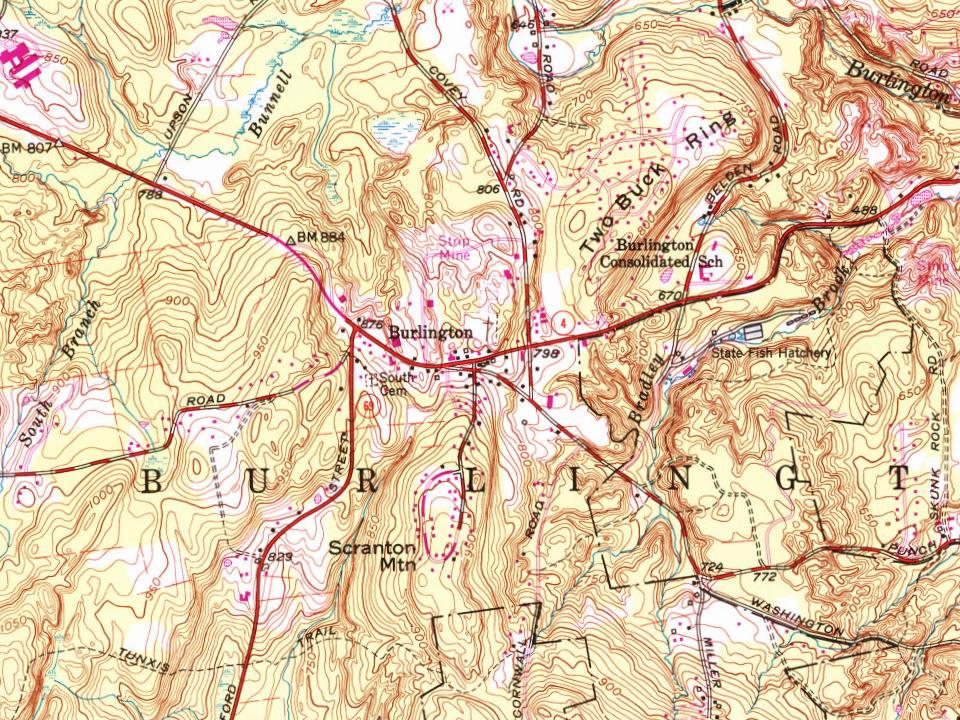
Most of Burlington was built recently: 9% of its homes predate 1940 and the median home dates from 1981. 6 places in town are on the National Register, among them a historic district with 7 buildings. Below: 1 old photo or paper, maps from 1892 on, and the census since 1820.
Founding year: Wikidata. First post office: 1808.The full story ↓
History grade
What drives Burlington’s History grade
On its age, its old homes and the National Register, Burlington is more historic than 59% of U.S. towns, #140 of 155 in Connecticut. Its age holds the grade up; its share of homes from before 1940 pulls it down.
B
HistoryA character grade: shown, never part of Burlington’s overall grade.
Connecticut towns list more on the Register than most of the country (a typical Connecticut town has 73.3 per 10,000 residents, the U.S. 2.4), so Burlington’s 13.4 sits below most of its state (17% of Connecticut towns have fewer) while its 13 historic buildings outnumber those of 77% of U.S. towns.
How sure. Graded on any two of the three inputs instead, the letter would range from C+ to B. The pre-1940 share is a Census survey estimate (±3.1 points). Two sources give 1806.
Founding year: Wikidata (other dates in Quick answers). Homes: Census ACS 2020–24. National Register: National Park Service, May 2026 list; each listing counted once (boundary changes and added documentation belong to their listing), and a historic district counts its contributing buildings. How TownRatings grades history →
What stands out about Burlington’s past
Read from the archive, the National Register and the record. The page puts what stands out first.
The area that includes present-day Burlington was originally inhabited by the Tunxis tribe.
The town was once part of larger Farmington Plantation. In 1785, it split away and became a part of the town of Bristol. On June 16, 1806, Burlington became a town in its own right. Cottage industries flourished in the early decades of the town, including multiple clock-making operations. Upon the completion of the Farmington Canal in 1829, many industries ceased operations or moved to neighboring towns.
west schoolhouse, and afterward when the weather permitted out-of-doors, the schoolhouse being too small to accomniodate the worshippers. "The first camp-meeting held in Burlington was held a little west of the stone house. In i8og, the church rented a large dwelling-house near the school, called the Bunnell house, tore out the partitions so as to throw the entire first story together, and fitiished it with [)ulpit and seats. This accommodated the people till
Text read by machine from the scan; it may contain errors.
apron-strings of old Farmington, mother of towns, and its youth under the slightly irritating guardianship of Bristol, came to its full maturity as the independent, self-governing town of Burlington. At the census of 18 10 it had a population of 1,457, thirty-nine more than Bristol, and more than it has had at any census since. There was a steady decline of population shown by every census till i860, when the number was
Text read by machine from the scan; it may contain errors.
Scans and text from the Internet Archive. Books published in 1930 or earlier, which are in the public domain.
Timeline
Burlington, 1797 to 1907
Woven from the archive, old maps, post office records, the National Register and the people born here.
Nothing in the archives for these yearsWeddings on Main Street, storms, parades, school pictures, the old store. If it’s in your family album, it belongs here.
In 1806, according to Wikidata. Burlington’s post office opened in 1808, and the census of 1820 counted 1,360 people here.
How does Burlington rank for history?
Burlington is more historic than 59% of U.S. towns, #140 of 155 in Connecticut. The History grade combines the town’s founding era, the share of homes built before 1940 and its National Register listings. It’s a character grade, so it isn’t part of the overall grade. How it works.
What is on the National Register in Burlington?
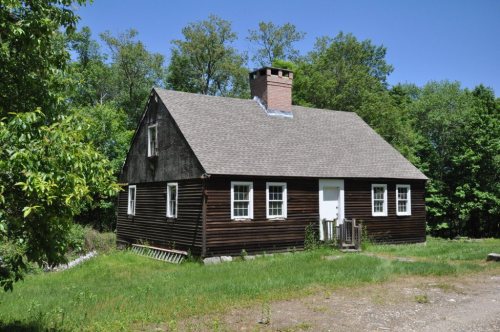
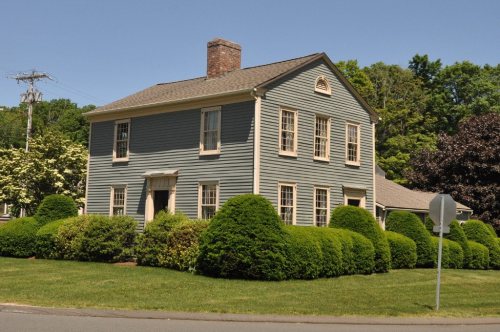
6 listings: 5 buildings, among them the Brown Tavern (listed 1972, the first), and 1 historic district, the Hart's Corner Historic District, with 7 contributing buildings. 13 historic buildings in all.
How old are the homes in Burlington?
9% of Burlington’s homes were built before 1940 (Census estimate, ±3.1 points), against a typical 15% for a Connecticut town; the median home was built in 1981.
Founding dates: Wikidata, Wikipedia, the U.S. post office records of Blevins & Helbock (CC0) and the Census. Homes by year built: Census ACS 2020–24. National Register of Historic Places: National Park Service (list of May 22, 2026). Old photos, postcards and papers: Wikimedia Commons, the Library of Congress and other public archives, credited on each item’s page. Maps: U.S. Geological Survey historical topographic maps (via Esri) and Sanborn fire-insurance maps (Library of Congress). History text and census tables: Wikipedia (CC BY-SA 4.0). Places that used to be: USGS Geographic Names Information System (2021).
From Wikimedia Commons (24), Wikidata (4), the National Register of Historic Places (6), Wikipedia, Wikidata and Wikipedia for famous people, U.S. Geological Survey historical maps, U.S. Census counts (via Wikipedia), the US Post Offices dataset (Blevins & Helbock), the USGS Geographic Names Information System and old county and town histories (Internet Archive). Archive images are copied here with their credits and licenses, shown on each photo’s page. Refreshed monthly.







 2025
 2024
 2024
 2023
 2023
 2019
 2019
 2019
 2019
 2018
 2018
 2018
 2016
 2016
 2016
 2012
 2011
 2010
 2010
 2010
 2006
 2006
 2006