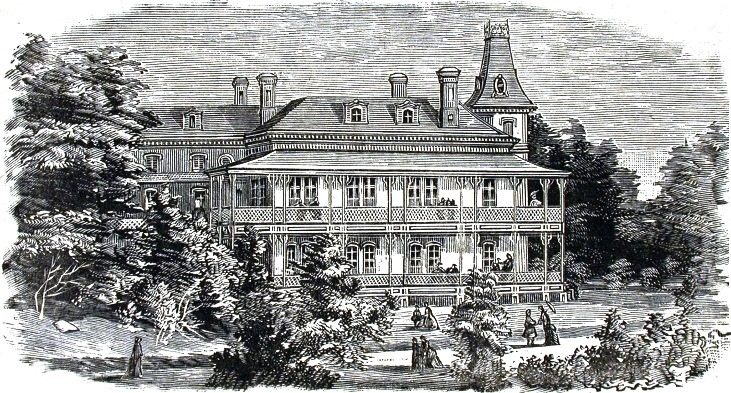
Manoir Maplewood · Photo: Cantons-de-l'Est · CC BY-SA 4.0
3historic places on the registers
History of Waterloo · Canada’s heritage registers
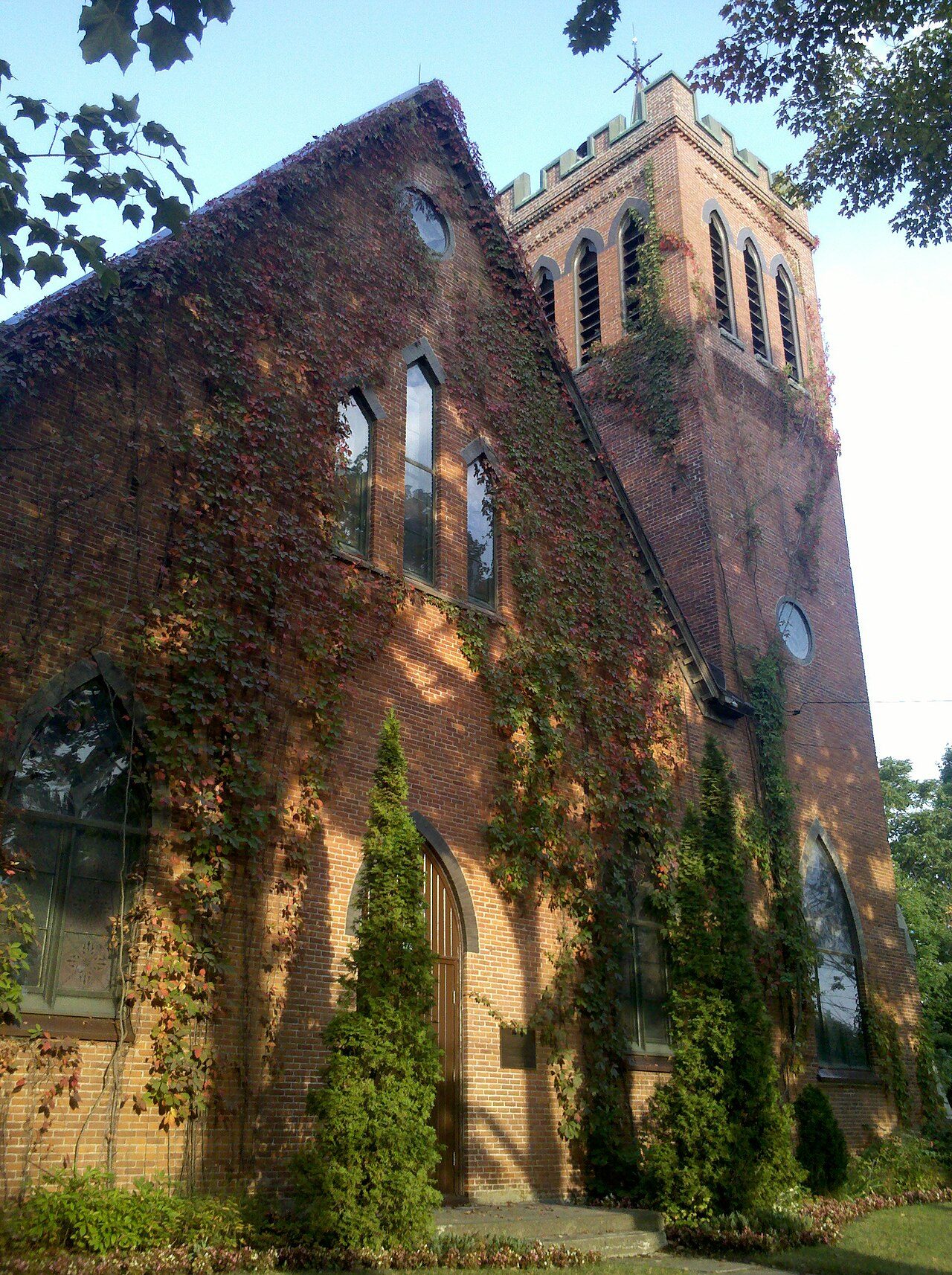
The registers list 3 historic places in Waterloo, one at the top
On the list: 2 municipal citations. For its size Waterloo is rich ground: 5.3 per 10,000 residents, ahead of 95% of Canadian towns. Homes from before 1961 make up 35% of the stock, above the 18% of the typical town. The earliest construction date, 1864, belongs to Manoir Maplewood.
Photos from Wikimedia Commons, each credited to its photographer with its licence; names open the place’s page. Tap a photo to step through them full screen.
Through time
Waterloo, long ago
One picture from before 1950: the oldest view of one of its historic places. It opens full screen with a tap.
Public domain or CC0, made before 1950, from Wikimedia Commons; old views of places can be drawings, prints or maps of their time. Each credit opens the image’s page.
How it began
Waterloo since 1793: its early dates
Waterloo was founded in 1793. It has been 233 years since then. The name of Waterloo honours Battle of Waterloo, 1815 battle during the War of the Seventh Coalition.
The date Wikidata keeps for Waterloo is January 1, 1867; whether it was a founding or a legal act, the entry leaves open.
Every place on the registers inside the town, by its designation.
Highest designationsProvincial and local listings
Hover a dot for its name; tap one to open its page.
The 3, by tier
1 Highest designations2 Provincial and local listings
Two open registers meet here: Parks Canada’s Directory of Federal Heritage Designations and Québec’s heritage register, which records both provincial classements and municipal citations.
Points from Wikidata (Parks Canada’s files carry none) and from Québec’s register, as mapped there.
Highest designations
One place in Waterloo with the highest designation
National Historic Sites and Classified Federal Heritage Buildings, Canada’s highest federal recognition. Each one opens its own page.
The oldest, Manoir Maplewood, dates from 1864; the newest from 1870. Citations the municipality has made, registered with Québec’s ministry of culture. Designations came from 1988 to 2013. Each one opens its own page.
9.6% of Waterloo’s homes are from 2016 to 2021 (4.1% is typical)
Only 13% of Waterloo’s homes were built from 1981 to 2000, less than the typical town’s 23%. Homes built from 2001 to 2015 make up 19% of Waterloo’s, against 15% in the typical town. More than half of Waterloo’s housing predates 1981.
35%
Before 1961
24%
1961–80
13%
1981–2000
19%
2001–15
9.6%
2016–21
WaterlooTypical town
2021 Census, private dwellings by period of construction (Statistics Canada); the typical town is the middle Canadian town of 2,500 or more.
Born here
Before 1914, Waterloo gave 7 lives to the record
The last born is William Kennedy, in 1899. Fame, by Wikipedia: Michael J. Hart first, in 6 languages. In 1827 came the earliest, John Rudolphus Booth. Of the 7, 4 were born in the years before Confederation.
John Rudolphus Booth
Charles Henry Parmelee
Armine Nutting Gosling
Henry Edgarton Allen
Michael J. Hart
Jonathan Robinson
William Kennedy
1800182518501875190019251950
Michael J. Hart1877–1951 · American politician
John Rudolphus Booth1827–1925 · Canadian businessman
Charles Henry Parmelee1855–1914 · Canadian politician
Armine Nutting Gosling1861–1942 · Canadian politician
HA
Henry Edgarton Allen1864–1924 · Canadian politician
Jonathan Robinson1894–1948 · Canadian politician
WK
William Kennedy1899–1992 · Canadian high jumper
Everyone born in Waterloo → Born before 1914 (the page’s periods: Confederation to the First World War). Birthplaces from Wikidata, each checked against the person’s Wikipedia article.
Towns its size
Waterloo has the 2nd most of 16 towns its size
Towns of 5,700 to 5,700 residents, by places on the registers.
Counted by age, 35% of Waterloo’s homes predate 1961, against 18% in the typical town. All told, the registers hold 3 historic places, one with the highest designation, Église Saint-Luke de Waterloo among them. Only one of the 16 towns nearest its size has more historic places. Among the lives from its past: Michael J. Hart (1877), John Rudolphus Booth (1827) and Charles Henry Parmelee (1855). For the rest, the list grew between 1978 and 2013.
How to read these numbers
What this data can and can’t tell you
•
People and events. Persons of national historic significance come with no location; a town gets one only by birthplace (name and both life years agreeing) or by one of its own places that bears the name and whose record tells the story. Events, which can’t be tied, are left out.
•
Protection. Québec’s classements and citations carry legal protection: work on a classified building needs the minister’s authorization, on a cited one the municipality’s. Federal designations commemorate.
•
The federal register. Federal places come from Parks Canada’s directory, which counts National Historic Sites, federal heritage buildings, stations and lighthouses; their statements are the register’s own.
•
The grade. History isn’t one of Canada’s graded pillars, so this page describes and compares without a letter.
•
Québec’s register. In Québec the ministry of culture publishes its register openly: provincial classements, declared sites and the municipalities’ citations all appear, with their descriptions.
•
The tiers. National Historic Sites and the most protected buildings form the top tier; recognized federal buildings, stations and lighthouses the second; provincial and municipal listings the third.
•
Map points. Parks Canada publishes no coordinates, so federal places are pinned where Wikidata puts them.
Questions about Waterloo’s history
How old are the homes in Waterloo?
35% predate 1961, where the typical town has 18%.
Which places in Waterloo have the highest designation?
It is Église Saint-Luke de Waterloo.
What is the oldest building in Waterloo?
By its record, Manoir Maplewood, from 1864 (Municipal citation (Québec)).
Contains information licensed under the Open Government Licence – Canada (Parks Canada). Québec register data: Ministère de la Culture et des Communications du Québec, CC BY 4.0.
Sources: Parks Canada, Directory of Federal Heritage Designations · Canadian Register of Historic Places (federal extract) · Répertoire du patrimoine culturel du Québec (MCC, Données Québec) · Wikidata (CC0) for map points, other names and articles · Statistics Canada, 2021 Census (homes by period of construction). Under the Statistics Canada Open Licence.


 1850–1885
 Top
 Local
 Local


