History of Port Elgin · Canada’s heritage registers
Port Elgin has 3 historic places on the registers, one in the top tier
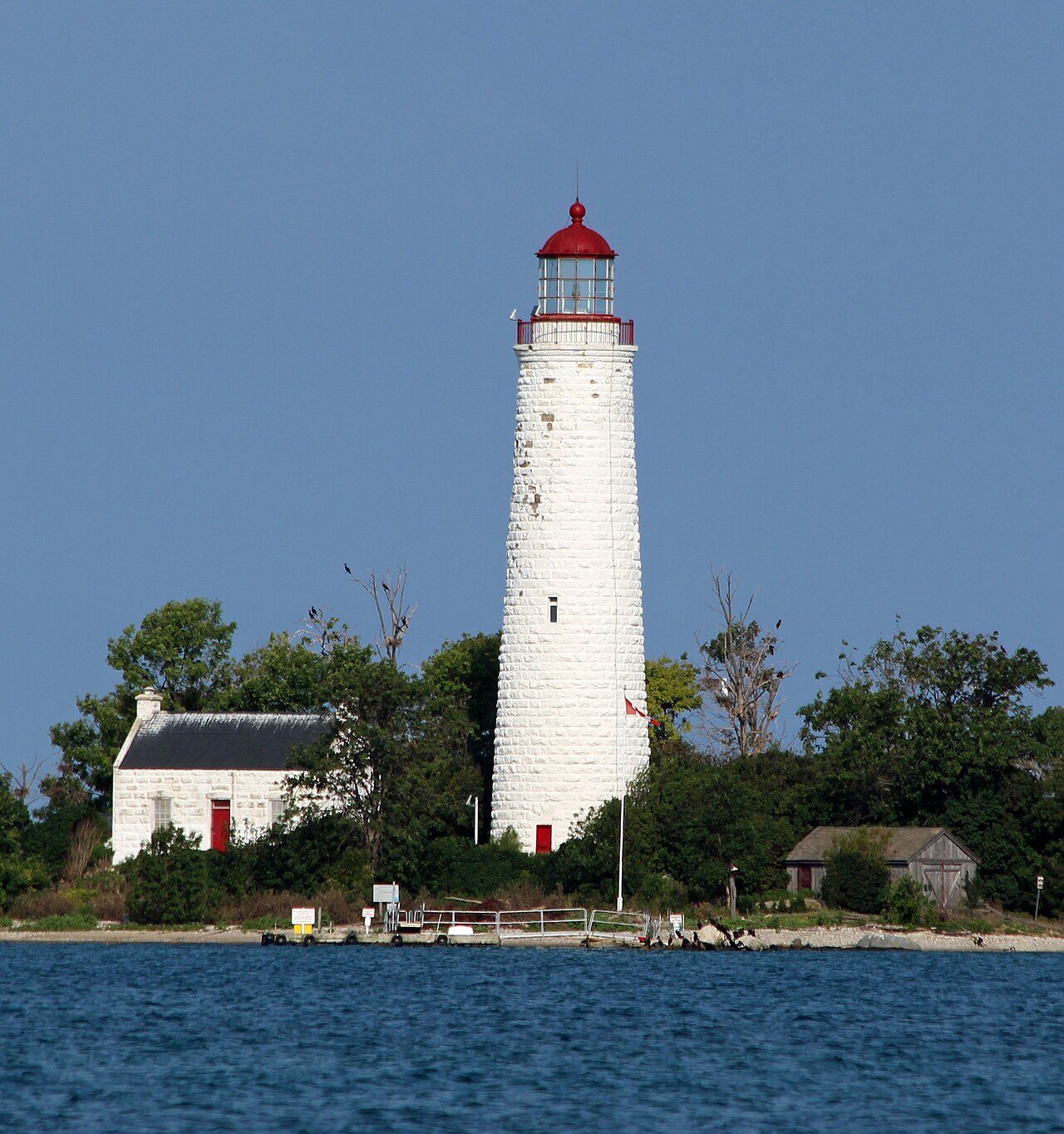
Among the places are 2 heritage lighthouses. Its oldest building on the record is Tower, from 1855. For every 10,000 residents Port Elgin has 1.7, ahead of 84% of Canadian towns. Within 5 km of the town lie 2 more that belong to it.
Photos from Wikimedia Commons, each credited to its photographer with its licence; names open the place’s page. Tap a photo to step through them full screen.
How it began
From 1873: Port Elgin’s first milestones
In 1873 the railway came to Port Elgin. Port Elgin took its legal form as a village in 1874.
Every place on the registers inside the town, by its designation.
Highest designationsOther federal designations
Each dot is a place: point at it for the name, tap it for its page.
The 3, by tier
1 Highest designations2 Other federal designations
The federal directory kept by Parks Canada supplies most of these places; provincial and municipal lists outside Québec aren’t open data, so only the ones Wikidata documents with an article appear.
Points from Wikidata (Parks Canada’s files carry none) and from Québec’s register, as mapped there.
Highest designations
One place in Port Elgin with the highest designation
National Historic Sites and Classified Federal Heritage Buildings, Canada’s highest federal recognition. Each one opens its own page.
Recognized Federal Heritage Buildings, heritage railway stations and lighthouses. McNab Point Lighthouse is the earliest, from 1877; the latest dates from 1903. Each one opens its own page.
Donaldson SiteNational Historic Site · 100 m outside the town
Homes by age
A growing town: 12% of Port Elgin’s homes went up from 2016 to 2021, against 4.1%
Half of the homes standing in Port Elgin today were built before 2001. The busiest building years in Port Elgin were from 1961 to 1980, which account for 31% of today’s homes. Homes built from 2001 to 2015 make up 22% of Port Elgin’s, against 15% in the typical town.
17%
Before 1961
31%
1961–80
17%
1981–2000
22%
2001–15
12%
2016–21
Port ElginTypical town
2021 Census, private dwellings by period of construction (Statistics Canada); the typical town is the middle Canadian town of 2,500 or more.
Born here
Natives of Port Elgin from 1858 to 1910
Longest lived was William George Bock, 89 years in all (1973). Before 1914, 11 births here made the record. By Wikipedia’s reach, David Milne leads, with 9 articles. The decades after Confederation gave 10 of the 11.
George Lynch-Staunton
Christopher McRae
Frederick Wellington Elliott
James Angus MacKinnon
David Milne
William George Bock
Charles Lightfoot Roman
Robert Hanbidge
James Mahaffy
Waldo McTavish Skillings
Alda Wilson
18501875190019251950
David Milne1882–1953 · Canadian painter, printmaker, and writer
Alda Wilson1910–1993 · Canadian athletics competitor
JM
James Angus MacKinnon1881–1958 · Canadian politician
RH
Robert Hanbidge1891–1974 · Canadian politician
CM
Christopher McRae1873–1938 · Canadian politician
WB
William George Bock1884–1973 · Canadian politician
George Lynch-Staunton1858–1940 · Canadian politician
FE
Frederick Wellington Elliott1873–1933 · Canadian politician
Everyone born in Port Elgin → Born before 1914 (the page’s periods: Confederation to the First World War). Birthplaces from Wikidata, each checked against the person’s Wikipedia article.
Towns its size
Port Elgin has the 4th most of 16 towns its size
Towns of 18,000 to 18,400 residents, by places on the registers.
Just these have more: Schmidtville, Downtown Yonge East and Edmundston. The middle one has 1. 8 of them have none.
In brief
Port Elgin in brief
All told, Port Elgin has 3 historic places, one with the highest designation; Tower heads the list. Only 3 of the 16 towns nearest its size have more historic places. David Milne (1882), Alda Wilson (1910) and James Angus MacKinnon (1881) are the best known of its historic lives. Pre-1961 homes are a small part of its stock: 17%, against 18% in the typical town. The rest is about typical: its places were designated between 1991 and 2012.
How to read these numbers
What this data can and can’t tell you
•
Map points. Parks Canada publishes no coordinates, so federal places are pinned where Wikidata puts them.
•
Provincial and municipal lists. Provincial and municipal listings here come from Wikidata alone, since the provinces’ own registers can’t be reused; a listing needs an encyclopedia article to get a page.
•
The federal register. The federal list is complete and open: Parks Canada’s directory for the designations, the Canadian Register of Historic Places for what each one is and why it matters.
•
The grade. History is described, not graded, for every Canadian town.
•
Protection. Federal recognition isn’t a planning control: buildings the federal government owns follow its heritage policy, while others are protected only by a provincial or municipal designation.
•
The tiers. Three tiers: the top for National Historic Sites, classified federal buildings and Québec’s classements, a second for the other federal designations, a third for provincial and municipal listings.
•
People and events. National historic persons carry no place in the open file. They appear on a town’s page when born there (same name, same birth and death years) or when a historic place inside it carries their name and its record names them with their dates; national historic events don’t appear.
Questions about Port Elgin’s history
Which places in Port Elgin have the highest designation?
Tower.
What is the oldest building in Port Elgin?
Tower — its record dates it to 1855 (Classified Federal Heritage Building).
How old are the homes in Port Elgin?
Before 1961: 17% of its homes; the typical town has 18%.
Contains information licensed under the Open Government Licence – Canada (Parks Canada).
Sources: Parks Canada, Directory of Federal Heritage Designations · Canadian Register of Historic Places (federal extract) · Wikidata (CC0) for map points, other names and articles · Statistics Canada, 2021 Census (homes by period of construction). Under the Statistics Canada Open Licence.

 Top


