
 Top
Classified Federal Heritage Building · 1857–1859LighttowerPhoto: Kevin Cabral from Toronto, Canada · CC BY 2.0 · Commons file
 Lighttower · Photo: Kevin Cabral from Toronto, Canada · CC BY 2.0
3historic places on the registers
History of Collingwood · Canada’s heritage registers
Collingwood: 3 historic places, 2 with the highest designation
Designations here include a provincial or municipal listing. Go back to 1857 and you reach Lighttower, the oldest of them. Scaled to its population, Collingwood’s 1.1 per 10,000 residents beats 80% of Canadian towns.
Historic places
3
1.1 per 10,000 residents
Highest designations
2
National Historic Sites and Classified Federal Heritage Buildings
Provincial and local listings
1
provincial and municipal listings with an encyclopedia article
Oldest building
1857
the first construction date on its record
Homes built before 1961
19%
typical town: 18%
In pictures
Then and today: Collingwood in 3 photos and 4 old pictures
To start: Lighttower, and Federal Building. Each of Collingwood’s designated places has a photo. 3 photographers took them.
Photos from Wikimedia Commons, each credited to its photographer with its licence; names open the place’s page. Tap a photo to step through them full screen.
Through time
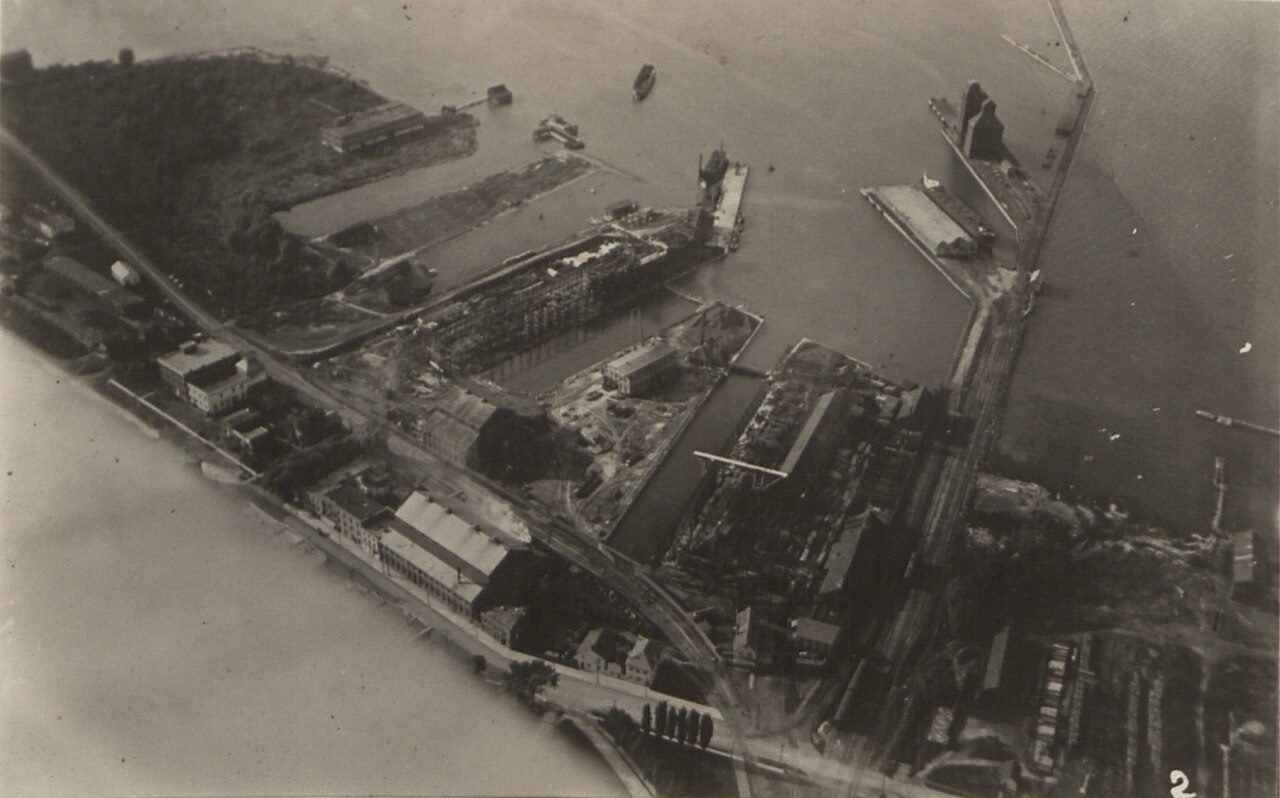
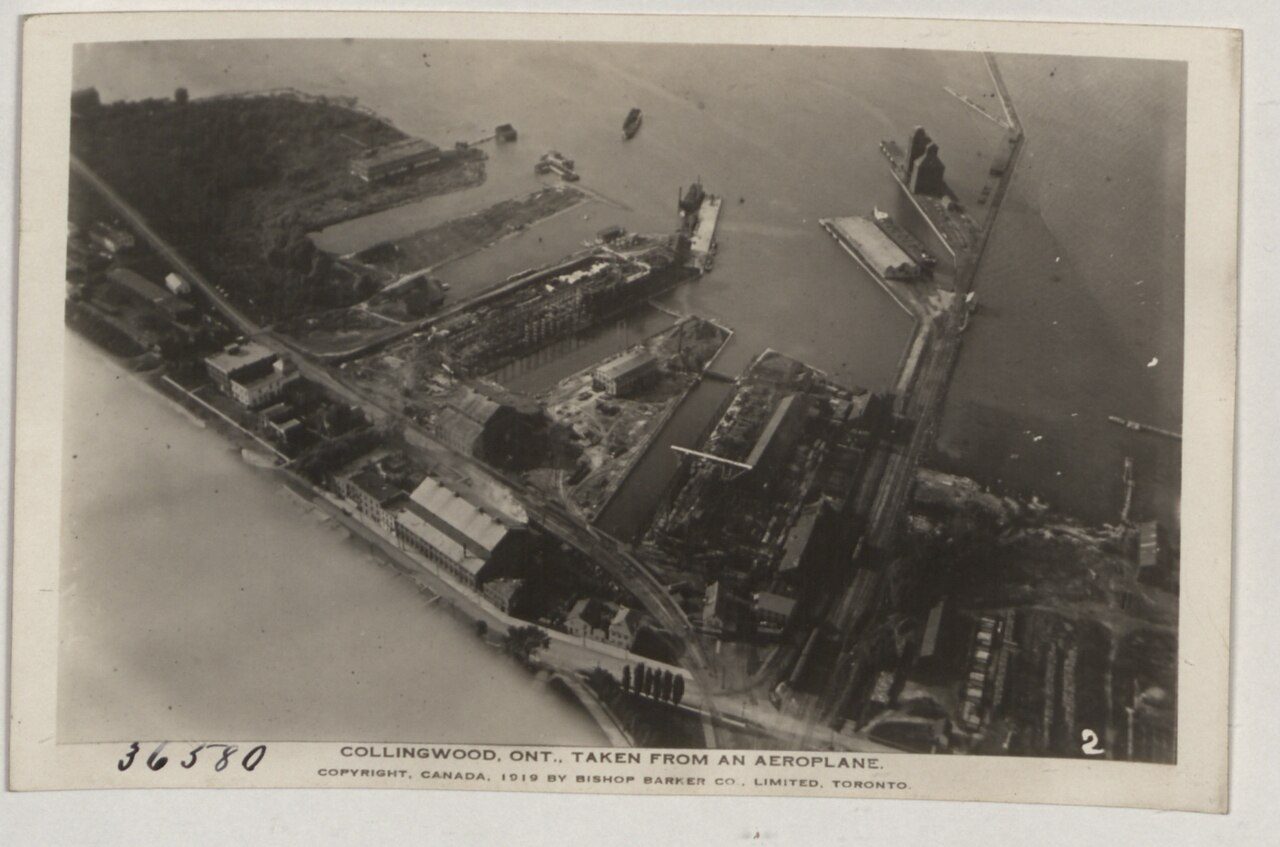
Old pictures of Collingwood
Here in time order: 4 old photographs of the town. Tap any picture to see it full screen.
 c. 1919
 c. 1919
 c. 1919
 c. 1919
Public domain or CC0, made before 1950, from Wikimedia Commons; old views of places can be drawings, prints or maps of their time. Each credit opens the image’s page.
The map
Where Collingwood’s history is
Every place on the registers inside the town, by its designation.
Highest designationsProvincial and local listings
Each dot is a place: point at it for the name, tap it for its page.
The 3, by tier
2 Highest designations1 Provincial and local listings
What the map shows is the open record: the federal directory in full, and from provincial or municipal lists only the places Wikidata ties to an encyclopedia article.
Points from Wikidata (Parks Canada’s files carry none) and from Québec’s register, as mapped there.
Highest designations
2 places in Collingwood with the highest designation
They were designated between 1984 and 1999. National Historic Sites and Classified Federal Heritage Buildings, Canada’s highest federal recognition. Their dates run from 1857, with Lighttower, to 1913. Each one opens its own page.
 Top
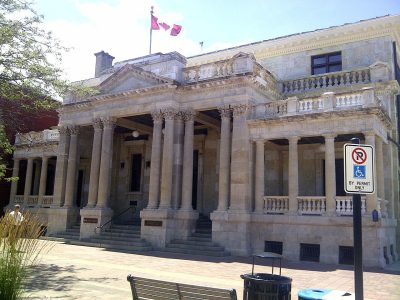
Classified Federal Heritage Building · 1913–1916Federal Building44 Hurontario StreetPhoto: Skeezix1000 · CC BY-SA 3.0 · Commons file
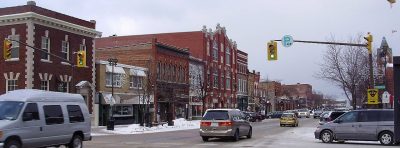
Provincial and local listings
One local listing in Collingwood
Provincial and municipal listings that Wikidata records and an encyclopedia describes. Each one opens its own page.
 Local
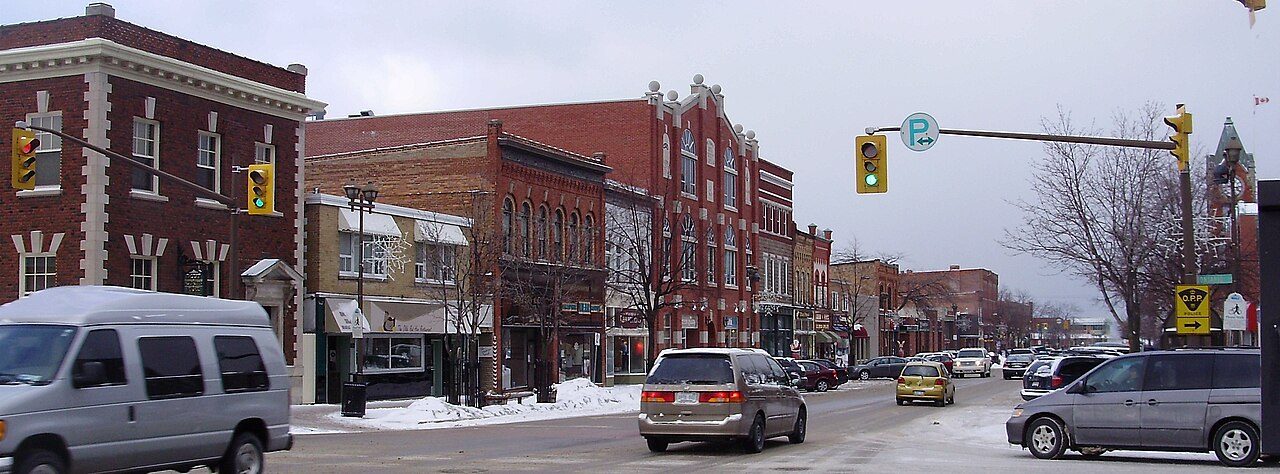
Heritage conservation districtCollingwood Downtown Heritage Conservation DistrictPhoto: GTD Aquitaine · Public domain · Commons file
Homes by age
13% of Collingwood’s homes are from 2016 to 2021 (4.1% is typical)
The busiest building years in Collingwood were from 2001 to 2015, which account for 25% of today’s homes. Like the typical town (18%), Collingwood has 19% of its homes from before 1961. Few of Collingwood’s homes date from 1961 to 1980: 21%, the norm 27%.
19%
Before 1961
21%
1961–80
22%
1981–2000
25%
2001–15
13%
2016–21
CollingwoodTypical town
2021 Census, private dwellings by period of construction (Statistics Canada); the typical town is the middle Canadian town of 2,500 or more.
Born here
One of Canada’s national historic persons, tied to Collingwood
The widest known is Reg Noble: 12 Wikipedia editions. Alexander Ferguson comes first, born in 1860. At the other end is Roy Burmister, from 1906. Before 1914, 9 births here made the record.
Alexander Ferguson
Margaret Robertson Watt
James Whalen
Norah M. Holland
Charles Collins
Dougall Carmichael
Reg Noble
Bernie Brophy
Roy Burmister
18501875190019251950

Reg Noble1895–1962 · Canadian ice hockey player

Margaret Robertson Watt1868–1948 · National historic person, 2007 · British Women's Institute activist
BB
Bernie Brophy1903–1982 · Canadian ice hockey player

Norah M. Holland1876–1925 · Canadian writer
RB
Roy Burmister1906–1980 · Canadian ice hockey player

James Whalen1869–1929 · Canadian businessperson

Charles Collins1882–1920 · Canadian ice hockey player
DC
Dougall Carmichael1885–1945 · Canadian politician
Everyone born in Collingwood → Born before 1914. Birthplaces from Wikidata, each checked against Wikipedia; national historic persons from Parks Canada’s Directory of Federal Heritage Designations, matched by name and life years.
Towns its size
Collingwood has the 3rd most of 16 towns its size
Towns of 28,000 to 28,700 residents, by places on the registers.
Collingwood3
Just these have more: René-Lévesque and Montagne. Their median is 0. For 9, the registers list nothing.
Neighbours
Collingwood and its neighbours
| Town | People | Places | Highest | Oldest |
|---|---|---|---|---|
| Collingwood | 28,366 | 3 | 2 | 1857 |
| Stayner | 16,571 | 1 | 1 | 1871 |
| Wasaga Beach | 28,736 | 0 | 0 | — |
| Thornbury | 11,162 | 0 | 0 | — |
In brief
Collingwood in brief
Counted by age, 19% of Collingwood’s homes predate 1961, against 18% in the typical town. The count is 3 historic places, 2 with the highest designation, with Lighttower first. Of the 16 towns closest in size, just 2 have more historic places. Of its people of the past, the best known are Reg Noble (1895), Margaret Robertson Watt (1868) and Bernie Brophy (1903). Everything else is close to the norm: the list grew between 1984 and 1999.
How to read these numbers
What this data can and can’t tell you
- Protection. A National Historic Site designation recognises significance; it doesn’t by itself protect a building the federal government doesn’t own. Legal protection comes from provincial and municipal designations, whose own registers aren’t open data outside Québec.
- The grade. There is no history grade: the page sets out the record and compares it with other towns.
- The federal register. The federal list is complete and open: Parks Canada’s directory for the designations, the Canadian Register of Historic Places for what each one is and why it matters.
- Map points. Pins for federal places come from Wikidata rather than Parks Canada, which gives no points.
- The tiers. Tiers follow the designation: national recognition and classement first, other federal designations next, provincial and local listings last.
- Provincial and municipal lists. Outside Québec, provinces’ and municipalities’ heritage registers aren’t open data; their places are known only through Wikidata items with a register number, and only those with an encyclopedia article get a page.
- People and events. National historic persons carry no place in the open file. They appear on a town’s page when born there (same name, same birth and death years) or when a historic place inside it carries their name and its record names them with their dates; national historic events don’t appear.
Questions about Collingwood’s history
Which places in Collingwood have the highest designation?
These: Lighttower and Federal Building.
What is the oldest building in Collingwood?
Lighttower — its record dates it to 1857 (Classified Federal Heritage Building).
How old are the homes in Collingwood?
The 2021 Census dates 19% of its homes before 1961 (18% in the typical town).
Contains information licensed under the Open Government Licence – Canada (Parks Canada).
Sources: Parks Canada, Directory of Federal Heritage Designations · Canadian Register of Historic Places (federal extract) · Wikidata (CC0) for map points, other names and articles · Statistics Canada, 2021 Census (homes by period of construction). Under the Statistics Canada Open Licence.
Adapted from Statistics Canada (Census of Population 2021, population estimates 2025, 2021 census boundaries) under the Statistics Canada Open Licence; this does not constitute an endorsement by Statistics Canada. Neighbourhood names in some cities © OpenStreetMap contributors (ODbL).