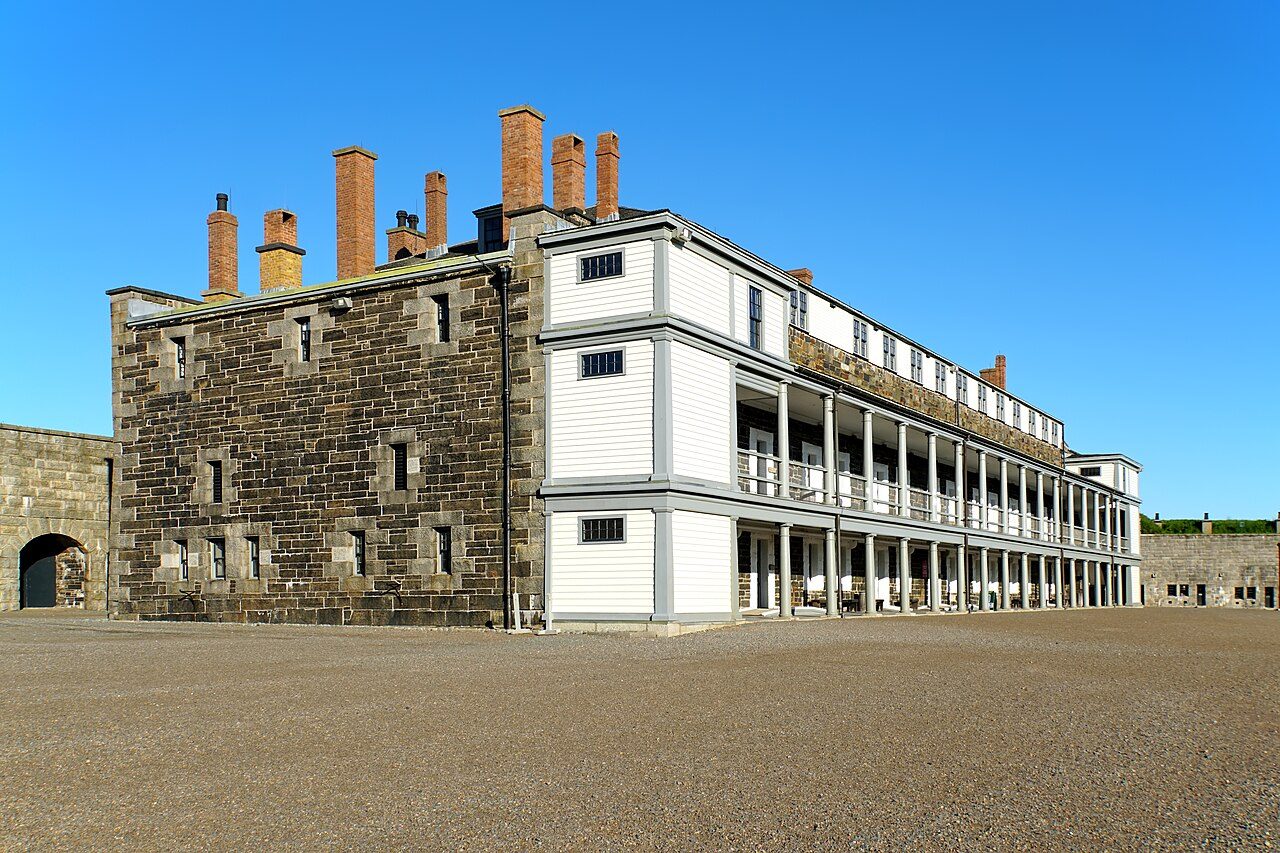
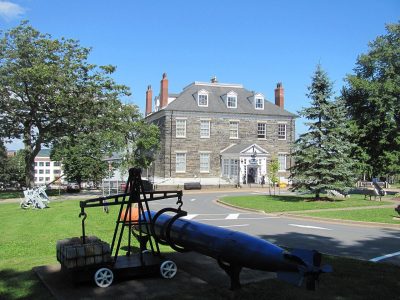
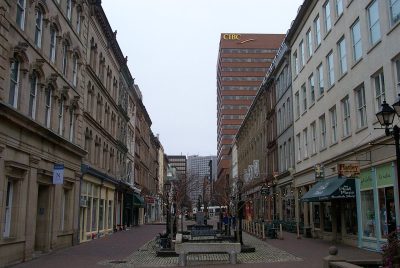
Cavalier Building · Photo: Dennis G. Jarvis · CC BY-SA 2.0
105historic places on the registers
History of Halifax · Canada’s heritage registers
History in Halifax goes back to 1746: D'Anville's Encampment
The lists give Halifax 105 historic places, 43 in the top tier. The record has 44 Recognized Federal Heritage Buildings, 17 provincial or municipal listings and a heritage railway station. Add 6 just outside the town. Local registers add 142 more places, counted here but not paged: Wikidata holds their numbers and little else.
provincial and municipal listings with an encyclopedia article
Oldest building
1746
the first construction date on its record
Homes built before 1961
18%
typical town: 18%
In pictures
64 photos of Halifax’s landmarks, and 16 from before 1950
The set includes 37 of Halifax’s highest-designated places. 64 of the places on Halifax’s heritage registers are pictured here; the others keep their register record. For 8 of Halifax’s places, old views sit on the place’s own page.
Photos from Wikimedia Commons, each credited to its photographer with its licence; names open the place’s page. Tap a photo to step through them full screen.
Through time
Pictures of Halifax from 1657 to 1942
10 old photographs of the town and the oldest views of 6 of its historic places, in date order. Swipe along the strip; each picture opens at full size.
1650170017501800185019001950New FranceBefore ConfederationConfederation to 1900Boom yearsThe wars and betweenAfter the war
Public domain or CC0, made before 1950, from Wikimedia Commons; old views of places can be drawings, prints or maps of their time. Each credit opens the image’s page.
How old
For Halifax, most dated places belong to the years before Confederation
Each place by the first construction date on its record.
New France before 17607
British North America 1760–186640
After Confederation 1867–191333
Wars and Depression 1914–194518
Since 1946 1946 on3
47 of the 101 dated places are older than Confederation.
How it began
The record of Halifax, from 1749 on
Wikidata gives the municipality of Halifax the date 1749, which can mark a founding, an incorporation or a merger. Behind the name Halifax is George Montagu-Dunk, 2nd Earl of Halifax. By 1874 the place had a station: North Street Station.
Every place on the registers inside the town, by its designation.
Highest designationsOther federal designationsProvincial and local listings400 m from Town Clock on Citadel Hill
11 of 43within 400 m of Town Clock on Citadel Hill, the heart of the town’s history
Each dot is a place: point at it for the name, tap it for its page.
The 105, by tier
43 Highest designations45 Other federal designations17 Provincial and local listings
What the map shows is the open record: the federal directory in full, and from provincial or municipal lists only the places Wikidata ties to an encyclopedia article.
Points from Wikidata (Parks Canada’s files carry none) and from Québec’s register, as mapped there.
Highest designations
43 places in Halifax with the highest designation
Their dates run from 1746, with D'Anville's Encampment, to 1960. Here that means 31 National Historic Sites and 12 Classified Federal Heritage Buildings. National Historic Sites and Classified Federal Heritage Buildings, Canada’s highest federal recognition. Each one opens its own page.
Classified Federal Heritage Building · 1868–1872Lower Battery
Other federal designations
45 other places Canada recognizes in Halifax
Their designations span 1986 to 2007. Here that means 44 Recognized Federal Heritage Buildings and a heritage railway station. Recognized Federal Heritage Buildings, heritage railway stations and lighthouses. Each one opens its own page.
Streets with three or more places on the registers, by the address each gives.
Brunswick Street6 on the registers · 5 top designations
Barrington Street4 on the registers · 4 top designations
Hollis Street3 on the registers · 2 top designations
47 of the 105 places have a street address on their record.
What’s designated
In Halifax, forts and military buildings lead the list (28%)
Second on the list: mills, shops and works, 15 of them. At the head of the list: D'Anville's Encampment and Georges Island. All told, 8 kinds of place appear.
Forts and military buildings29
Mills, shops and works15
Houses14
Public buildings12
Churches and religious buildings9
Stations, lighthouses and bridges5
Theatres, museums and memorials3
Other places18
Kinds read from each place’s name and the functions its register gives; a building keeps the kind it was built as.
Provincial and local listings
17 local listings in Halifax
Provincial and municipal listings that Wikidata records and an encyclopedia describes. Their dates run from 1749, with Grand Parade, to 1931. Each one opens its own page.
Building No. 4Recognized Federal Heritage Building · 100 m outside the town
Gas HouseRecognized Federal Heritage Building · 600 m outside the town
Homes by age
7.3% of Halifax’s homes are from 2016 to 2021 (4.1% is typical)
Halifax’s largest group of homes, 29%, went up from 1981 to 2000. Like the typical town (18%), Halifax has 18% of its homes from before 1961. 19% of Halifax’s homes date from 2001 to 2015, well above the typical 15%.
18%
Before 1961
27%
1961–80
29%
1981–2000
19%
2001–15
7.3%
2016–21
HalifaxTypical town
2021 Census, private dwellings by period of construction (Statistics Canada); the typical town is the middle Canadian town of 2,500 or more.
People of the past
Halifax’s 7 persons of national historic significance, and others
Jonathan McCully is remembered here at Jonathan McCully House. 51 Wikipedias cover Charles Brenton Huggins, the most of anyone here. Most of them, 53 of 100, came into the world in the decades after Confederation. The longest life was Alice Mary Hagen’s: 100 years, to 1972. The timeline keeps to the 20 best known.
Joseph Howe
Michael Power
Henrietta Stanley, Baroness Stanley of Alderley
Maria Morris Miller
William Alexander Henry
John Sparrow David Thompson
William Stevens Fielding
Eliza Ritchie
William Grant Stairs
Agnes Sime Baxter
Nat Butler
Ernest Lawson
Oswald Avery
Tom Butler
Stella Browne
Hal Foster
Pinna Nesbit
David Manners
Charles Brenton Huggins
Aileen Meagher
1800182518501875190019251950
Charles Brenton Huggins1901–1997 · American physiologist
Oswald Avery1877–1955 · Canadian-born American physician and medical researcher
John Sparrow David Thompson1845–1894 · On Canada’s list since 1937 · Prime Minister of Canada from 1892 to 1…
HF
Hal Foster1892–1982 · Canadian-American illustrator
David Manners1900–1998 · Canadian-born American actor
Aileen Meagher1910–1987 · Athletics competitor
Agnes Sime Baxter1870–1917 · Mathematician
EL
Ernest Lawson1873–1939 · American painter
Everyone born in Halifax → Born before 1914, or named by one of the town’s historic places. Birthplaces from Wikidata, each checked against Wikipedia; national historic persons from Parks Canada’s Directory of Federal Heritage Designations, matched by name and life years.
The registers count 105 historic places in Halifax, 43 with the highest designation, D'Anville's Encampment first. Homes from before 1961 make up 18%, against 18% in the typical town. The densest spot is around Town Clock on Citadel Hill: 11 of its places of the highest designation within 400 m. Charles Brenton Huggins (1901), Oswald Avery (1877) and John Sparrow David Thompson (1845) lead its people of the past.
How to read these numbers
What this data can and can’t tell you
•
Protection. Federal recognition isn’t a planning control: buildings the federal government owns follow its heritage policy, while others are protected only by a provincial or municipal designation.
•
Provincial and municipal lists. Only Wikidata gives open access to listings on provincial and municipal registers outside Québec; without an article such a place is counted but not paged.
•
The grade. History is described, not graded, for every Canadian town.
•
The tiers. Three tiers: the top for National Historic Sites, classified federal buildings and Québec’s classements, a second for the other federal designations, a third for provincial and municipal listings.
•
Map points. Federal places get their map points from Wikidata, since Parks Canada’s files carry none; they are as mapped there.
•
The federal register. Federal places come from Parks Canada’s directory, which counts National Historic Sites, federal heritage buildings, stations and lighthouses; their statements are the register’s own.
•
People and events. Persons of national historic significance come with no location; a town gets one only by birthplace (name and both life years agreeing) or by one of its own places that bears the name and whose record tells the story. Events, which can’t be tied, are left out.
Questions about Halifax’s history
What is the oldest building in Halifax?
D'Anville's Encampment (National Historic Site): the first construction date on its record is 1746.
Which places in Halifax have the highest designation?
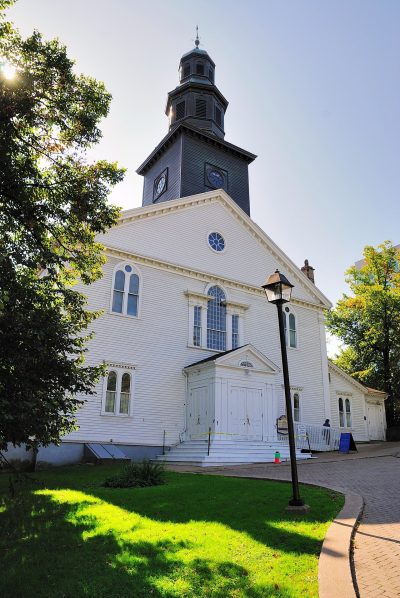
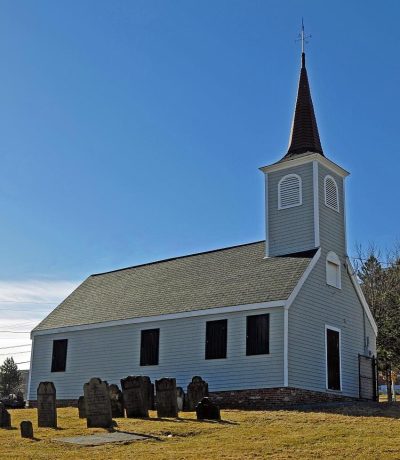
These: D'Anville's Encampment, Georges Island, Old Burying Ground, St. Paul's Anglican Church, Little Dutch (Deutsch) Church and York Redoubt, and 37 more.
Why might a heritage building in Halifax be missing here?
Provincial and municipal registers outside Québec aren’t open data. Wikidata knows 142 more listings in Halifax, but without an open description or an encyclopedia article they get no page.
How old are the homes in Halifax?
The 2021 Census dates 18% of its homes before 1961 (18% in the typical town).
Contains information licensed under the Open Government Licence – Canada (Parks Canada).
Sources: Parks Canada, Directory of Federal Heritage Designations · Canadian Register of Historic Places (federal extract) · Wikidata (CC0) for map points, other names and articles · Statistics Canada, 2021 Census (homes by period of construction). Under the Statistics Canada Open Licence.



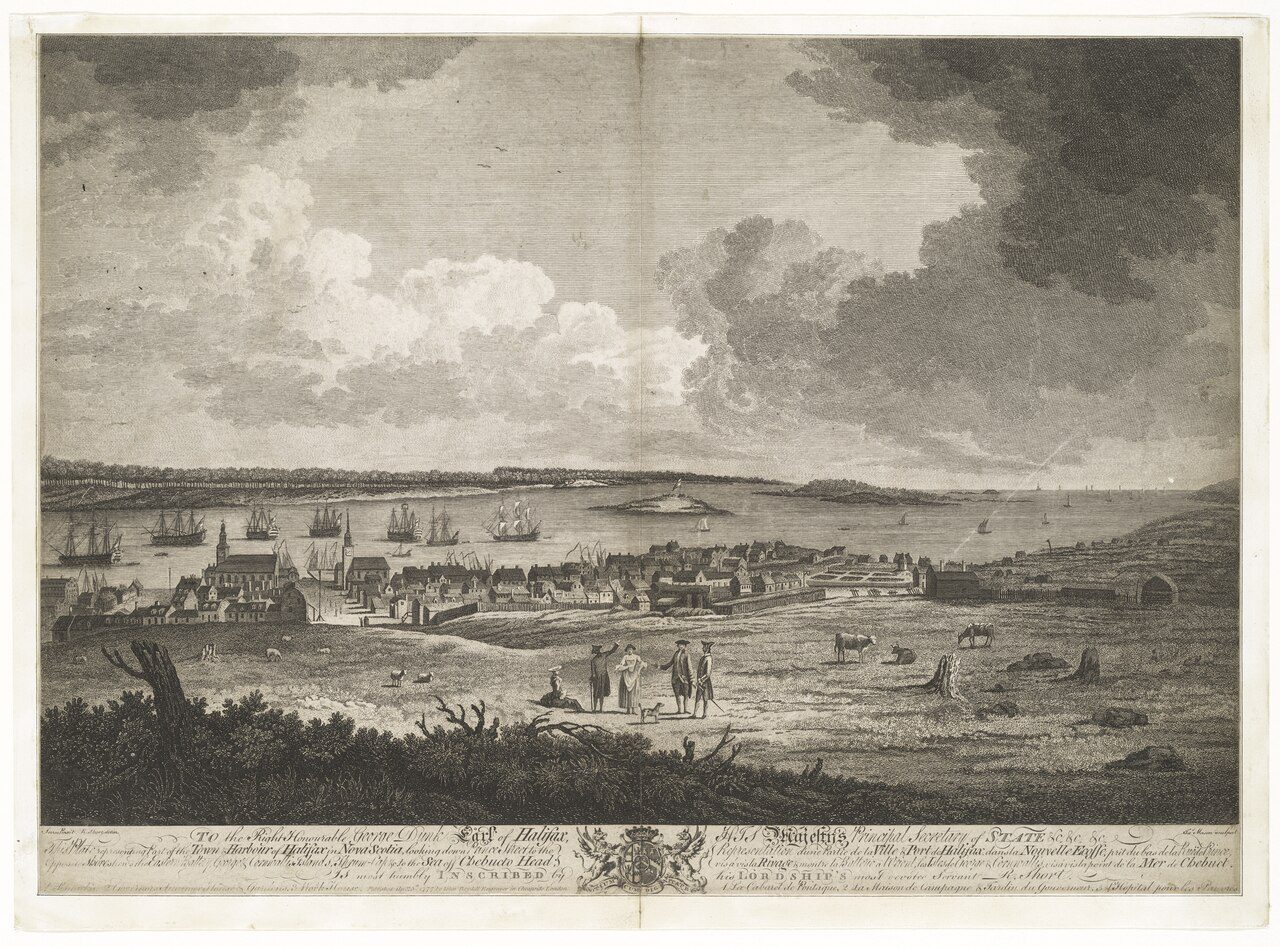
 1657
 1657
 1750
 1759
 c. 1780
 c. 1819
 c. 1879
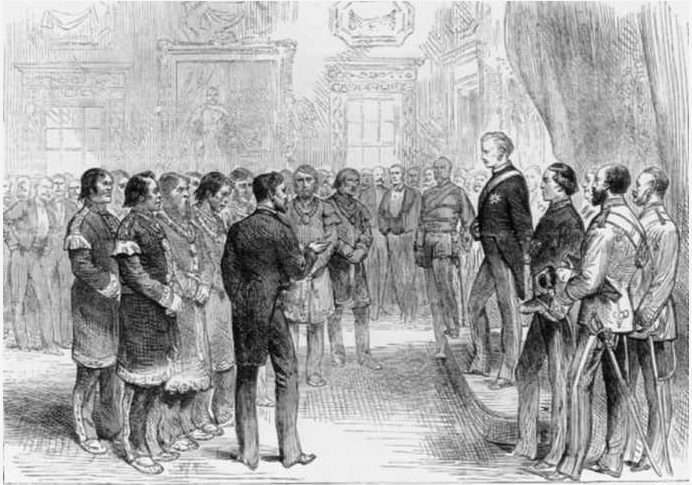 1879
 c. 1884
 c. 1890
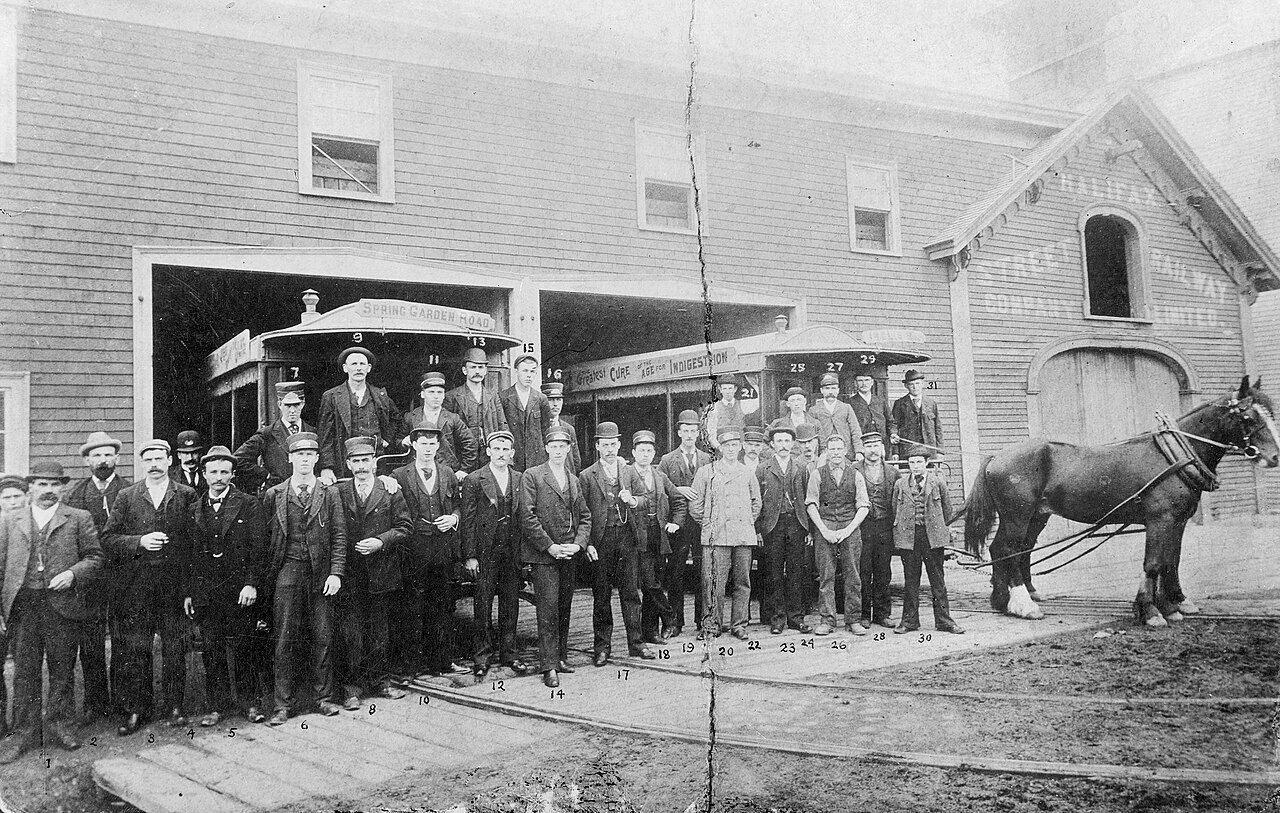 c. 1894
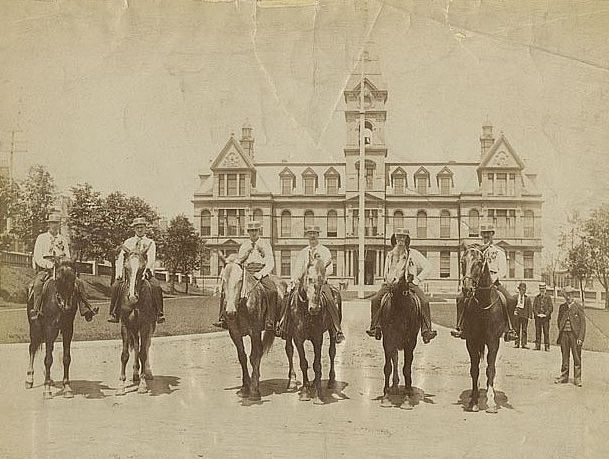 1897
 c. 1900
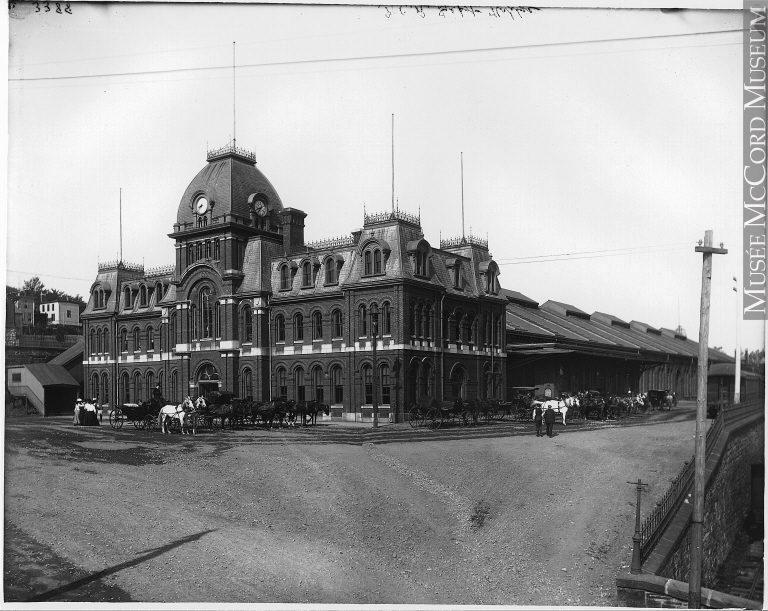 1901
 c. 1941
 c. 1942
 Top
 Top
 Top
 Top
 Top
 Top
 Top
 Top
 Top
 Top
 Top
 Top
 Top
 Top
 Top
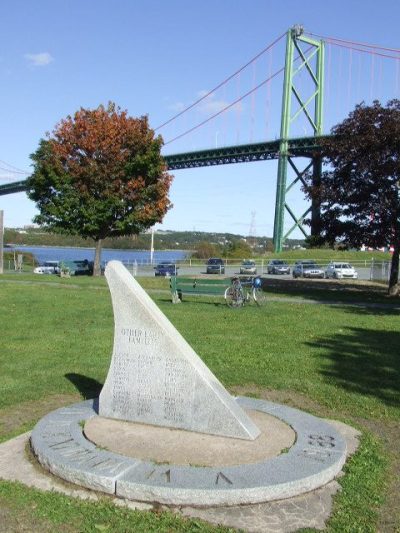 Top
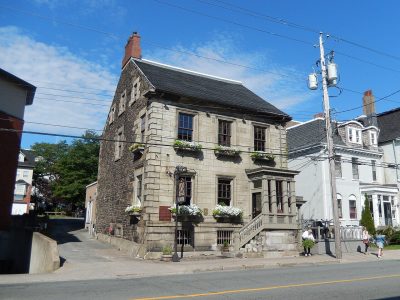 Top
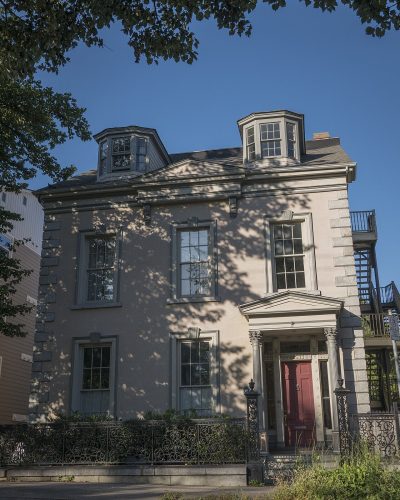 Top
 Top
 Top
 Top
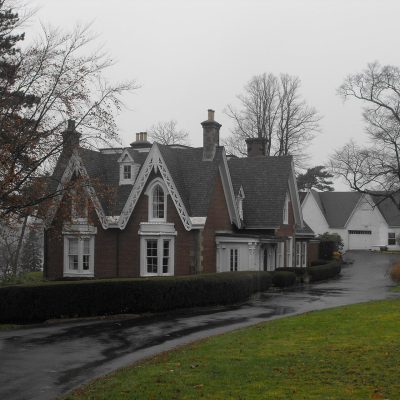 Top
 Top
 Top
 Top
 Top
 Top
 Top
 Top
 Top
 Top
 Top
 Top
 Top
 Top
 Top
 Top


