 Top
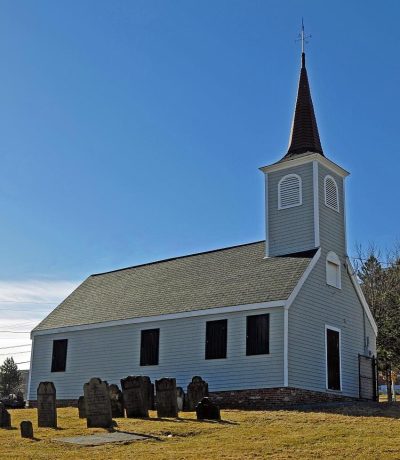
National Historic Site · 1756–1761Little Dutch (Deutsch) Church2393 Brunswick StreetPhoto: Dennis G. Jarvis · CC BY-SA 2.0 · Commons file
 St. George's Anglican Church / Round Church · Photo: Elisabeth Kleven · CC BY-SA 3.0
14historic places on the registers
History of North End · Canada’s heritage registers
Little Dutch (Deutsch) Church, from 1756, is North End’s oldest designated place
The typical town has 18% of its homes from before 1961; North End has 38%. On the registers the town counts 14 historic places, 7 at the top. Per resident it outdoes 96% of Canadian towns, with 7.1 for every 10,000 people. The list takes in 5 Recognized Federal Heritage Buildings and 2 provincial or municipal listings.
Historic places
14
7.1 per 10,000 residents
Highest designations
7
National Historic Sites and Classified Federal Heritage Buildings
Other federal designations
5
Recognized buildings, railway stations, lighthouses
Provincial and local listings
2
provincial and municipal listings with an encyclopedia article
Oldest building
1756
the first construction date on its record
Homes built before 1961
38%
typical town: 18%
In pictures
Photos of all 7 top-tier places in North End
Photos show 9 of the places North End’s registers name; the others show their record instead. Two worth a look first: St. George's Anglican Church / Round Church and Admiralty House. 8 different photographers shared them on Wikimedia Commons.
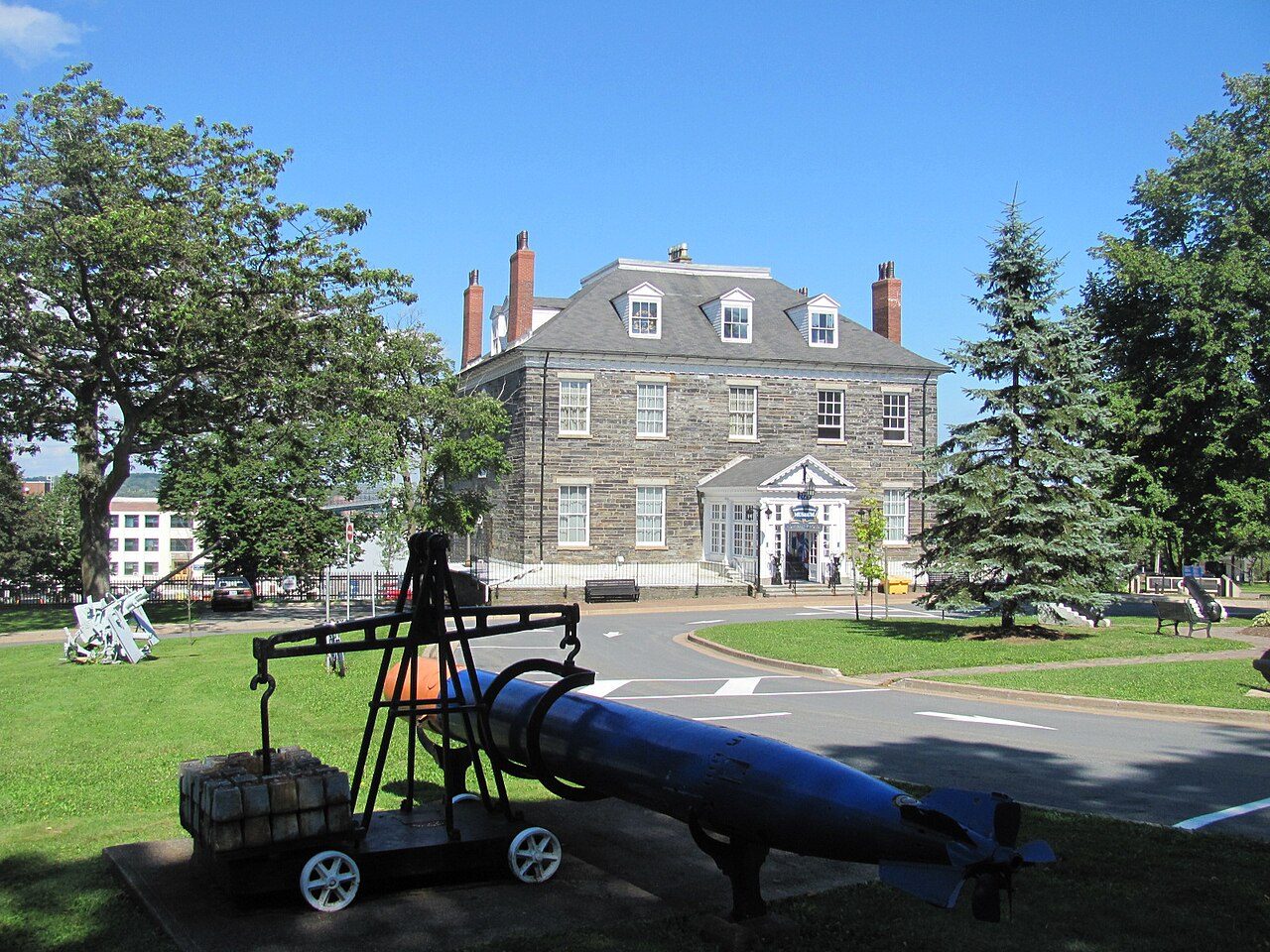 Admiralty House
 Hydrostone District
 Halifax Drill Hall
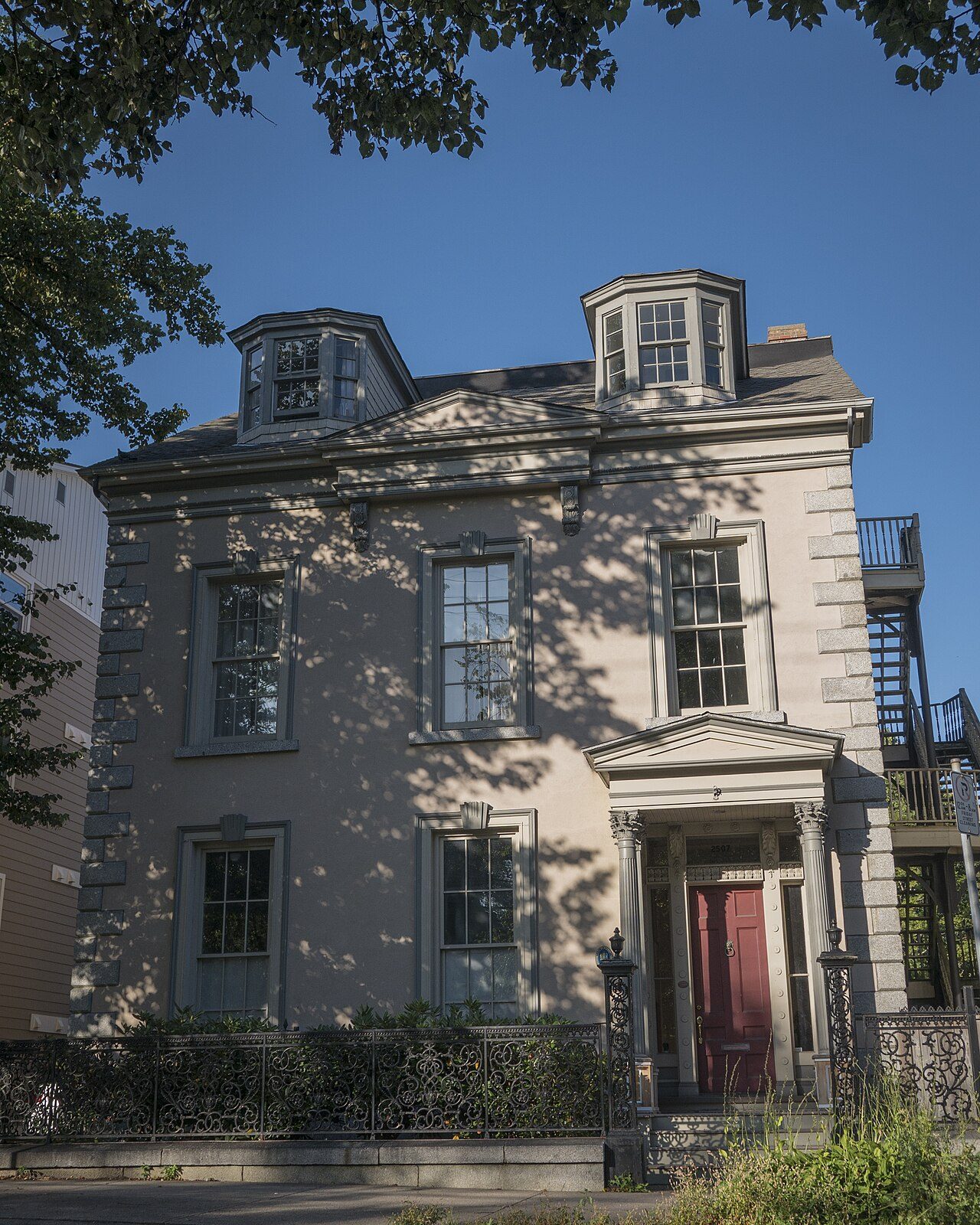 Jonathan McCully House
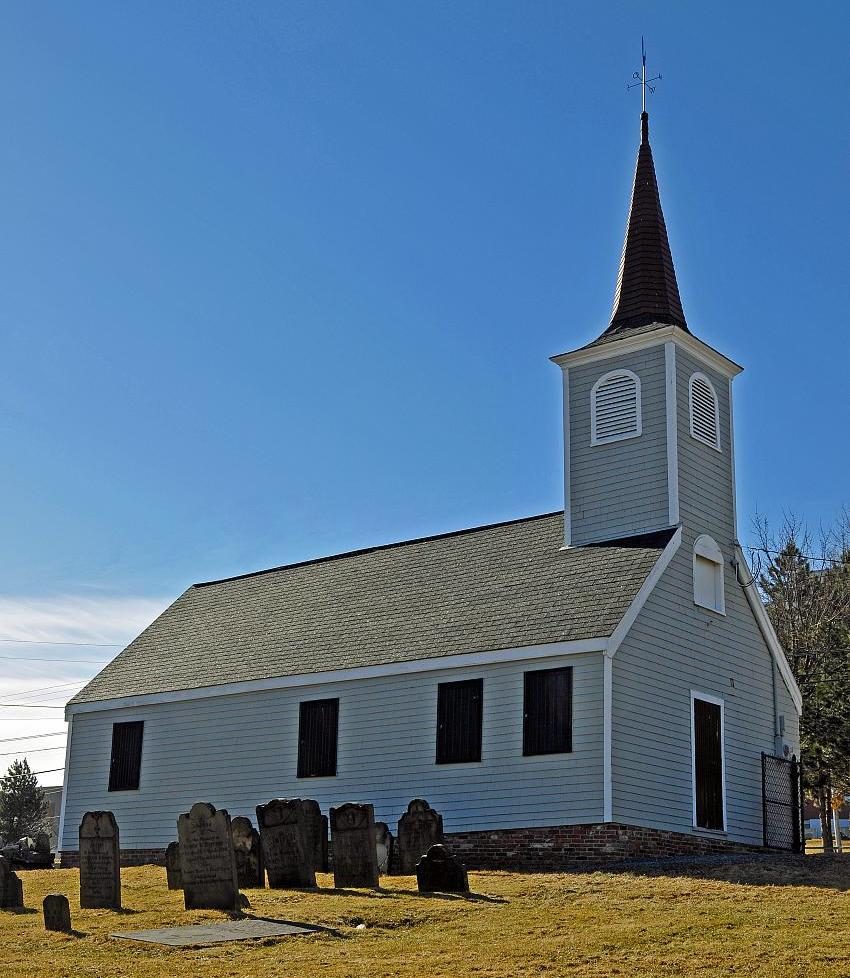 Little Dutch (Deutsch) Church+4See all photos
Photos from Wikimedia Commons, each credited to its photographer with its licence; names open the place’s page. Tap a photo to step through them full screen.
How old
Most of North End’s dated places come from the years before Confederation
Each place by the first construction date on its record.
New France before 17601
British North America 1760–18665
After Confederation 1867–19133
Wars and Depression 1914–19455
Since 1946 1946 on0
Of the 14 with a date, 6 predate 1867.
The map
Where North End’s history is
Every place on the registers inside the town, by its designation.
Highest designationsOther federal designationsProvincial and local listings400 m from Little Dutch (Deutsch) Church
3 of 7within 400 m of Little Dutch (Deutsch) Church, the heart of the town’s history
Names show on hover, and a tap takes you to the place’s page.
The 14, by tier
7 Highest designations5 Other federal designations2 Provincial and local listings
Federal designations come from Parks Canada’s directory; a province’s or a council’s own listing shows here only when Wikidata holds it and an encyclopedia covers it.
Points from Wikidata (Parks Canada’s files carry none) and from Québec’s register, as mapped there.
Highest designations
7 places in North End with the highest designation
Designations came from 1975 to 1997. By designation: 6 National Historic Sites and a Classified Federal Heritage Building. National Historic Sites and Classified Federal Heritage Buildings, Canada’s highest federal recognition. Each one opens its own page.
 Top
National Historic Site · 1800–1813St. George's Anglican Church / Round Church2222 Brunswick StreetPhoto: Elisabeth Kleven · CC BY-SA 3.0 · Commons file
 Top
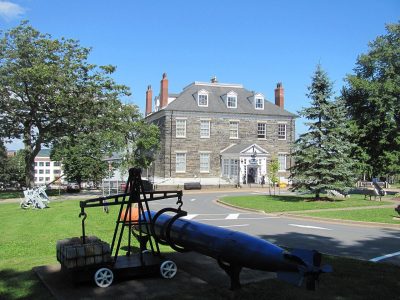
National Historic Site · 1815–1820Admiralty House20 CFB Stadacona (2725 Gottingen St. at CFB Halifax)Photo: Dan Conlin · CC BY-SA 3.0 · Commons file
 Top
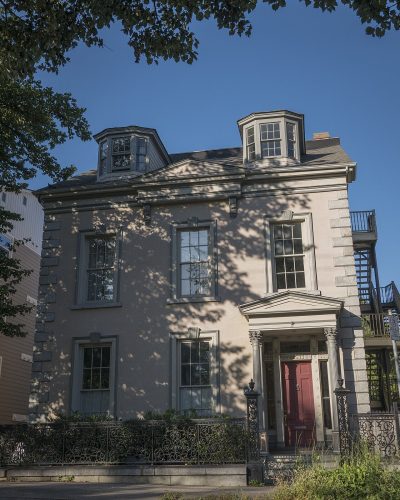
National Historic Site · 1856Jonathan McCully House2507 Brunswick StreetPhoto: Edward · CC BY-SA 4.0 · Commons file
 Top
National Historic Site · 1895–1900Halifax Drill Hall2667 North Park StreetPhoto: SimonP · CC BY-SA 3.0 · Commons file
 Top
National Historic Site · 1917Hydrostone DistrictKaye, Isleville, Duffus Streets and Novalea DrivePhoto: Verne Equinox · CC BY-SA 3.0 · Commons file
 Top
Classified Federal Heritage Building · 1852–1861Wellington HouseBarrington StreetPhoto: Verne Equinox · CC BY 3.0 · Commons file
Other federal designations
5 more federal designations in North End
Dockyard Terrace is the earliest, from 1815; the latest dates from 1942. Recognized Federal Heritage Buildings, heritage railway stations and lighthouses. They were designated between 1986 and 2000. Each one opens its own page.
Recognized Federal Heritage Building · 1815–1816Dockyard TerraceBuildings 77, 78 and 79 HMC Dockyard Terrace
Recognized Federal Heritage Building · 1900–1901Lorne Terrace52 CFB Stadacona
Recognized Federal Heritage Building · 1941–1945Carall Building S-17
Recognized Federal Heritage Building · 1941–1944Murray Building (S-15)CFB Halifax
Recognized Federal Heritage Building · 1942–1943Currie Building, S37
What’s designated
North End’s list splits evenly at the top: 4 houses, 4 forts and military buildings
forts and military buildings weigh more here than across Canada: 29%, against 10%. The top of the list holds Little Dutch (Deutsch) Church and St. George's Anglican Church / Round Church. All told, 5 kinds of place appear.
Houses4
Forts and military buildings4
Churches and religious buildings3
Public buildings1
Other places2
Each place sits in one group, from its name first, then the uses its register lists.
Provincial and local listings
2 more places North End or its province protects
Provincial and municipal listings that Wikidata records and an encyclopedia describes. “St. Patrick's Church, Halifax” is the earliest, from 1885; the latest dates from 1927. Each one opens its own page.
 Local
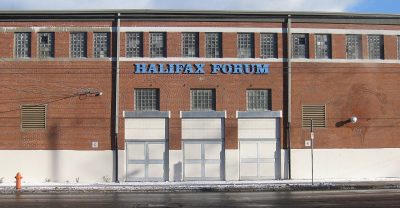
Provincially Registered Property · 1885St. Patrick's Church, HalifaxPhoto: Citobun · CC BY-SA 4.0 · Commons file
 Local
When designated
Designated in North End since 1975
The places by the year of their designation.
1960198020002020
The first was Jonathan McCully House, in 1975. The busiest year was 1986, with 2. The list hasn’t grown since 2011.
Just outside
Just outside North End
Places the registers give to the town from within 5 km of its edge, nearest first.
Just outside North End: 1
| Halifax DockyardNational Historic Site · 100 m outside the town |
Homes by age
A growing town: 10% of North End’s homes went up from 2016 to 2021, against 4.1%
More than half of North End’s housing predates 1981. North End built little from 1981 to 2000: 14% of its homes, where most towns have 23%. Homes built from 1961 to 1980 make up 22% of North End’s, about the typical 27%.
38%
Before 1961
22%
1961–80
14%
1981–2000
14%
2001–15
10%
2016–21
North EndTypical town
2021 Census, private dwellings by period of construction (Statistics Canada); the typical town is the middle Canadian town of 2,500 or more.
People of the past
North End’s past in lives: 3 nationally designated
Best known is Edward Belcher, with articles in 22 Wikipedia languages. There are 31 people born here before 1914 with an article to show for it. The register links Jonathan McCully to Jonathan McCully House. Of the 31, 17 were born in the decades after Confederation. The timeline keeps to the 20 best known.
Provo Wallis
Edward Belcher
William Annand
John McNeil
William Johnston Almon
George C. Howard
Samuel Edward Dawson
Thomas Edward Kenny
Laura Borden
Philip Primrose
Charles Hill Mailes
Harry Piers
Gordon Sidney Harrington
Philip Bent
Hal Foster
George Henry Weiss
Harry Wickwire Foster
Edith Standen
Roland Ritchie
Margaret Meagher
175017751800182518501875190019251950

Edward Belcher1799–1877 · Person of national historic significance (1938) · British naval offic…
HF
Hal Foster1892–1982 · Canadian-American illustrator

Charles Hill Mailes1870–1937 · Actor

Provo Wallis1791–1892 · National historic person, 1945 · British Royal Navy officer and war h…

Laura Borden1861–1940 · Former president of the Local Council of Women of Halifax

George Henry Weiss1898–1946 · American poet

Harry Wickwire Foster1902–1964 · Canadian general

William Annand1808–1887 · Premier of Nova Scotia
Everyone born in North End → Born before 1914, or named by one of the town’s historic places. Birthplaces from Wikidata, each checked against Wikipedia; national historic persons from Parks Canada’s Directory of Federal Heritage Designations, matched by name and life years.
Towns its size
North End has the most of 16 towns its size
Towns of 19,600 to 19,900 residents, by places on the registers.
North End14
The middle one has 0. For 11, the registers list nothing.
Neighbours
North End and its neighbours
| Town | People | Places | Highest | Oldest |
|---|---|---|---|---|
| North End | 19,733 | 14 | 7 | 1756 |
| Windsor Park | 13,044 | 1 | 1 | 1830 |
| Schmidtville | 18,105 | 53 | 23 | 1749 |
| Austinville | 28,021 | 3 | 0 | 1786 |
| Westmount | 23,207 | 1 | 0 | 1917 |
| Fairview | 16,296 | 0 | 0 | — |
| Manor Park | 14,148 | 0 | 0 | — |
In brief
North End in brief
Of the homes standing in North End, 38% went up before 1961, against 18% in the typical town. In all there are 14 historic places, 7 with the highest designation. It tops the 16 towns nearest its size for historic places. Its people of the past include Edward Belcher (1799), Hal Foster (1892) and Charles Hill Mailes (1870).
How to read these numbers
What this data can and can’t tell you
- Map points. Pins for federal places come from Wikidata rather than Parks Canada, which gives no points.
- The federal register. Parks Canada’s Directory of Federal Heritage Designations lists every National Historic Site, federal heritage building, heritage railway station and lighthouse; the Canadian Register of Historic Places adds their statements in English and French.
- The tiers. National Historic Sites and the most protected buildings form the top tier; recognized federal buildings, stations and lighthouses the second; provincial and municipal listings the third.
- Provincial and municipal lists. Only Wikidata gives open access to listings on provincial and municipal registers outside Québec; without an article such a place is counted but not paged.
- Protection. Being on these registers doesn’t mean a building can’t change. Federal designation commemorates; protection is provincial or municipal, and those lists aren’t open here.
- The grade. History isn’t one of Canada’s graded pillars, so this page describes and compares without a letter.
- People and events. The open directory puts its national historic persons nowhere, so a town shows one only on firm ground: a birth there, matched by name and life years, or a historic place there named for the person whose record says so. Events are left out.
Questions about North End’s history
What is the oldest building in North End?
By its record, Little Dutch (Deutsch) Church, from 1756 (National Historic Site).
How old are the homes in North End?
Before 1961: 38% of its homes; the typical town has 18%.
Which places in North End have the highest designation?
They are Little Dutch (Deutsch) Church, St. George's Anglican Church / Round Church, Admiralty House, Jonathan McCully House, Halifax Drill Hall and Hydrostone District, and 1 more.
Why might a heritage building in North End be missing here?
Its province’s and council’s own lists can’t be reused here; 26 further listings in North End show up only as Wikidata numbers.
Contains information licensed under the Open Government Licence – Canada (Parks Canada).
Sources: Parks Canada, Directory of Federal Heritage Designations · Canadian Register of Historic Places (federal extract) · Wikidata (CC0) for map points, other names and articles · Statistics Canada, 2021 Census (homes by period of construction). Under the Statistics Canada Open Licence.
Adapted from Statistics Canada (Census of Population 2021, population estimates 2025, 2021 census boundaries) under the Statistics Canada Open Licence; this does not constitute an endorsement by Statistics Canada. Neighbourhood names in some cities © OpenStreetMap contributors (ODbL).