 Photo: A.Davey · CC BY 2.0
Old Ladysmith: 4 photographs from 1905 to 1927
The nearest heritage to Ladysmith is Esquimalt and Nanaimo Railway Station, Nanaimo, British Columbia, 22 km off, one of 8 places within 50 km. Look 53 km away, to Richmond, for the nearest place of the highest designation. Lorenzo Giovando heads a list of 2 people born in Ladysmith before 1914. Wikidata’s date for the municipality is 1904; it may record a founding, an incorporation or an amalgamation.
Back in time: Ladysmith, 1905–1927
On one line by date: 4 old photographs of the town. Pick a dot to see the year; pick a picture to see it large.
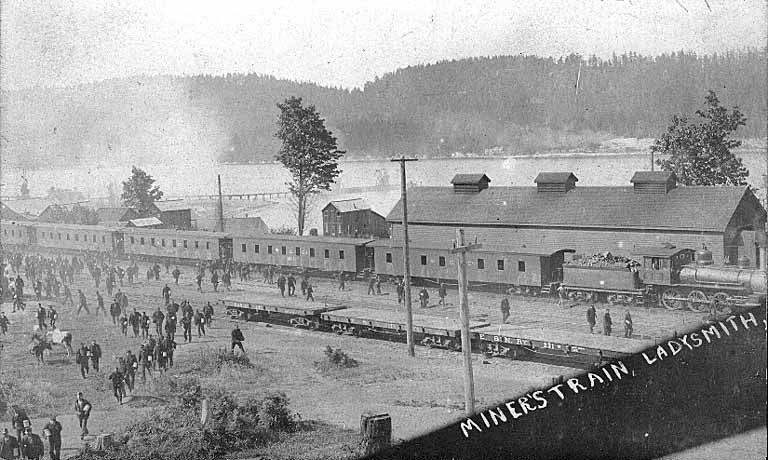 c. 1905
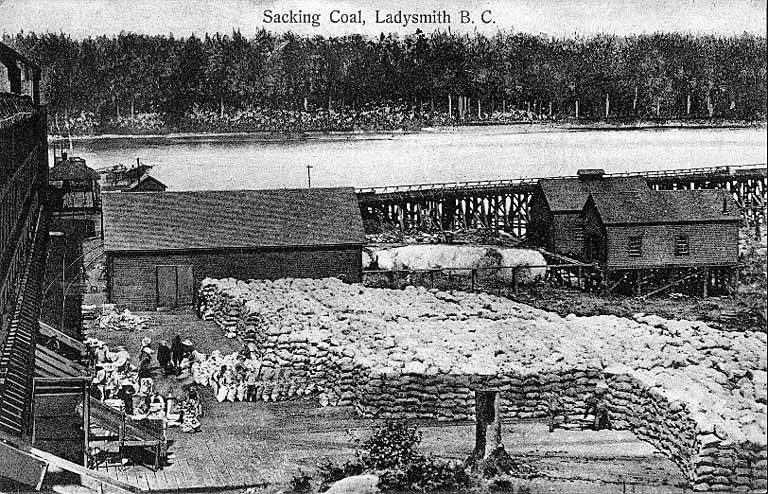 c. 1910
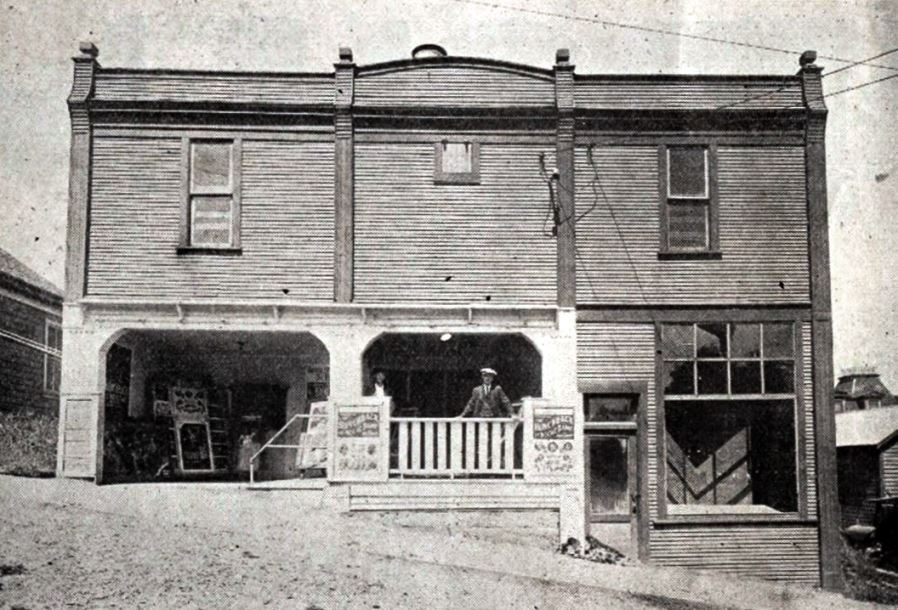 c. 1924
 c. 1927
Public domain or CC0, made before 1950, from Wikimedia Commons; old views of places can be drawings, prints or maps of their time. Each credit opens the image’s page.
Near Ladysmith, within 50 km: built places from 1855 on
The area here stretches to 50 km around Ladysmith: each historic place by the first construction date it records.
Oldest of all: Bastion, Nanaimo, 1855. 7 dated places within 50 km make up the record. One is older than 1867.
The highest designation, 2 times, within 50 km of Ladysmith
8 places lie within 50 km. “Esquimalt and Nanaimo Railway Station, Nanaimo, British Columbia” in Nanaimo is the nearest, 22 km away. Between them, 5 towns share them, mainly Nanaimo, Richmond and Duncan.
The 8 nearest, within 50 km
| Esquimalt and Nanaimo Railway Station, Nanaimo, British ColumbiaHeritage Railway Station · 1920–1921 · 22 km away, in Nanaimo |
| BastionHeritage designation · 1855 · 22 km away, in Nanaimo |
| Christian Science SocietyListed in a community heritage register · 1932 · 22 km away, in Nanaimo |
| Former Canadian Pacific Railway Station (VIA Rail), Duncan, British ColumbiaHeritage Railway Station · 1912–1913 · 25 km away, in Duncan |
| Kinsol TrestleListed in a community heritage register · 37 km away, in Shawnigan |
| Active Pass LighthouseHeritage Lighthouse · 1969–1970 · 40 km away, in Southern Gulf Islands |
| Gulf of Georgia CanneryNational Historic Site · 1894–1965 · 48 km away, in Richmond |
| Britannia ShipyardNational Historic Site · 1890–1956 · 49 km away, in Richmond |
The biggest share of Ladysmith’s homes dates from 1981 to 2000: 29%
Homes from before 1961 make up 22% of Ladysmith’s housing; the typical town has 18%. From 2016 to 2021 Ladysmith added 6.2% of its homes, more than the typical town’s 4.1%. 21% of Ladysmith’s homes date from 2001 to 2015, well above the typical 15%.
2021 Census, private dwellings by period of construction (Statistics Canada); the typical town is the middle Canadian town of 2,500 or more.
How Ladysmith compares with 16 towns its size
Towns of 9,900 to 10,000 residents, by places on the registers.
Ahead of it: Hatchet Lake and Shawnigan. Their median is 0. For 14, the registers list nothing.
Ladysmith and its neighbours
| Town | People | Places | Highest | Oldest |
|---|---|---|---|---|
| Ladysmith | 9,926 | 0 | 0 | — |
| Electoral Area H, Cowichan Valley | 2,761 | 0 | 0 | — |
| Electoral Area G, Cowichan Valley | 2,597 | 0 | 0 | — |
| Electoral Area A, Nanaimo | 7,825 | 0 | 0 | — |
Ladysmith in brief
Before 1961: 22% of Ladysmith’s homes, against 18% in the typical town. Most towns its size have more historic places: the typical one has 0. For the rest, its past has lives on the record such as Lorenzo Giovando (1905) and Andrew Mowatt Whisker (1907).
What this data can and can’t tell you
- Protection. A National Historic Site designation recognises significance; it doesn’t by itself protect a building the federal government doesn’t own. Legal protection comes from provincial and municipal designations, whose own registers aren’t open data outside Québec.
- People and events. National historic persons carry no place in the open file. They appear on a town’s page when born there (same name, same birth and death years) or when a historic place inside it carries their name and its record names them with their dates; national historic events don’t appear.
- The federal register. The federal list is complete and open: Parks Canada’s directory for the designations, the Canadian Register of Historic Places for what each one is and why it matters.
- The tiers. National Historic Sites and the most protected buildings form the top tier; recognized federal buildings, stations and lighthouses the second; provincial and municipal listings the third.
- The grade. History isn’t one of Canada’s graded pillars, so this page describes and compares without a letter.
- Provincial and municipal lists. Only Wikidata gives open access to listings on provincial and municipal registers outside Québec; without an article such a place is counted but not paged.
Questions about Ladysmith’s history
How many historic places does Ladysmith have on the registers?
Inside Ladysmith, none so far; Esquimalt and Nanaimo Railway Station, Nanaimo, British Columbia, 22 km away in Nanaimo, is the closest.
When did Ladysmith become a municipality?
Wikidata dates the municipality of Ladysmith to 1904. That can be its founding, its incorporation or a later merger.
How old are the homes in Ladysmith?
Before 1961: 22% of its homes; the typical town has 18%.
Contains information licensed under the Open Government Licence – Canada (Parks Canada).
Sources: Parks Canada, Directory of Federal Heritage Designations · Canadian Register of Historic Places (federal extract) · Wikidata (CC0) for map points, other names and articles · Statistics Canada, 2021 Census (homes by period of construction). Under the Statistics Canada Open Licence.
Adapted from Statistics Canada (Census of Population 2021, population estimates 2025, 2021 census boundaries) under the Statistics Canada Open Licence; this does not constitute an endorsement by Statistics Canada. Neighbourhood names in some cities © OpenStreetMap contributors (ODbL).