Pomona’s post office opened in 1875, and 10% of its homes were built before 1940
More historic than 68% of U.S. towns · #63 of 847 in California. What drives it
12 places in town are on the National Register, among them three historic districts with 754 buildings between them. Below: 9 old photos and papers, maps from 1885 on, and the census since 1890.
The Pomona post office opened in 1875, the earliest record of the town by name. Wikidata gives 1888. Three smaller post offices, Spadra (1868), North Pomona (1891) and Carey (1927), opened inside today’s city and later closed.
First census: 3,634 in 18902020 census: 151,713151 years
How historic is Pomona?
B+
More historic than 68% of U.S. towns, on its age, its old homes and the National Register.
Founding year: the first Pomona post office (Blevins & Helbock, CC0). Wikidata: 1888.The full story ↓
History grade
What drives Pomona’s History grade
On its age, its old homes and the National Register, Pomona is more historic than 68% of U.S. towns, #63 of 847 in California. Its National Register listings hold the grade up; its age pulls it down.
B+
HistoryA character grade: shown, never part of Pomona’s overall grade.
Among the 400 U.S. cities of 100,000 or more, Pomona ranks #181 on History.
Few California towns list much on the Register (a typical California town has 0.0 per 10,000 residents, the U.S. 2.4), so Pomona’s 51.6 sits above most of its state (97% of California towns have fewer) while its 763 historic buildings outnumber those of 98% of U.S. towns.
How sure. Graded on any two of the three inputs instead, the letter would range from C to A−. The pre-1940 share (±0.9 points) is firm at this size. The founding year is the first post office, not a stated founding date; Wikidata’s 1888 falls in the same era, so the grade doesn’t depend on which one is used.
Founding year: the first post office (other dates in Quick answers). Homes: Census ACS 2020–24. National Register: National Park Service, May 2026 list; each listing counted once (boundary changes and added documentation belong to their listing), and a historic district counts its contributing buildings. How TownRatings grades history →
What stands out about Pomona’s past
Read from the archive, the National Register and the record. The page puts what stands out first.
At the time Spanish conquistadors first arrived in California, the Tongva people inhabited what is now Pomona and the LA Basin. The area eventually became part of Mexico, and what is now Pomona was claimed by Ricardo Véjar and Ygnacio Palomares in the 1830s.
The first Anglo-Americans arrived prior to 1848 when the signing of the Treaty of Guadalupe Hidalgo resulted in California becoming part of the United States.
In 1875, a group of real estate developers called the Los Angeles Immigration and Land Cooperative Association held a contest to name the burgeoning town. The winning entry, submitted by citrus worker Solomon Gates, was Pomona, the name of the Roman goddess of fruit.
Passages that mention Pomona, cut from the printed page as they were published.
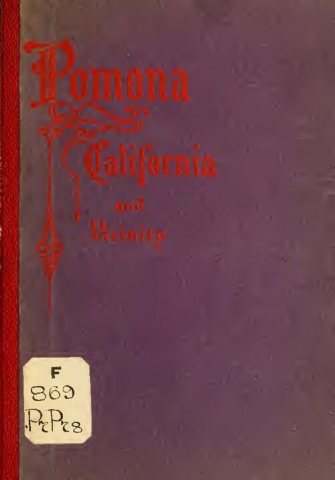
History of Pomona Valley, California, with biographical sketches of the leading men and women of the valley who have been identified with its growth and development from the early days to the present ..1920 · page 630Read the page →
Read the text
RICHARD N. LOUCKS A citizen of Pomona for nearly forty years who has contributed his share to the permanent and substantial development of the city, and a man who has witnessed the marvelous growth of the city of Pomona as well as the prosperous development of Pomona Valley, is Richard N. Loucks, who for twenty-five years has been actively engaged in the general insurance business here.
Text read by machine from the scan; it may contain errors.
History of Pomona Valley, California, with biographical sketches of the leading men and women of the valley who have been identified with its growth and development from the early days to the present ..1920 · page 282Read the page →
Read the text
been a factor In the advancement and growth of both Pomona and her surrounding territory. He was a director and one of the founders of the first orange growers' association in the Valley; he is president and one of the founders of the Home Builders Loan Association of Pomona; a director and one of the organizers of the State Bank of Pomona; and a director and one of the founders of the Home Telephone Company of Pomona.
Text read by machine from the scan; it may contain errors.
Scans and text from the Internet Archive. Books published in 1930 or earlier, which are in the public domain.
Timeline
Pomona, 1868 to 1981
Woven from the archive, old maps, post office records, the National Register and the people born here.
Nothing in the archives for these yearsWeddings on Main Street, storms, parades, school pictures, the old store. If it’s in your family album, it belongs here.
Every edition of the U.S. Geological Survey’s map of Pomona. Tap a year, or press play to watch the town change.
1928Claremont sheet · 1:24,000
U.S. Geological Survey historical topographic maps (public domain), via Esri’s collection of the scans. The red ring marks the center of Pomona.
Every building
Pomona, building by building, 1885–1911
Fire insurance maps drew every building, what it was made of and what it was used for, so insurers could price the risk of fire. Pick a year, then a sheet.
1885Sheet 1 of 1
Edition
Sheets
BrickWoodStone
Sanborn Map Company, via the Library of Congress. Editions published in 1930 or earlier, which are in the public domain.
Then & now
Stand where they stood
No then-and-now pairs yet. Take a photo from the same spot as an old one and they appear here side by side.
Retake this viewPomona Valley & snow capped peaks, 1913
Find the spot, match the angle, and add your photo. It becomes the first then-and-now pair on Pomona’s page.
The Pomona post office opened in 1875, the earliest record of the town by name (U.S. post office records). Wikidata gives 1888.
How does Pomona rank for history?
Pomona is more historic than 68% of U.S. towns, #63 of 847 in California. The History grade combines the town’s founding era, the share of homes built before 1940 and its National Register listings. It’s a character grade, so it isn’t part of the overall grade. How it works.
What is on the National Register in Pomona?
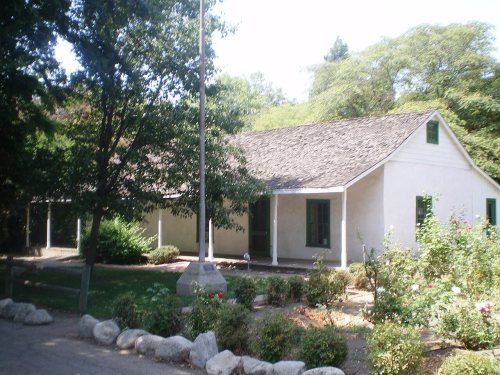
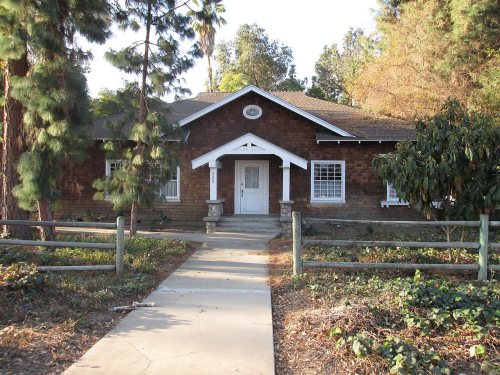
12 listings: 9 buildings, among them the Palomares, Ygnacio, Adobe (listed 1971, the first), and 3 historic districts, the Edison Historic District, the Lincoln Park Historic District and the Lincoln, Abraham, Elementary School, with 754 contributing buildings. 763 historic buildings in all.
How old are the homes in Pomona?
10% of Pomona’s homes were built before 1940 (Census estimate), against a typical 3.4% for a California town; the median home was built in 1967.
Founding dates: Wikidata, Wikipedia, the U.S. post office records of Blevins & Helbock (CC0) and the Census. Homes by year built: Census ACS 2020–24. National Register of Historic Places: National Park Service (list of May 22, 2026). Old photos, postcards and papers: Wikimedia Commons, the Library of Congress and other public archives, credited on each item’s page. Maps: U.S. Geological Survey historical topographic maps (via Esri) and Sanborn fire-insurance maps (Library of Congress). History text and census tables: Wikipedia (CC BY-SA 4.0). Places that used to be: USGS Geographic Names Information System (2021).
From Wikimedia Commons (12), the Library of Congress (5), the National Register of Historic Places (12), Wikipedia, Wikidata and Wikipedia for famous people, U.S. Geological Survey historical maps, U.S. Census counts (via Wikipedia), the US Post Offices dataset (Blevins & Helbock), the USGS Geographic Names Information System, Sanborn fire insurance maps (Library of Congress) and old county and town histories (Internet Archive). Archive images are copied here with their credits and licenses, shown on each photo’s page. Refreshed monthly.





 1968
 1980
 Date?
 Date?
 Date?
 2026
 2020
 2010
 2010
 2009
 2009
 2006
 2005


