On its age, its old homes and the National Register, Sparta is more historic than 70% of U.S. towns, #127 of 362 in Wisconsin. All 2 inputs are above most U.S. towns; its share of homes from before 1940 ranks highest and its National Register listings lowest.
B+
HistoryA character grade: shown, never part of Sparta’s overall grade.
Wisconsin towns list more on the Register than most of the country (a typical Wisconsin town has 3.0 per 10,000 residents, the U.S. 2.4), so Sparta’s 3.1 sits near the middle of its state (62% of Wisconsin towns have fewer) while its 1 listings outnumber those of 51% of U.S. towns.
How sure. Graded on two of the three inputs, so a change in either one moves the letter more than it would with three. The pre-1940 share is a Census survey estimate (±10.3 points).
Founding year: our sources. Homes: Census ACS 2020–24. National Register: National Park Service, May 2026 list; each listing counted once (boundary changes and added documentation belong to their listing), and a historic district counts its contributing buildings. How TownRatings grades history →
What stands out about Sparta’s past
Read from the archive, the National Register and the record. The page puts what stands out first.
Fire insurance maps drew every building, what it was made of and what it was used for, so insurers could price the risk of fire. Pick a year, then a sheet.
Sparta is located on Ho-Chunk territory ceded in 1837. White settlement began after the government surveyed the land in 1849 and created a crossroads by building early state roads from Prairie du Chien to Hudson in 1849 and from Portage to La Crosse in 1851. The first recorded settlers were brothers Frank and William Petit, who opened a tavern near the crossroads in 1851. Their mother, recorded only as Mrs. Petit, named the settlement after the ancient Greek city-state of Sparta. A post office has been in operation at Sparta since 1852.
Passages that mention Sparta, cut from the printed page as they were published.
History of Monroe County Wisconsin1912 · page 216Read the page →
Read the text
the committee was discharged. Thus ended the third round. At that time there were nineteen supervisors on the board and the votes in favor of the courthouse came from the towns of Portland, Angelo, Eaton, Little Falls and the village of Sparta, and the votes against it came from Glendale, Wellington, Wilton, Ridgeville, Leon, LeRoy, Tomah (town), Adrian, Greenfield, Lafayette and, strange to say, the town of Sparta. It will be seen by the distribution of this vote that several localities still had
Text read by machine from the scan; it may contain errors.
History of Monroe County, Wisconsin, past and present1912 · page 534Read the page →
Read the text
Closely connected with the history of the city of Sparta is that of the town, for it Avas all one at the beginning, and the settlers who came in and took up land at the point and vieinity of where the city now stands Avere the earliest settlers of the town of Sparta, notably the Petit boys, wdio first settled somewhere near Castle Rock, Rev. Walrath, J. D. Damman, A. H. Blake and the score or more of others, who are so fully mentioned in the chapter devoted to the city.
Text read by machine from the scan; it may contain errors.
History of Monroe County Wisconsin1912 · page 556Read the page →
Read the text
Closely connected with the history of the city of Sparta is that of the town, for it was all one at the beginning, and the settlers who came in and took up land at the point and vicinity of where the city now stands were the earliest settlers of the town of Sparta, notably the Petit boys, who first settled somewhere near Castle Rock, Rev. Walrath, J. D. Damman, A. H. Blake and the score or more of others, who are so fully mentioned in the chapter devoted to the city.
Text read by machine from the scan; it may contain errors.
History of Monroe County, Wisconsin, past and present1912 · page 474Read the page →
Read the text
Jackson chose a good location and platted the village of Jacksonville in the town of Adrian, the plat of v/hich is still in existence; the proposed village was twelve miles from Sparta, and about four miles west of Tomah; the railroad did not come that Avay. however, and the village of Jacksonville became a memory.
Text read by machine from the scan; it may contain errors.
Scans and text from the Internet Archive. Books published in 1930 or earlier, which are in the public domain.
Timeline
Sparta, 1862 to 1997
Woven from the archive, old maps, post office records, the National Register and the people born here.
Sparta is more historic than 70% of U.S. towns, #127 of 362 in Wisconsin. The History grade combines the town’s founding era, the share of homes built before 1940 and its National Register listings. It’s a character grade, so it isn’t part of the overall grade. How it works.
What is on the National Register in Sparta?
One place: the St. John's Episcopal Church (listed 1983).
How old are the homes in Sparta?
18% of Sparta’s homes were built before 1940 (Census estimate, ±10.3 points), against a typical 12% for a Wisconsin town; the median home was built in 1986.
Founding dates: Wikidata, Wikipedia, the U.S. post office records of Blevins & Helbock (CC0) and the Census. Homes by year built: Census ACS 2020–24. National Register of Historic Places: National Park Service (list of May 22, 2026). Old photos, postcards and papers: Wikimedia Commons, the Library of Congress and other public archives, credited on each item’s page. Maps: U.S. Geological Survey historical topographic maps (via Esri) and Sanborn fire-insurance maps (Library of Congress). History text and census tables: Wikipedia (CC BY-SA 4.0). Places that used to be: USGS Geographic Names Information System (2021).
From Wikimedia Commons (12), the Library of Congress (1), Wikidata (3), the National Register of Historic Places (1), Wikipedia, U.S. Geological Survey historical maps, U.S. Census counts (via Wikipedia), the US Post Offices dataset (Blevins & Helbock), the USGS Geographic Names Information System, Sanborn fire insurance maps (Library of Congress) and old county and town histories (Internet Archive). Archive images are copied here with their credits and licenses, shown on each photo’s page. Refreshed monthly.


 1997
 2023
 2023
 2023
 2023
 2023
 2023
 2023
 2021
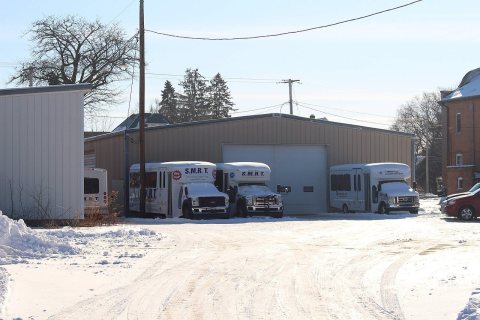 2020
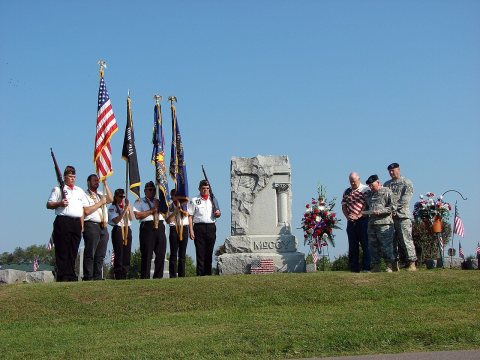 2009
 2006