Founding year: the first Hazel Green post office (Blevins & Helbock, CC0).The full story ↓
History grade
What drives Hazel Green’s History grade
On its age, its old homes and the National Register, Hazel Green is more historic than 79% of U.S. towns. All 3 inputs are above most U.S. towns; its age ranks highest and its National Register listings lowest.
A−
HistoryA character grade: shown, never part of Hazel Green’s overall grade.
Wisconsin towns list more on the Register than most of the country (a typical Wisconsin town has 3.0 per 10,000 residents, the U.S. 2.4), so Hazel Green’s 8.3 sits above most of its state (73% of Wisconsin towns have fewer) while its 1 listings outnumber those of 51% of U.S. towns.
How sure. Graded on any two of the three inputs instead, the letter would range from B+ to A−. The pre-1940 share is a Census survey estimate (±6.8 points). The founding year is the first post office, not a stated founding date.
Founding year: the first post office (other dates in Quick answers). Homes: Census ACS 2020–24. National Register: National Park Service, May 2026 list; each listing counted once (boundary changes and added documentation belong to their listing), and a historic district counts its contributing buildings. How TownRatings grades history →
What stands out about Hazel Green’s past
Read from the archive, the National Register and the record. The page puts what stands out first.
In 1825, the village was named from dense growth of American Hazelnut near the town site.
In 1876, a tornado struck Hazel Green; nine died, many were injured, and property loss was approximately $40,000 to $50,000 (equivalent to $1.21 million to $1.51 million in 2025).
Passages that mention Hazel Green, cut from the printed page as they were published.
[History of Grant County, Wisconsin, preceded by a history of Wisconsin1881 · page 738Read the page →
Read the text
dences which were erected in Rood's Addition went up about this time, and Lewisburg, a town of great ambition, but slender prospects, was beginning to come into notice. This projected municipality was surveyed and platted in 1846 by Henry C. Wiltse, on the Curtis farm, a mile north of Hazel Green, and named after Lewis Curtis, who will be remembered as an arrival here in 1827. It was thought that the enterprise might, in time, either neutralize the influence and importance of Hazel Green, or become a valuable addition to that place. Lots were laid out, streets designated and named, and other improvements proposed, but they were never realized, nor were the ambitions of its founders ; the village that was to be failed to attract visitors ;
Text read by machine from the scan; it may contain errors.
History of Grant County, Wisconsin1881 · page 738Read the page →
Read the text
dences which were erected in Rood's Addition went up about this time, and Lewisburg, a town of great ambition, but slender prospects, was beginning to come into notice. This projected municipality was surveyed and platted in 1846 by Henry C. Wiltse, on the Curtis farm, a mile north of Hazel Green, and named after Lewis Curtis, who will be remembered as an arrival here in 1827. It was thought that the enterprise might, in time, either neutralize the influence •and importance of Hazel Green, or become a valuable addition to that place. Lots were laid •out, streets designated and named, and other improvements proposed, but they were never realized, nor were the ambitions of its founders ; the village that was to be failed to attract visitors ;
Text read by machine from the scan; it may contain errors.
[History of Grant County, Wisconsin, preceded by a history of Wisconsin1881 · page 750Read the page →
Read the text
The cause of education found an early and, it may be added, substantial support in the village of Hazel Green. Not only have public places of learning been liberally sustained, but private enterprises extended a gratifying support. In the fall of 1843, John Smith, at present engaged as mail contractor between Hazel Green and Cuba City, opened a school in a frame house on Lower Main street, built and furnished by public subscription. His roster of pupils was made up of scholars from all parts of the present township, and the course of study such as found favor from its simplicity forty years ago.
Text read by machine from the scan; it may contain errors.
History of Grant County Wisconsin1900 · page 234Read the page →
Read the text
The following diggings are in the village of Hazel Green, but not on the lands of the Hazel Green Mining Company : McBrien & Co. — This is an east-and-west sheet, connected with a quartering one averaging about an inch thick, situated on the land of Dr. McBrien, on the northwest quarter of Section 25, Town 1, Range 1 west. The range was worked in 1844, and the ore taken out to the water-level. The water having become much reduced by the Hazel Green Company’s level, work was recommenced in 1871, since which
Text read by machine from the scan; it may contain errors.
Scans and text from the Internet Archive. Books published in 1930 or earlier, which are in the public domain.
By decade
Hazel Green, decade by decade
One decade in the archive so far: the 1910s. Scroll each row; tap a photo for its story.
Nothing in the archives for these yearsWeddings on Main Street, storms, parades, school pictures, the old store. If it’s in your family album, it belongs here.
The Hazel Green post office opened in 1837, the earliest record of the town by name (U.S. post office records).
How does Hazel Green rank for history?
Hazel Green is more historic than 79% of U.S. towns. The History grade combines the town’s founding era, the share of homes built before 1940 and its National Register listings. It’s a character grade, so it isn’t part of the overall grade. How it works.
What is on the National Register in Hazel Green?
One place: the Hazel Green Town Hall (listed 1989).
How old are the homes in Hazel Green?
18% of Hazel Green’s homes were built before 1940 (Census estimate, ±6.8 points), against a typical 12% for a Wisconsin town; the median home was built in 1977.
Founding dates: Wikidata, Wikipedia, the U.S. post office records of Blevins & Helbock (CC0) and the Census. Homes by year built: Census ACS 2020–24. National Register of Historic Places: National Park Service (list of May 22, 2026). Old photos, postcards and papers: Wikimedia Commons, the Library of Congress and other public archives, credited on each item’s page. Maps: U.S. Geological Survey historical topographic maps (via Esri) and Sanborn fire-insurance maps (Library of Congress). History text and census tables: Wikipedia (CC BY-SA 4.0). Places that used to be: USGS Geographic Names Information System (2021).
From Wikimedia Commons (15), the Library of Congress (2), Wikidata (1), the National Register of Historic Places (1), Wikipedia, Wikidata and Wikipedia for famous people, U.S. Geological Survey historical maps, U.S. Census counts (via Wikipedia), the US Post Offices dataset (Blevins & Helbock), the USGS Geographic Names Information System and old county and town histories (Internet Archive). Archive images are copied here with their credits and licenses, shown on each photo’s page. Refreshed monthly.


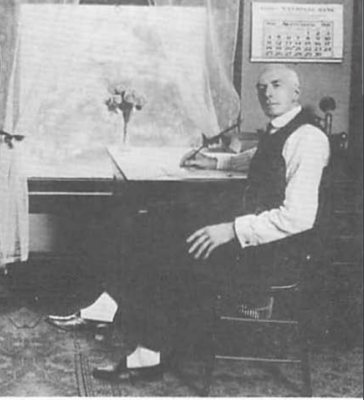


 1915
 1915
 2013
 2013
 2013
 2013
 2013
 2013
 2013
 2013
 2013
 2013
 2013
 2013
 2012
 2012
