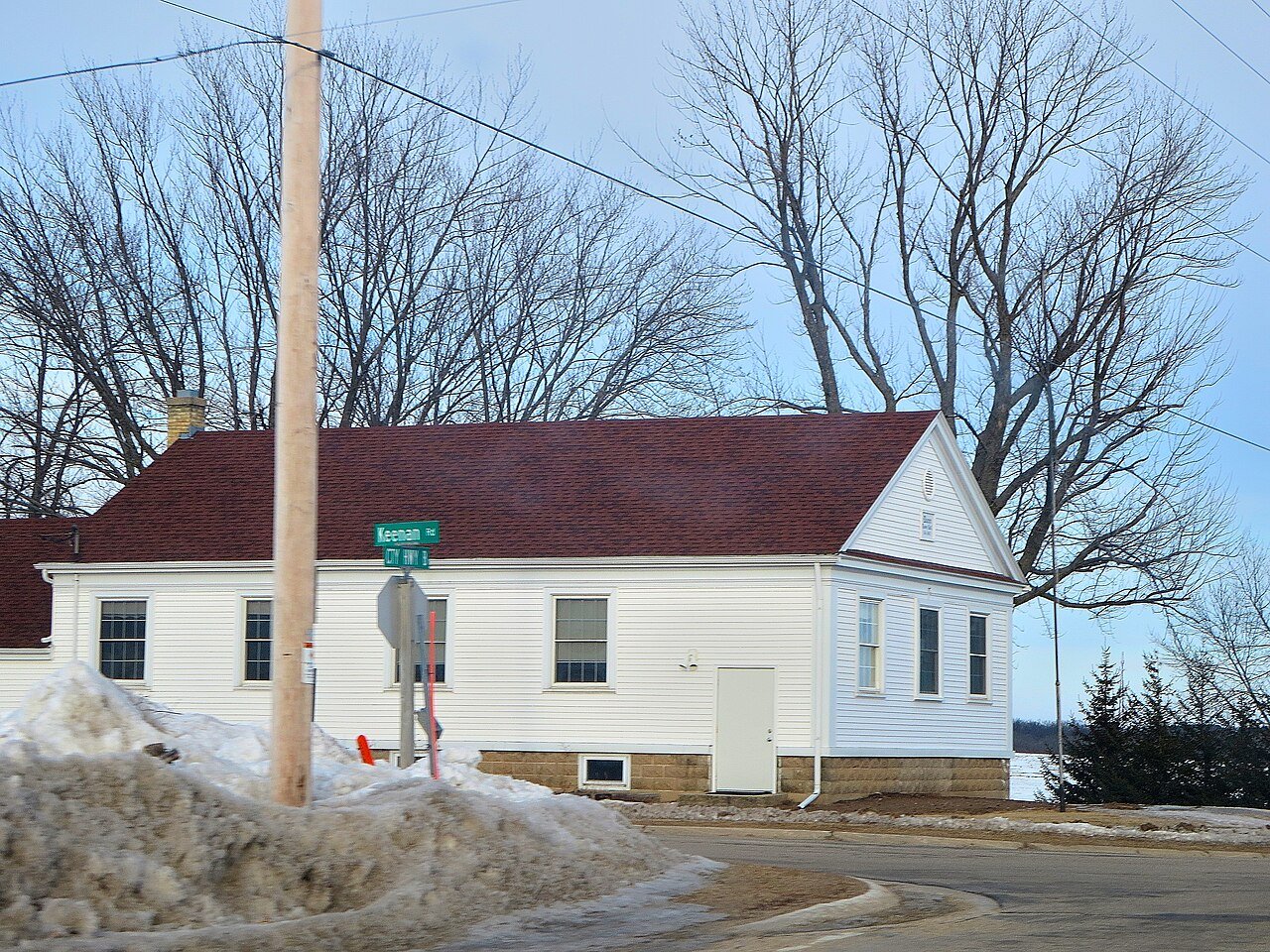
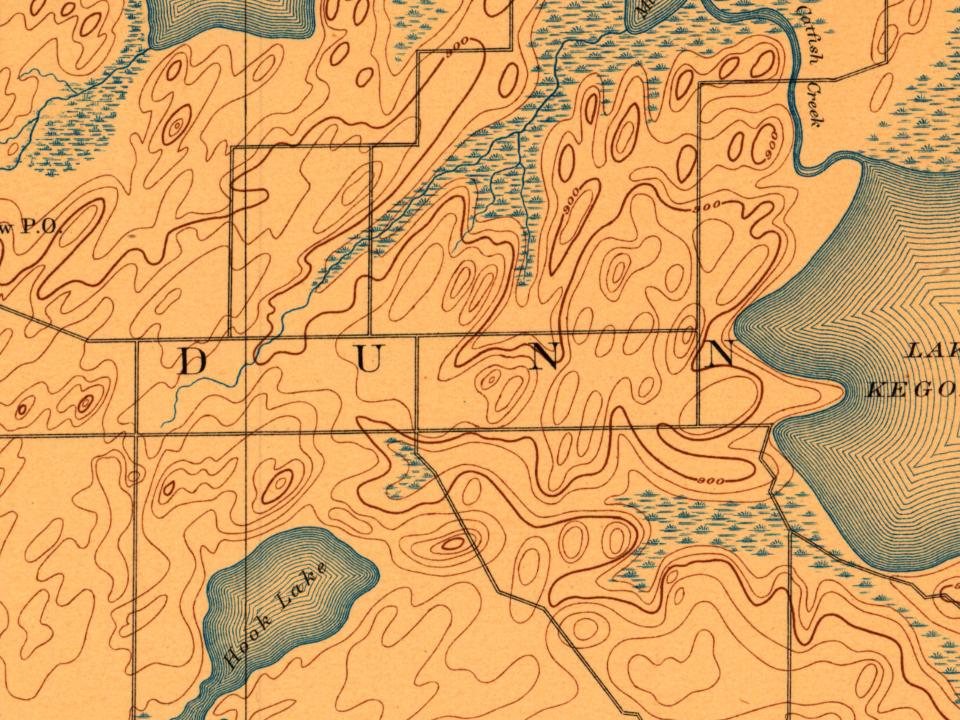
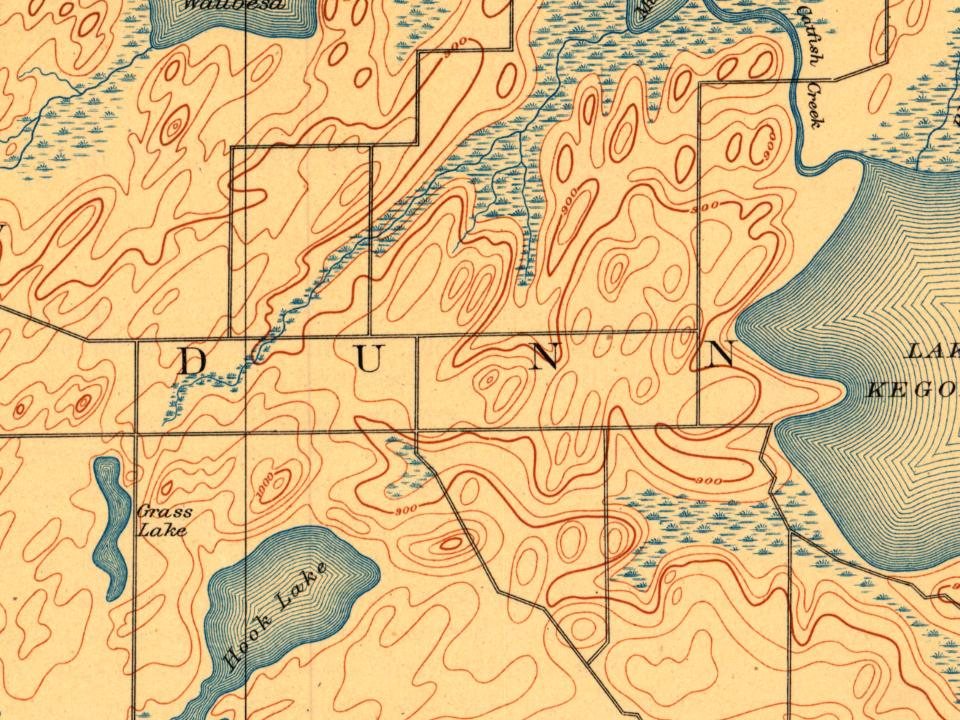
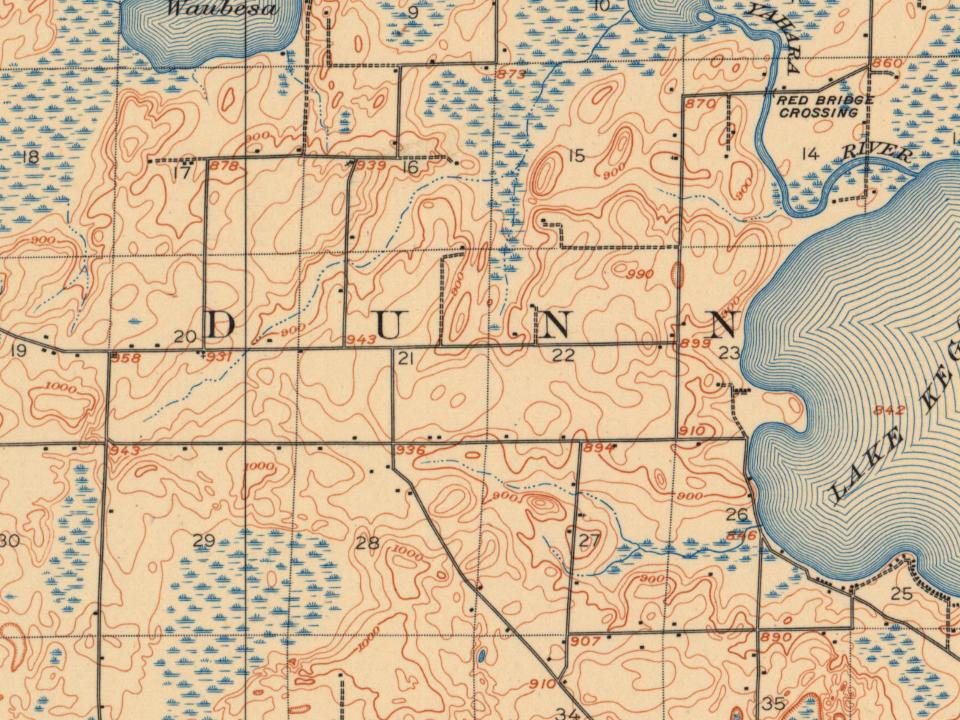
The Dunn post office opened in 1849, the earliest record of the town by name. Another post office, Rockside (1857), opened inside today’s town and later closed.
2020 census: 4,880177 years
How historic is Dunn?
B−
More historic than 47% of U.S. towns, on its age, its old homes and the National Register.
Founding year: the first Dunn post office (Blevins & Helbock, CC0).
History grade
What drives Dunn’s History grade
On its age, its old homes and the National Register, Dunn is more historic than 47% of U.S. towns, #221 of 362 in Wisconsin. Its age holds the grade up; its National Register listings pull it down.
B−
HistoryA character grade: shown, never part of Dunn’s overall grade.
Wisconsin towns list more on the Register than most of the country (a typical Wisconsin town has 3.0 per 10,000 residents, the U.S. 2.4), so Dunn’s 0.0 sits below most of its state (28% of Wisconsin towns have fewer) while its 0 listings outnumber those of 23% of U.S. towns.
How sure. Graded on any two of the three inputs instead, the letter would range from C to B. The pre-1940 share is a Census survey estimate (±4.1 points). The founding year is the first post office, not a stated founding date.
Founding year: the first post office (other dates in Quick answers). Homes: Census ACS 2020–24. National Register: National Park Service, May 2026 list; each listing counted once (boundary changes and added documentation belong to their listing), and a historic district counts its contributing buildings. How TownRatings grades history →
What stands out about Dunn’s past
Read from the archive, the National Register and the record. The page puts what stands out first.
Wikipedia doesn’t have a history of Dunn yet. The photos, dates and memories neighbors add here are how it gets written.
Dunn is a town in Dane County, Wisconsin, United States. The population was 4,880 at the 2020 census.
Its first post office opened in 1849. Its population held steady between the last two censuses: 4,931 in 2010, 4,880 in 2020.
Intro from Wikipedia. Population: U.S. Census Bureau.
From the old history books
What they wrote about Dunn, 1874–1880
Passages that mention Dunn, cut from the printed page as they were published.
History of Dane County, Wisconsin ... preceded by a history of Wisconsin, statistics of the state, and an abstract of its laws and constitution and of the Constitution of the United States1880 · page 886Read the page →
Read the text
The territory included within the present limits of the town of Dunn is Township 6 north, of Range 10 east, of the United States survey. This township was one of the three which originally constituted the town of Rome. By an act of the Territorial Legislature, approved March 11, 1848, Rome became extinct, and its territory was erected into a separate town, called Dunn.
Text read by machine from the scan; it may contain errors.
Madison, Dane County and surrounding towns1877 · page 490Read the page →
Read the text
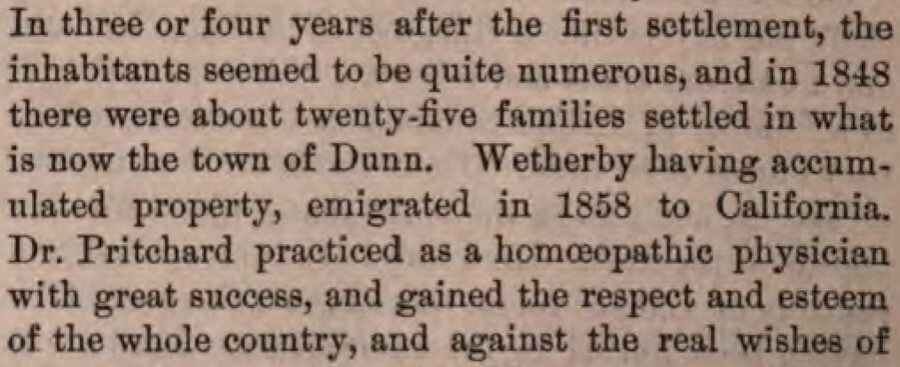
In three or four years after the first settlement, the inhabitants seemed to be quite numerous, and in 1848 there were about twenty-five families settled in what is now the town of Dunn. Wetherby having accura* ulated property, emigrated in 1858 to California. Dr. Pritchard practiced as a homoeopathic physician with great success, and gained the respect and esteem of the whole country, and against the real wishes of
Text read by machine from the scan; it may contain errors.
A history of Madison, the capital of Wisconsin1874 · page 400Read the page →
Read the text
A large number of the settlers are Norwegians. The town of Dunn was so named by mistake. The inhabitants petitioned to have it called Door, but the Town Clerk mistook the word and called it Dunn. The early settlers were A. Weatherby, A. Whitcomb, E. Root, William: Root, H. Prichard, William Calladay and O. B. Moore. The town was organized in 1848. There are eight schools and one church. Indian relics abound on almost every hill. Mounds, in the shape ot animals,, birds and fishes are numerous.
Text read by machine from the scan; it may contain errors.
History of Dane County, Wisconsin ... preceded by a history of Wisconsin, statistics of the state, and an abstract of its laws and constitution and of the Constitution of the United States1880 · page 1168Read the page →
Read the text
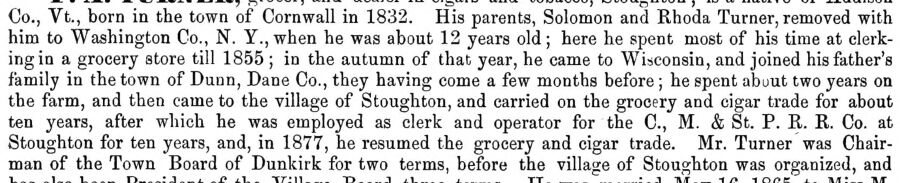
Co., Vt., born in the town of Cornwall in 1832. His parents, Solomon and Rhoda Turner, removed with him to Washington Co., N. Y.,when he was about 12 years old; here he spent most of his time at clerking in a grocery store till 1855 ; in the autumn of that year, he came to Wisconsin, and joined his father's family in the town of Dunn, Dane Co., they having come a few months before ; he spent about two years on the farm, and then came to the village of Stoughton, and carried on the grocery and cigar trade for about ten years, after which he was employed as clerk and operator for the C, M. & St. P. R. R. Co. at Stoughton for ten years, and, in 1877, he resumed the grocery and cigar trade. Mr. Turner was Chairman of the Town Board of Dunkirk for two terms, before the village of Stoughton was organized, and
Text read by machine from the scan; it may contain errors.
Scans and text from the Internet Archive. Books published in 1930 or earlier, which are in the public domain.
By decade
No old photos in the archives yet
Weddings on Main Street, storms, parades, school pictures, the old store. If it’s in your family album, it belongs here.
Be the first to add onePhotograph a print flat, in daylight, no flash.
The Dunn post office opened in 1849, the earliest record of the town by name (U.S. post office records).
How does Dunn rank for history?
Dunn is more historic than 47% of U.S. towns, #221 of 362 in Wisconsin. The History grade combines the town’s founding era, the share of homes built before 1940 and its National Register listings. It’s a character grade, so it isn’t part of the overall grade. How it works.
How old are the homes in Dunn?
9% of Dunn’s homes were built before 1940 (Census estimate, ±4.1 points), against a typical 12% for a Wisconsin town; the median home was built in 1978.
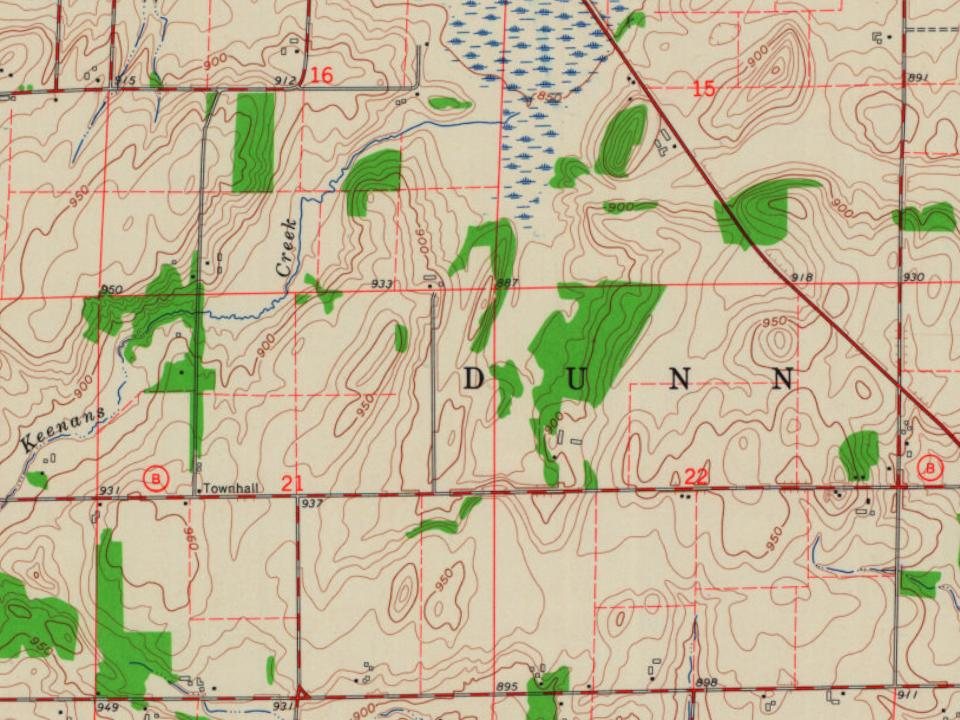
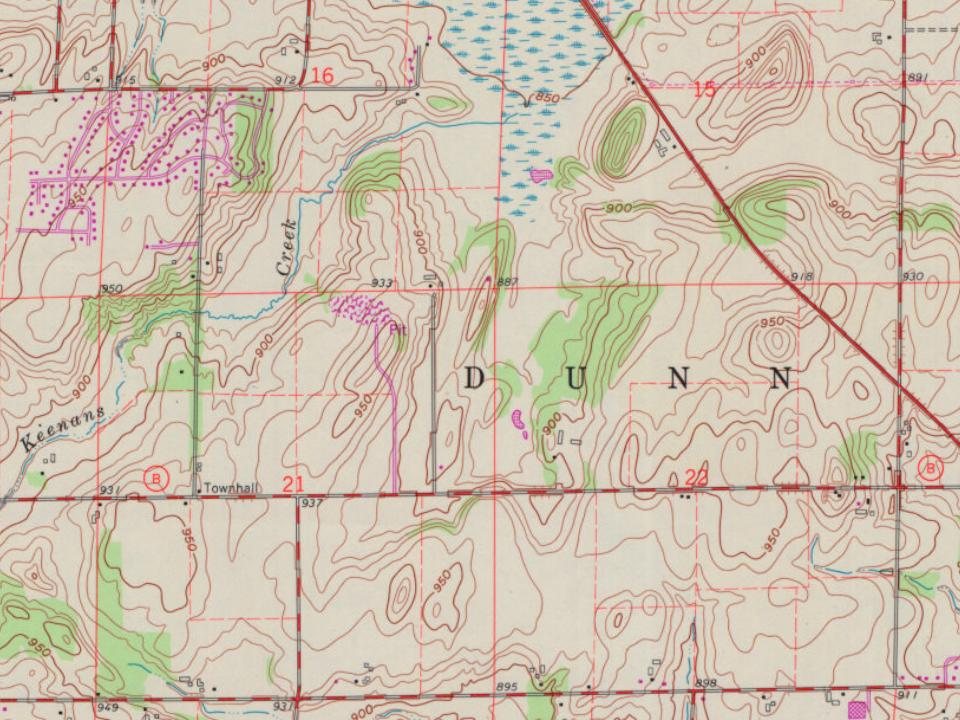
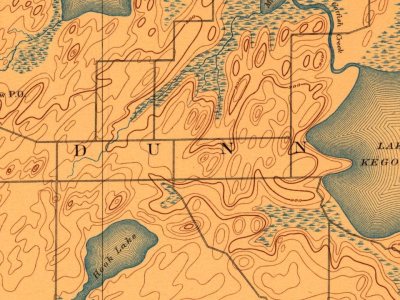
Founding dates: Wikidata, Wikipedia, the U.S. post office records of Blevins & Helbock (CC0) and the Census. Homes by year built: Census ACS 2020–24. National Register of Historic Places: National Park Service (list of May 22, 2026). Old photos, postcards and papers: Wikimedia Commons, the Library of Congress and other public archives, credited on each item’s page. Maps: U.S. Geological Survey historical topographic maps (via Esri) and Sanborn fire-insurance maps (Library of Congress). History text and census tables: Wikipedia (CC BY-SA 4.0). Places that used to be: USGS Geographic Names Information System (2021).
From U.S. Geological Survey historical maps, the US Post Offices dataset (Blevins & Helbock), the USGS Geographic Names Information System and old county and town histories (Internet Archive). Archive images are copied here with their credits and licenses, shown on each photo’s page. Refreshed monthly.