Guest, Sign inJoin

Post to Vancouver

We’ll email a one-tap link to publish your post. No password, and nothing is public until you click it.
Already a member? Sign in
Officers Row-3
Washington›Clark County
Photo: Visitor7 · CC BY-SA 3.0
Photo of Vancouver

Vancouver, WA · Photo: Visitor7 · CC BY-SA 3.0 · Source ↗

What is it like to live in Vancouver?

For a city of 199,698, Vancouver does unevenly: it grades C−, 237th of 285 graded towns in Washington. It is more walkable than 90% of U.S. towns. The trade-offs: its crime rate is higher than 94% of U.S. towns, with 1,111 violent crimes reported to the FBI in 2025, and homes are expensive, about $498K for a typical one and 5.1 times the Portland metro’s $97K median household income. 35% of working residents work locally in Vancouver, against 4.8% in Washington’s towns and 8% across U.S. towns. Its National Register listings include Fort Vancouver National Historic Site and Covington House. On hazard risk, just 37 of Washington’s 397 towns do better.

What makes Vancouver stand out

Where Vancouver beats most towns, and one thing worth knowing.

Fort Vancouver National Historic Site
Fort Vancouver National Historic Site · National Register of Historic Places
Vancouver’s story

201 years in pictures

Its founding year, 1825, comes before those of 99% of the Washington towns we grade with a known year.

Census counts: 1,722 in 1880, 190,915 in 2020. The archive holds 6 old photos and papers going back to 1889 and 7 maps from 1897 on.

22 places on the National Register of Historic Places.

  • 1825Vancouver is settled
Explore the history →

How Vancouver grades

Each subject compared with towns across the country (schools within Washington), ordered by how far Vancouver is from typical.

How grading works
Character Graded, but not part of the overall grade.
Described, not graded Taste, not quality: snow or an older crowd is neither good nor bad.

How TownRatings grades towns →

Nearby attractions

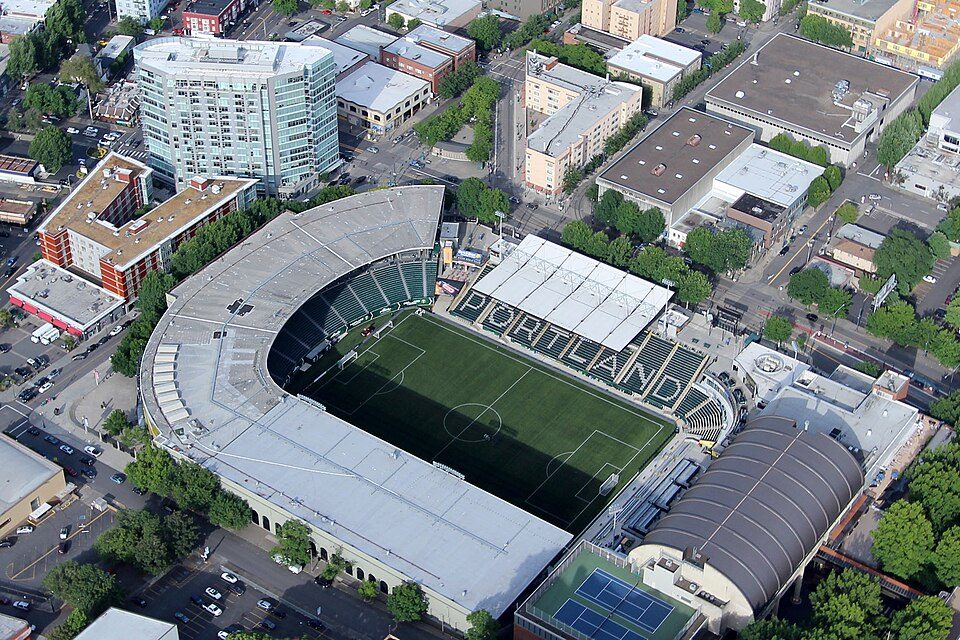
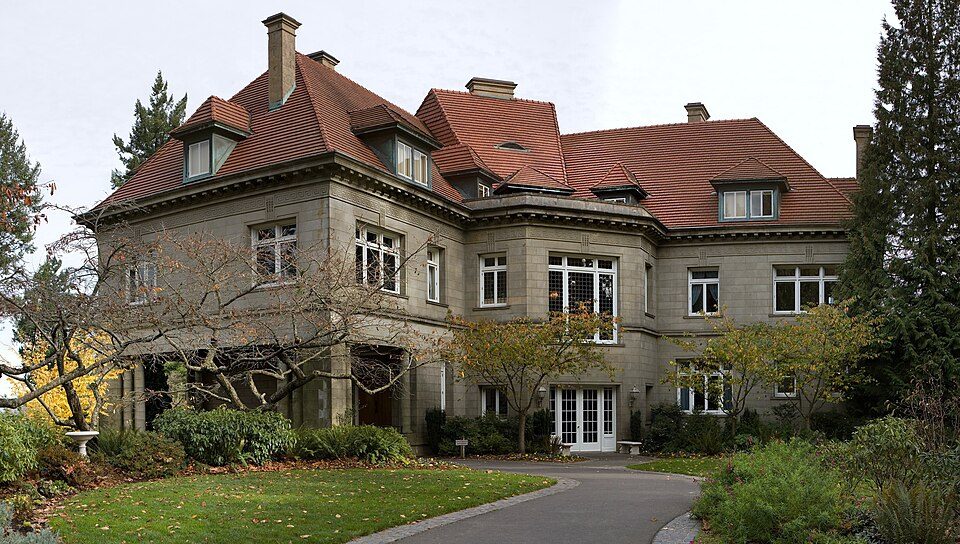
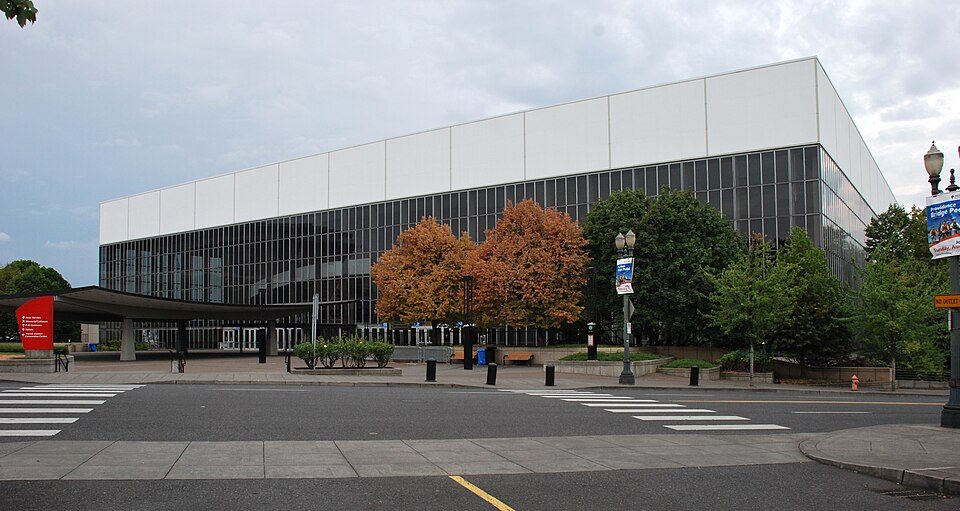
Moda Center and 161 more within 40 miles

Museums, parks, gardens and other places to visit around Vancouver. Close and well known come first.

All 188 attractions →
Sources: National Park Service · ski areas © OpenSkiMap / OpenStreetMap contributors · Wikidata · Wikipedia readership · photos via Wikimedia Commons
Photo credits

Moda Center: Lugnuts, CC BY-SA 3.0 · Providence Park: Pdx.rollingthunder, CC BY-SA 4.0 · Multnomah Falls: John Fowler from Placitas, NM, USA, CC BY 2.0 · Forest Park: EncMstr, CC BY-SA 3.0 · Pittock Mansion: PittockBack.jpg: Cacophony derivative work: Tiptoety talk, CC BY-SA 3.0 · Veterans Memorial Coliseum: Steve Morgan, CC BY-SA 3.0

Getting set up

Moving to Vancouver: who provides what

Who provides power, water and the rest in Vancouver, and how to reach them.

The full setup list →
PowerPUD No 1 of Clark County10.6¢/kWh · EIA 2025HIFLD · EIA
WaterCity of Vancouver water systemNo health-based violations in 5 years · EPAEPA
Internet8 providers100% of addresses get 100/20 MbpsFCC
Trash & dumpWaste Connections of Washington, Inc.Trash haulerTown site
SchoolsEvergreen School District (Clark)Vancouver Public Schools2 districts serve Vancouver; which school depends on your address and gradeNCES
Register to voteOnlineIn Washington you can register online until 8 days before Election Day, in person up to and including Election Day, or by mail (received 8 days before).vote.gov
Who runs elections hereClark County AuditorClark County; contacts on the Handbook page.FVAP, Aug 2025
ZIP codes98661, 98683, 98684, 9868298661 18% · 98683 18% · 98684 14% · 98682 14%Census 2020

EPA SDWIS (Oct 9, 2026) · HIFLD + EIA-861 2025 · Census 2020 ZCTAs · NCES 2024–25 · registration: vote.gov, updated Sep 30, 2026.

The data

Ordered by what stands out in Vancouver.

Vancouver carries less natural-hazard risk than most of Washington (mostly earthquakes), sends many workers across the state line to Portland and is healthy by national standards but behind most towns in Washington.

SafetyD

Vancouver earns a D for safety

Reported crimes fell from 10,084 to 6,868 over the last three FBI years, a drop beyond ordinary year-to-year swings.

The violent crime rate in Vancouver is 5.5 per 1,000 residents. Vancouver reports more crime per resident than most U.S. towns we grade: about 94% report less. The property crime rate in Vancouver is 28.6 per 1,000 residents.

6%of U.S. towns report more crimeDSafety Grade
VancouverWashington townsU.S. towns
Violent crimes per 1,000 (2025)5.5 per 1,000 residents1.51.6
Property crimes per 1,000 (2025)28.6 per 1,000 residents159.9

Violent crime per 1,000 residents

Vancouver5.5
Washington2.9
U.S.3.3

Property crime per 1,000 residents

Vancouver28.6
Washington20.2
U.S.15.5
6th
percentile among U.S. towns we grade
9th
percentile among WA towns
1,111
violent crimes reported in 2025
5,757
property crimes reported in 2025

FBI crime data, 2025 · crimes reported to police

SchoolsC+

Vancouver’s schools rank behind 63% of Washington districts

Its public schools are run by the Evergreen School District. Two of its 74 schools are below, each with why it’s listed.

37%of WA districts it outscoresC+School Grade
SchoolLevelStudentsLetter
Mcloughlin Middle SchoolLargest public middle schoolGrades 6–8Grades 6–8849–
Union High SchoolLargest public high schoolGrades 9–12Grades 9–121,989–

NCES · EDFacts · graded within WA on state tests and graduation

OutdoorsA

6.9% of Vancouver is conserved land

53 miles of trail in 117 parks and preserves. Vancouver’s trail density is 1.0 miles per square mile. The biggest place to walk is Vancouver Lake Park, 242 acres with 2.3 miles of trail.

#112for trails in WA
VancouverWashington townsU.S. towns
Miles of trail per square mile1.0 miles per square mile0.80.4
Conserved land6.9%4%4.3%
6.9%
conserved · 2,311 of 33,375 acres
53 mi
of trails · 1 per sq mi
Biggest places to walkTrailsAcres
1. Fort Vancouver National Historic Site6.1 mi196
2. Vancouver Lake Park2.3 mi242
3. Frenchman's Bar Park2.2 mi203

Trails & parks © OpenStreetMap contributors · Conserved land: USGS PAD-US

Climate

Mild winters and pleasant summers in Vancouver

Vancouver has mild winters and pleasant summers. July afternoons reach 81°, January nights drop to 36° and about 4 inches of snow falls in a winter.

4″snow a winter

Typical low → high °F

Winter36–48°
Spring42–62°
Summer54–78°
Fall45–64°
Nov 19
typical first frost
Mar 13
typical last frost
+1.3°
vs. the 20th-century average

NOAA U.S. Climate Normals, 1991–2020

Work & commuteJobs & income grade B

Vancouver has 1.2 jobs for every working resident, and 70,968 people commute in

25% of working residents cross a state line to work, Portland among the top destinations.

About one in 3 of Vancouver’s working residents works in town. Jobs based in Vancouver grew to 100,295 in 2023, 22,765 more than in 2013. 18% of workers work from home in Vancouver.

35%work in town
VancouverWashington townsU.S. towns
Work from home18%15%11%
Average trip to work23 minutes27 minutes25 minutes
Median household income$81,000$98,000$80,000
Below the poverty line10%7.9%9.6%

Where working residents work

In Vancouver35%
Portland19%
Seattle3%
Camas3%
Hazel Dell2%
8 mi
median commute distance
100,295
jobs based in Vancouver
Balanced
jobs vs. working residents
A
Walkability grade: more walkable than 90% of U.S. towns

Census LEHD 2023 · ACS

Natural hazardsHazard risk grade B

Earthquakes leads a low hazard risk in Vancouver

FEMA rates its natural-hazard risk lower than 88% of Washington towns, with expected losses of about $302 per resident a year; that rating is what its B for hazard risk is built on.

Since 1986, 5 flood insurance claims have been paid out in Vancouver.

36risk score of 100
FEMA risk score
36Low riskLowerHigher
EarthquakesInland floodingCold waves
5
paid flood claims since 1986
3
federal disasters paid out here

FEMA flood insurance claims · FEMA National Risk Index · OpenFEMA

HealthB

Vancouver is healthier than 62% of U.S. towns

Within Washington it is less healthy than 72% of the 285 graded towns: Washington sets a high bar.

Vancouver beats the Washington average on 0 of 31 CDC measures and trails it on 14. 68% of Vancouver adults had a checkup this year.

62%healthier than U.S. townsBHealth Grade
VancouverWashington townsU.S. towns
Yearly checkup (CDC PLACES)68%71%79%
Frequent mental distress (CDC PLACES)19%17%17%
Depression (CDC PLACES)27%26%23%
Sleep under 7 hours (CDC PLACES)32%33%36%
31 measures vs. Washington
0 better17 too close to call14 worse
What stands outVancouverWA
More adults who get no exercise21.2%17.9%
More adults with obesity36.2%30.6%
More adults in frequent mental distress19.1%16.4%
Legacy Salmon Creek Medical Center
6.4 mi away · emergency room
3 of 3
care shortages: primary care, dental, mental health
28th
percentile among WA towns

CDC PLACES 2025 · modeled estimates for adults · CMS · HRSA

HousingCost of living grade D

Vancouver earns a D for cost of living

The typical Vancouver home is worth about $498,000, about the same as a year ago, 15% below the Washington typical home.

$498KZillow home value
VancouverWashington townsU.S. towns
Households that own their home51%71%73%
Median rent$1,702 a month$1,740 a month$1,185 a month
Renters paying 30%+ of income on rent54%51%48%

Typical home value

Vancouver$498K
Washington$588K
Market temperature
BalancedA seller's marketBuyer’sSeller’s
21
days on market
100.3%
sale-to-list price
−0.1%
value change, 1 year
151
homes sold in May

Zillow Home Value Index · Redfin Data Center

Who lives here

An age mix much like Washington’s

No broad age group is more than 4 points off the Washington average. Vancouver has grown 4.6% since 2020, to 199,698 residents in the Census Bureau’s 2025 estimate. 32% of adults 25 and older have a bachelor’s degree or more, vs 40% across Washington.

37.9median age · WA 38.3
VancouverWashington townsU.S. towns
Under 1821%22%22%
Median age37.9 years38.6 years40.5 years
Bachelor’s degree or more, 25+32%30%29%
VancouverWashingtonUnited States

Ages · share of residents

Education · adults 25 and older

No diploma9%
High school24%
Some college24%
Associate’s10%
Bachelor’s20%
Graduate12%

Women and men · all residents

50.8% women, 49.2% men

About 97 men for every 100 women. Across Washington, 49.6% of residents are women. Median age: women 39.5, men 36.4.

Ages and education in Vancouver
VancouverWAU.S.
Under 1011%11.5%11.6%
10 to 179.6%9.9%10.3%
18 to 248.6%8.5%9.1%
25 to 3416.5%15.2%13.7%
35 to 4413.8%14.3%13.2%
45 to 5412%12%12.2%
55 to 6411.7%12%12.7%
65 to 749.7%10.1%10.2%
75 and older7%6.5%7%
No diploma9%7.7%10.4%
High school24.3%21.6%26%
Some college24.4%21%19.1%
Associate’s10%10%8.8%
Bachelor’s20%24%21.6%
Graduate12.4%15.6%14.1%

Census population estimates, 2025 · U.S. Census Bureau · ACS 2020-2024 5-year estimates

Keep exploring

Everything we know about Vancouver

20pages on Vancouver
After high school

Colleges nearby

15 within 15 miles of the center of Vancouver

A growing town

Vancouver has grown 23% since 2010

161,791 counted in 2010 and 190,915 in 2020; an estimated 199,698 in 2025.

161,7912010
190,9152020
199,6982025 est.

U.S. Census 2010 & 2020 counts · Census Bureau estimate, July 1, 2025

Landmarks

22 places in Vancouver on the National Register of Historic Places.

All landmarks →

Famous people from Vancouver

38 notable people were born in Vancouver.

See all 38 →

About Vancouver

City in Washington, United States

Official town website ↗

Vancouver ( van-KOO-vər) is a city in Clark County, Washington, United States, located on the north bank of the Columbia River. It had a population of 190,915 at the 2020 census, making it the fourth-most populous city in Washington. Founded in 1825 and incorporated in 1857, the city was originally established around Fort Vancouver, a fur trading outpost, and is situated directly north of Portland, Oregon, along the Washington–Oregon state line. Vancouver serves as the county seat of Clark County and is part of the Portland metropolitan area.

From Wikipedia, licensed CC BY-SA 4.0 · facts via Wikidata (CC0)

Established
1825
Area
51 sq mi
Elevation
171 ft
ZIP code
98660, 98661, 98662
Area code
360

Vancouver’s neighbors

7 towns share a border with Vancouver.

Explore the map →

All 6 graded towns on its borders grade higher than its C−; Hazel Dell (C) is closest.

How the neighbors grade
TownWA rankOverallCostSafetySchoolsHealth
Vancouver#237C−DDC+B
Hazel Dell#182CD—C+B
Minnehaha#148C+C−—C+B
Five Corners#143B−C−—C+B
Orchards#167C+C−—C+B
Camas#17ADB+A+A
Lake Shore#111B−D—C+A

Hazel Dell, Minnehaha, Five Corners, Orchards and Lake Shore report no FBI crime data of their own. Compare Vancouver with a neighbor →

Questions about Vancouver

Short answers, built from the data on this page.

Is Vancouver, WA a good place to live?

Vancouver grades C− overall, better than 16% of U.S. towns and #237 of 285 in Washington. It grades B for health, D for safety and C+ for schools. Safety is its weak spot, with a D.

Is Vancouver, WA expensive?

Yes. Cost of living, which also weighs rents, property taxes and how many households pay 30% or more of their income for housing, grades D.

What is Vancouver, WA known for?

38 notable people were born here, including Michael Barratt and Tamina Snuka.