Guest, Sign inJoin

Post to St. Johnsbury

We’ll email a one-tap link to publish your post. No password, and nothing is public until you click it.
Already a member? Sign in
A+History
History · St. Johnsbury

St. Johnsbury dates to 1786, and 46% of its homes were built before 1940

More historic than 96% of U.S. towns · #19 of 71 in Vermont. What drives it

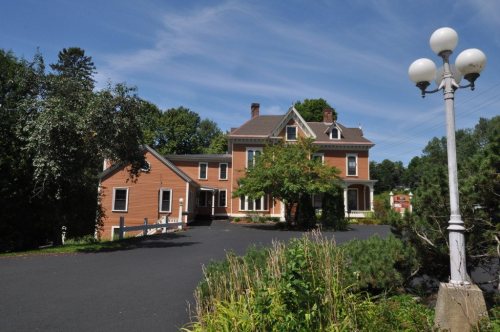
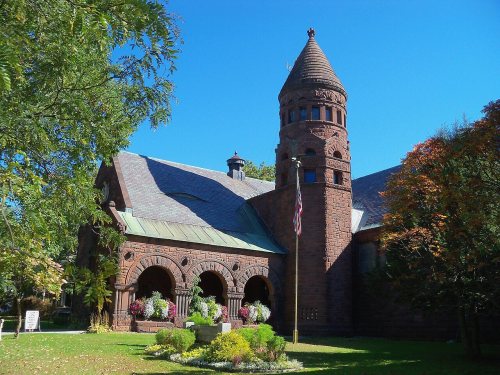
14 places in town are on the National Register, among them the St. Johnsbury Athenaeum, a National Historic Landmark, and five historic districts with 171 buildings between them. Below: 7 old photos and papers from 1905 on and the census since 1790.

1786founded
14on the National Register
46%homes built before 1940
7old photos & papers
30famous people
From St. Johnsbury’s archive · credits on each photo
Quick answers

How St. Johnsbury began

When was St. Johnsbury founded?

1786

St. Johnsbury dates its founding to 1786 (Wikidata). It appears in the first U.S. census, 1790.

First census: 143 in 17902020 census: 7,364240 years

How historic is St. Johnsbury?

A+

More historic than 96% of U.S. towns, on its age, its old homes and the National Register.

What drives the grade ↓
Founding year: Wikidata. First post office: 1802.The full story ↓
History grade

What drives St. Johnsbury’s History grade

On its age, its old homes and the National Register, St. Johnsbury is more historic than 96% of U.S. towns, #19 of 71 in Vermont. All 3 inputs are above most U.S. towns; its share of homes from before 1940 ranks highest and its age lowest.

A+
HistoryA character grade: shown, never part of St. Johnsbury’s overall grade.
All U.S. towns we grade (21,289)Ahead of 96%
NewerOlder
Vermont towns of 2,500+ (71)Ahead of 74%

Vermont towns list more on the Register than most of the country (a typical Vermont town has 147 per 10,000 residents, the U.S. 2.4), so St. Johnsbury’s 244 sits above most of its state (74% of Vermont towns have fewer) while its 180 historic buildings outnumber those of 93% of U.S. towns.

How sure. Graded on any two of the three inputs instead, the letter would range from A to A+. The pre-1940 share is a Census survey estimate (±6.5 points). Two sources give 1786.

Founding year: Wikidata (other dates in Quick answers). Homes: Census ACS 2020–24. National Register: National Park Service, May 2026 list; each listing counted once (boundary changes and added documentation belong to their listing), and a historic district counts its contributing buildings. How TownRatings grades history →

What stands out about St. Johnsbury’s past

Read from the archive, the National Register and the record. The page puts what stands out first.

★ What stands out · On the National Register

14 listings protect 180 historic buildings

The country’s official list of buildings and places worth saving. One is a National Historic Landmark, the highest tier.

places listed
14
National Historic Landmark
1
St. Johnsbury Athenaeum
historic buildings protected
180
each building in a district counts
first listed
1974
Railroad Street Historic District
All 14 listings

National Park Service, National Register of Historic Places. Photos from Wikimedia Commons, credited on each place’s page.

Places that used to be

Lost post offices, old corners and burying grounds

Three other post offices opened and closed inside today’s town.

Saint Johnsbury
1802–today
Saint Johnsbury East
1825–1952
Saint Johnsbury Plain
1827–1836
Saint Johnsbury North
1828–1840
Saint Johnsbury Center
1840–today
East Saint Johnsbury
1952–today
18001910today
Hamlets and corners on the map
Coles CornerEast Saint JohnsburySaint JohnsburySaint Johnsbury Center
6cemeteries and burying grounds inside St. Johnsbury
Goss HollowGroveMount CalvaryMount PleasantNew Saint Johnsbury CenterOld Church Yard

US Post Offices dataset (Blevins & Helbock, CC0). Places and cemeteries from the USGS Geographic Names Information System (2021).

The story

How St. Johnsbury came to be

From Wikipedia’s history of St. Johnsbury.

Read it all →

The town was originally granted in 1760 as part of the New Hampshire Grants and named Bessborough. It was regranted by Vermont in 1786 as Dunmore, and settled the same year. An early settler was Jonathan Arnold, a member of the Continental Congress and author of Rhode Island's act of secession from the Kingdom of Great Britain in May 1776. Arnold left Rhode Island in 1787 and, with six other families, built homes at what is now the town center.

Text from Wikipedia, licensed CC BY-SA 4.0.

Timeline

St. Johnsbury, 1786 to 1956

Woven from the archive, old maps, post office records, the National Register and the people born here.

  1. 18th century
  2. 1786
    FoundingSt. Johnsbury is established
  3. 1792Born hereLemuel Hastings Arnold is born here
  4. 19th century
  5. 1802Post officeThe Saint Johnsbury post office opens
  6. 1825Post officeThe Saint Johnsbury East post office opens
  7. 1827Post officeThe Saint Johnsbury Plain post office opens
  8. 1836Post officeThe Saint Johnsbury Plain post office closes
  9. 1868Born hereFrederick G. Fleetwood is born here
  10. 1873BuiltSt. Johnsbury Athenaeum is built
  11. 1879Born hereBob Smith is born here
  12. 1890BuiltFairbanks Museum is built
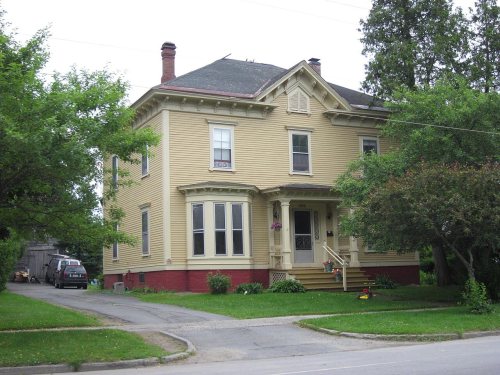
  13. 1894BuiltBenoit Apartment House-74 Pearl Street is built
  14. 20th century
  15. 1900BuiltBenoit Apartment House-76 Pearl Street is built
  16. 1905In the archiveSouth Main Street
  17. 1910In the archiveVillage from Harris Hill
  18. 1924In the archiveFMIB 37638 St Johnsbury (Vt) station hatchery
  19. 1939In the archiveBright Look Hospital, St. Johnsbury, Vermont -- about 1939
  20. 1952Post officeThe Saint Johnsbury East post office closes
  21. 1956Born hereChris Hedges is born here
By decade

St. Johnsbury, decade by decade

6 decades in the archive, from the 1900s to the 1980s. Scroll each row; tap a photo for its story.

Then & now

The same spot, 68 years apart

Drag across each photo to compare.

People over time

St. Johnsbury, census by census

02,0004,0006,0008,00010,00018001850190019502000Peak: 9,696

Between 143 and 9,696 people in every census since 1790.

24 censuses, 1790–2020.

U.S. Census Bureau decennial counts, from the census table on St. Johnsbury’s Wikipedia page.

Famous people

30 famous people were born in St. Johnsbury

Writers, athletes, leaders and more, ranked by how widely they’re known.

See all →
Help out

Finish St. Johnsbury’s story

Most archives stop around 1920. The photos from after that are in family albums, not libraries.

Decades since 1900 with photos
00s10s20s30s40s50s60s70s80s90s
6 of 10 decades. The empty ones are waiting for someone’s album.
Stories next door

History across the town line

Each neighbor’s History grade, on the same three inputs.

Questions about St. Johnsbury’s history

What year was St. Johnsbury founded?

In 1786, according to Wikidata. St. Johnsbury’s post office opened in 1802, and the first U.S. census counted 143 people here in 1790.

How does St. Johnsbury rank for history?

St. Johnsbury is more historic than 96% of U.S. towns, #19 of 71 in Vermont. The History grade combines the town’s founding era, the share of homes built before 1940 and its National Register listings. It’s a character grade, so it isn’t part of the overall grade. How it works.

What is on the National Register in St. Johnsbury?

14 listings: 9 buildings, among them the St. Johnsbury Athenaeum (a National Historic Landmark since 1996), and 5 historic districts with 171 contributing buildings. 180 historic buildings in all.

How old are the homes in St. Johnsbury?

46% of St. Johnsbury’s homes were built before 1940 (Census estimate, ±6.5 points), against a typical 22% for a Vermont town; the median home was built in 1944.

Memory lane

What the archives can’t tell you, neighbors can.

Town Square →
Start a conversation
Sources

Where this page comes from

Founding dates: Wikidata, Wikipedia, the U.S. post office records of Blevins & Helbock (CC0) and the Census. Homes by year built: Census ACS 2020–24. National Register of Historic Places: National Park Service (list of May 22, 2026). Old photos, postcards and papers: Wikimedia Commons, the Library of Congress and other public archives, credited on each item’s page. Maps: U.S. Geological Survey historical topographic maps (via Esri) and Sanborn fire-insurance maps (Library of Congress). History text and census tables: Wikipedia (CC BY-SA 4.0). Places that used to be: USGS Geographic Names Information System (2021).

From Wikimedia Commons (20), Wikidata (4), the National Register of Historic Places (14), Wikipedia, Wikidata and Wikipedia for famous people, U.S. Census counts (via Wikipedia), the US Post Offices dataset (Blevins & Helbock) and the USGS Geographic Names Information System. Archive images are copied here with their credits and licenses, shown on each photo’s page. Refreshed monthly.