Founding year: the first Coventry post office (Blevins & Helbock, CC0). Wikidata: 1920.The full story ↓
History grade
What drives Coventry’s History grade
On its age, its old homes and the National Register, Coventry is more historic than 45% of U.S. towns. Its age holds the grade up; its National Register listings pull it down.
C+
HistoryA character grade: shown, never part of Coventry’s overall grade.
Vermont towns list more on the Register than most of the country (a typical Vermont town has 147 per 10,000 residents, the U.S. 2.4), so Coventry’s 0.0 sits below most of its state (5% of Vermont towns have fewer) while its 0 listings outnumber those of 23% of U.S. towns.
How sure. Graded on any two of the three inputs instead, the letter would range from C− to B+. The pre-1940 share is a Census survey estimate (±5.6 points). The founding year is the first post office, not a stated founding date; Wikidata gives 1920.
Founding year: the first post office (other dates in Quick answers). Homes: Census ACS 2020–24. National Register: National Park Service, May 2026 list; each listing counted once (boundary changes and added documentation belong to their listing), and a historic district counts its contributing buildings. How TownRatings grades history →
What stands out about Coventry’s past
Read from the archive, the National Register and the record. The page puts what stands out first.
Nothing in the archives for these yearsWeddings on Main Street, storms, parades, school pictures, the old store. If it’s in your family album, it belongs here.
Coventry was named for the birthplace of one of the founders, Major Elias Buel, who was born in Coventry, Connecticut.
A record exists from 1860, showing that the "Artillery Company" of the 3rd Regiment mustered for annual drill on June 5. An inventory shows they possessed one six pound brass cannon.
In 1861, the 3rd Vermont Infantry, Company B, was recruited in part from Coventry.
In the September 9, 1977, episode of Hee Haw, Coventry was saluted for its population of 300.
Passages that mention Coventry, cut from the printed page as they were published.
The history of Orleans county, Vermont. Civil, ecclesiastical, biographical and military1882 · page 154Read the page →
Read the text
by the Rev. Samuel Smith of Windsor, and Dea. Daniel True of Derby. As some of the members lived in Irasburgh, it took the name of "the Baptist Church in Coventry and Irasburgh." Nathaniel Kellam of Irasburgh was chosen deacon, and John Ide, clerk. The subsequent growth of the church being mainly in Coventry, the title was altered, in 1815,
Text read by machine from the scan; it may contain errors.
The history of Orleans county, Vermont. Civil, ecclesiastical, biographical and military1882 · page 162Read the page →
Read the text
Erastus Fairbanks, in 1852. He represented the town of Coventry m the House of Representatives in 1862 and '63. At the session of 1862, Mr. White took little part in the debates, only upon a bill relating to marriage, which was subsequently considered by a special committee on domestic relations, consisting of A. B. Gardner, Dugald Stewart,
Text read by machine from the scan; it may contain errors.
Scans and text from the Internet Archive. Books published in 1930 or earlier, which are in the public domain.
Timeline
Coventry, 1812 to 2020
Woven from the archive, old maps, post office records, the National Register and the people born here.
The Coventry post office opened in 1822, the earliest record of the town by name (U.S. post office records). Wikidata gives 1920.
How does Coventry rank for history?
Coventry is more historic than 45% of U.S. towns. The History grade combines the town’s founding era, the share of homes built before 1940 and its National Register listings. It’s a character grade, so it isn’t part of the overall grade. How it works.
How old are the homes in Coventry?
11% of Coventry’s homes were built before 1940 (Census estimate, ±5.6 points), against a typical 22% for a Vermont town; the median home was built in 1993.
Founding dates: Wikidata, Wikipedia, the U.S. post office records of Blevins & Helbock (CC0) and the Census. Homes by year built: Census ACS 2020–24. National Register of Historic Places: National Park Service (list of May 22, 2026). Old photos, postcards and papers: Wikimedia Commons, the Library of Congress and other public archives, credited on each item’s page. Maps: U.S. Geological Survey historical topographic maps (via Esri) and Sanborn fire-insurance maps (Library of Congress). History text and census tables: Wikipedia (CC BY-SA 4.0). Places that used to be: USGS Geographic Names Information System (2021).
From Wikimedia Commons (14), the Library of Congress (1), Wikidata (1), Wikipedia, Wikidata and Wikipedia for famous people, U.S. Geological Survey historical maps, U.S. Census counts (via Wikipedia), the US Post Offices dataset (Blevins & Helbock), the USGS Geographic Names Information System and old county and town histories (Internet Archive). Archive images are copied here with their credits and licenses, shown on each photo’s page. Refreshed monthly.


 1989
 1989
 1989
 1989
 1989
 1989
 1989
 1989
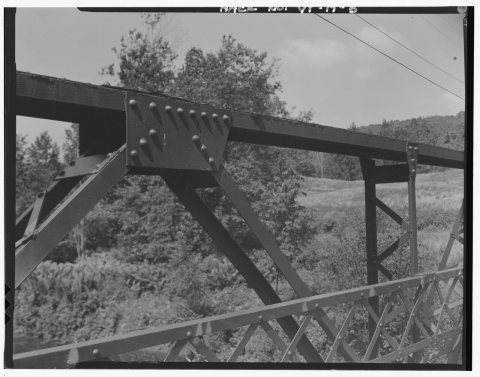 1989
 1989
 Date?
 Date?
 Date?
 2025
 2004


