Winchester dates to 1752, and 19% of its homes were built before 1940
More historic than 97% of U.S. towns · #3 of 253 in Virginia. What drives it
27 places in town are on the National Register, among them 2 National Historic Landmarks and two historic districts with 1,657 buildings between them. Below: 17 old photos and papers, maps from 1885 on, and old-book passages.
On its age, its old homes and the National Register, Winchester is more historic than 97% of U.S. towns, #3 of 253 in Virginia. All 3 inputs are above most U.S. towns; its age ranks highest and its share of homes from before 1940 lowest.
A+
HistoryA character grade: shown, never part of Winchester’s overall grade.
Virginia towns list more on the Register than most of the country (a typical Virginia town has 3.6 per 10,000 residents, the U.S. 2.4), so Winchester’s 608 sits above most of its state (91% of Virginia towns have fewer) while its 1,697 historic buildings outnumber those of 99% of U.S. towns.
NoteThe founding year comes from Wikidata alone; no second source gives 1752.
How sure. Graded on any two of the three inputs instead, the letter would range from A to A+. The pre-1940 share (±2.9 points) is firm at this size.
Founding year: Wikidata (other dates in Quick answers). Homes: Census ACS 2020–24. National Register: National Park Service, May 2026 list; each listing counted once (boundary changes and added documentation belong to their listing), and a historic district counts its contributing buildings. How TownRatings grades history →
What stands out about Winchester’s past
Read from the archive, the National Register and the record. The page puts what stands out first.
The country’s official list of buildings and places worth saving. 2 are National Historic Landmarks, the highest tier. Boundary changes and added documentation are counted with their listing.
National Park Service, National Register of Historic Places. Photos from Wikimedia Commons, credited on each place’s page.
Every building
Winchester, building by building, 1885–1921
Fire insurance maps drew every building, what it was made of and what it was used for, so insurers could price the risk of fire. Pick a year, then a sheet.
Indigenous peoples lived along the waterways of present-day Virginia for thousands of years before European contact. Archeological, linguistic, and anthropological studies have provided insights into their cultures.
The Shenandoah Valley area, considered a sacred common hunting ground, appears by the 17th century to have been controlled mostly by the local Iroquoian-speaking groups, including the Senedo and herando.
In laying out the town of Winchester, James Wood set aside four lots for public uses. In approving what Wood had done, Fairfax dedicated them to the use of the county. This is the true source of title, as was decided in the lawsuit between the city of Winchester and the county of Frederick. But as Fairfax would give only leasehold titles, it was discovered after his death that the county had no legal title to the public square. By a special Act of Assembly, James Marshall, as purchaser of the Fairfax inter-
Text read by machine from the scan; it may contain errors.
Annals and family records of Winchester, Conn.1873 · page 22Read the page →
Read the text
In June, 1771, the proprietors of Winchester granted to Richard Smith, the proprietor of the " Old Forge," at Robertsville, a right " to draw off or lower the Long Pond in Winchester one and a half feet, for the benefit of his iron works, during the pleasure of proprietors."
Text read by machine from the scan; it may contain errors.
140 Tin Story or WINCHESTER IN VIRGINIA The neighboring marker, to Colonel James Wood, reads thus: “Colonel James Wood, the founder of Winchester, was a native of the ancient city of the same name in England. He laid out and founded the new town prior to 1748. It received a charter of incorporation from the Colonial Legislature in February, 1752.
Text read by machine from the scan; it may contain errors.
Annals and family records of Winchester, Conn.1873 · page 438Read the page →
Read the text
terested along the line was immediately called, and a division of responsibility was agreed upon, by which the citizens of Winsted assumed half the bonus and the securing the whole right of way and depot grounds within the town of Winchester; and the citizens of Wolcottville and Plymouth agreed to assume the other half of the bonus and the whole expense of the remaining land tiile.
Text read by machine from the scan; it may contain errors.
Scans and text from the Internet Archive. Books published in 1930 or earlier, which are in the public domain.
Timeline
Winchester, 1752 to 2021
Woven from the archive, old maps, post office records, the National Register and the people born here.
Nothing in the archives for these yearsWeddings on Main Street, storms, parades, school pictures, the old store. If it’s in your family album, it belongs here.
Old hamlets and crossroads still carry their names on the map.
Hamlets and corners on the map
Kernstown
Gone or out of use
Fort Milroymilitary
10cemeteries and burying grounds inside Winchester
Centenary Reformed UCCGeneral Daniel Morgan VeteransGerman Lutheran ChurchMount HebronOrrickSacred HeartStonewall ConfederateWinchester NationalWinchester NationalWood Family
Places and cemeteries from the USGS Geographic Names Information System (2021).
Help out
Finish Winchester’s story
Most archives stop around 1920. The photos from after that are in family albums, not libraries.
Decades since 1900 with photos
00s10s20s30s40s50s60s70s80s90s
2 of 10 decades. The empty ones are waiting for someone’s album.
Winchester is more historic than 97% of U.S. towns, #3 of 253 in Virginia. The History grade combines the town’s founding era, the share of homes built before 1940 and its National Register listings. It’s a character grade, so it isn’t part of the overall grade. How it works.
What is on the National Register in Winchester?
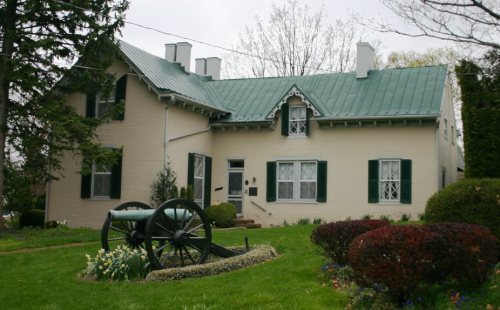
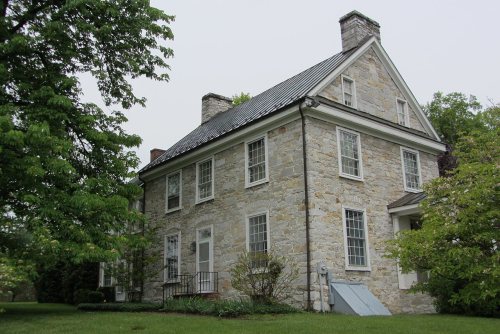
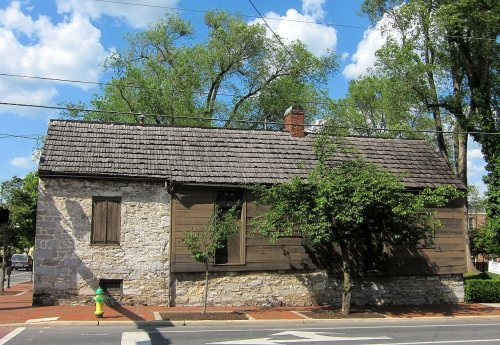
27 listings, 2 of them National Historic Landmarks: 23 buildings, among them the Patsy Cline House (a National Historic Landmark since 2021) and the Jackson, Thomas J., Headquarters (listed 1967, the first), 2 historic districts, the Winchester Historic District and the Kernstown Battlefield Historic District, with 1,657 contributing buildings, and 2 sites. 1,697 historic buildings in all.
How old are the homes in Winchester?
19% of Winchester’s homes were built before 1940 (Census estimate, ±2.9 points), against a typical 1.9% for a Virginia town; the median home was built in 1968.
Founding dates: Wikidata, Wikipedia, the U.S. post office records of Blevins & Helbock (CC0) and the Census. Homes by year built: Census ACS 2020–24. National Register of Historic Places: National Park Service (list of May 22, 2026). Old photos, postcards and papers: Wikimedia Commons, the Library of Congress and other public archives, credited on each item’s page. Maps: U.S. Geological Survey historical topographic maps (via Esri) and Sanborn fire-insurance maps (Library of Congress). History text and census tables: Wikipedia (CC BY-SA 4.0). Places that used to be: USGS Geographic Names Information System (2021).
From Wikimedia Commons (17), Wikidata (1), the National Register of Historic Places (27), Wikipedia, Wikidata and Wikipedia for famous people, U.S. Geological Survey historical maps, the USGS Geographic Names Information System, Sanborn fire insurance maps (Library of Congress) and old county and town histories (Internet Archive). Archive images are copied here with their credits and licenses, shown on each photo’s page. Refreshed monthly.


 ★ Landmark
 ★ Landmark





 1862
 1863
 1863
 1913
 1913
 1913
 1913
 1913
 1913
 1913
 1925


