
One to see in Blyth: Fort on Blyth Links
Mapped inside Blyth’s built-up area is one place to visit, and within 5 km of its edge another 4. On the list: 2 museums, a fort and a historic house, among others. Among them, one is cared for by the National Trust. At 38 km, Durham Castle is worth the journey.
The first to see in Blyth
Alongside Fort on Blyth Links you find 2 museums, a historic house and an attraction.
 MuseumNorthumberland Museum and Archives4.7 km outside town, to the northHistoric houseHistoric house · National TrustSeaton Delaval Hall2.7 km outside town, to the southeastMuseumMuseumNewbiggin Maritime Centre4.4 km outside town, to the northAttractionAttractionNewbiggin Rocket House Museum4.4 km outside town, to the north
Each has a page of its own: what it is, who runs it, the weather month by month and what else is near it.
Finding your way
The map shows most of the 4 nearby to the north.
The dashed line is Blyth’s built-up area; orange marks its middle (where most people live). Numbers match the list below. © OpenStreetMap contributors · ONS built-up area 2022
The types of place
Castles or historic places are the biggest group (2), then museums or galleries (2).
Green: inside Blyth. Grey: within 5 km of its edge.
1 place is cared for by the National Trust (Seaton Delaval Hall).
The places, one by one
First the one in town, then the 4 within 5 km of its edge.
Northumberland Museum and Archives
Museum, archive and county record office for Northumberland.
Newbiggin Maritime Centre
Museum in Newbiggin-by-the-Sea, England, UK.
The one inside Blyth comes first, then the places within 5 km, close and well known first. Churches and listed buildings are on the History page, not here.
32 listed buildings and 1 scheduled monument are on Blyth’s History page → · Parks, footpaths and green space in Blyth →
Names further out
The standout of the 12 is Durham Castle, 38 km from town.
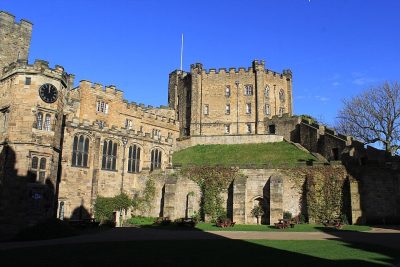 CastleDurham Castle38 km south
 CathedralDurham Cathedral39 km south
 MuseumTurbinia18 km south
 CathedralNewcastle Cathedral17 km south
 MuseumArbeia Roman Fort Museum14 km southeast
 Abbey or priory · English HeritageMonkwearmouth-Jarrow Abbey25 km southeast
 CastleNewcastle upon Tyne Castle18 km south
 CastleBothal Castle8.7 km northwest
 Big drawMuseumGreat North Museum: Hancock16 km south · 638K visitors a year
 Castle · English HeritageWarkworth Castle26 km north
 CastleAlnwick Castle35 km north
 MuseumBeamish Museum27 km south · 350K visitors a year
Places well known beyond Blyth (Wikipedia articles in several languages, published visitor counts, or a National Trust, English Heritage or Cadw property), close and famous first. Distances are straight lines from the middle of the town.
Blyth, answered
What are the main attractions in Blyth?
The place to visit inside Blyth’s built-up area is Fort on Blyth Links. In all, 1 place to visit is mapped inside the town, and 4 more within 5 km.
Does Blyth have a museum?
2 museums and galleries are in or within 5 km of Blyth: Northumberland Museum and Archives and Newbiggin Maritime Centre.
Is there a National Trust or English Heritage property near Blyth?
Yes. In or within 5 km of Blyth, 1 place is cared for by the National Trust (Seaton Delaval Hall).
What are the best-known days out near Blyth?
Within 40 km: Durham Castle (38 km), Durham Cathedral (39 km), Turbinia (18 km), Newcastle Cathedral (17 km).
Where are Blyth’s historic buildings listed?
Blyth has 32 listed buildings. They are on its History page, from Historic England’s list, not repeated here.
How is this list made?
From OpenStreetMap (museums, galleries, zoos, theme parks and attractions, castles, forts and abbeys, and historic houses and gardens that are open to visitors) and Wikidata (what each place is, who runs it, its website and visitor counts). A place counts for Blyth when it is inside the ONS 2022 built-up area, and as nearby within 5 km of its edge. Opening times and prices are not shown: check the official site.
Places: OpenStreetMap (© OpenStreetMap contributors, Open Database Licence) and Wikidata (CC0), placed in the ONS 2022 built-up area (Open Government Licence v3.0). Visitor counts are the latest Wikidata gives, with their year.
Photos: each place’s Wikidata image, from Wikimedia Commons under the licence below (our copy, resized).
Photo credits (13)
- Northumberland Museum and Archives: hayley green, CC BY-SA 2.0, Wikimedia Commons
- Durham Castle: Carla Brain, CC BY-SA 2.0, Wikimedia Commons
- Durham Cathedral: Benjamin Smith, CC BY-SA 4.0, Wikimedia Commons
- Turbinia: Alfred John West, Public domain, Wikimedia Commons
- Newcastle Cathedral: The original uploader was Soloist at English Wikipedia., CC BY-SA 3.0, Wikimedia Commons
- Arbeia Roman Fort Museum: Agnete, CC BY-SA 4.0, Wikimedia Commons
- Monkwearmouth-Jarrow Abbey: R J McNaughton, CC BY-SA 2.0, Wikimedia Commons
- Newcastle upon Tyne Castle: Benjamin Smith, CC BY-SA 4.0, Wikimedia Commons
- Bothal Castle: DRomley, CC BY-SA 3.0, Wikimedia Commons
- Great North Museum: Hancock: TubularWorld, CC BY-SA 3.0, Wikimedia Commons
- Warkworth Castle: Draco2008 from UK, CC BY 2.0, Wikimedia Commons
- Alnwick Castle: Thomas Quine, CC BY 2.0, Wikimedia Commons
- Beamish Museum: Benjamin Smith, CC BY-SA 4.0, Wikimedia Commons
Contains public sector information licensed under the Open Government Licence v3.0. Contains HM Land Registry data © Crown copyright and database right 2026. Contains OS data © Crown copyright and database right 2026 (ONS boundaries). Northern Ireland: Source: NISRA; contains Land & Property Services data and Ordnance Survey of Northern Ireland information, © Crown copyright, licensed under the Open Government Licence v3.0. Scotland: contains National Records of Scotland data, Registers of Scotland data and SEPA data, © Crown copyright / © SEPA 2025, licensed under the Open Government Licence v3.0.